Wednesday, July 5, 2023

How To Write A Business Book That Matters

How To Write A Business Book That Matters written by John Jantsch read more at Duct Tape Marketing

Marketing Podcast with Josh Bernoff

Josh Bernoff, a guest on the Duct Tape Marketing PodcastIn this episode of the Duct Tape Marketing Podcast, I interview Josh Bernoff. He is the bestselling author or ghostwriter of eight business books and contributed to 50 book projects that have generated over $20 million for their authors. Josh was formerly Senior Vice President, Idea Development at Forrester, where he spent 20 years analyzing technology and business. 

​​His most recent book Build a Better Business Book: How to Plan, Write, and Promote a Book That Matters, is a guide for authors who want to create impact in their business books. Josh teaches them how to refine their idea, choose a publishing model, and research, write, publish, and promote their books.

Key Takeaway:

A good business book should have a unique idea that solves a specific problem for a targeted audience, incorporating real-life stories and a narrative structure that engages readers. It should follow a natural progression from presenting a problem to providing a solution and explaining the details of that solution, using case studies to support their ideas. It is vital for authors to understand the continuum between big-idea books and how-to books, as both can be problem-solving.

The promotion plan of the book is crucial, and authors must not assume people will find their books without proper promotion and by building a platform. Josh shares a five-step process called “PQRST” which involves: Positioning, answering the Question, Reaching the target audience, Spreading the book encouraging word-of-mouth, and Timing the book launch.

Questions I ask Josh Bernoff:

  • [01:59] What are the essential elements that a business book needs to be good?
  • [02:49] Can a business book have a similar narrative to a fiction book?
  • [04:03] Some business books are terrible. What are they doing wrong?
  • [04:59] There are two types of business books: the ones that stay in the big idea category and others that are perspective. Are there different approaches that need to be taken for those two different kinds of books?
  • [06:43] Can you explain the different kinds of authors?
  • [08:59] Do publishers care about ideas or do they care about the platform or do you have to have both?
  • [11:16] There are two book approaches, the ones that include research and case studies, and the ones that talk from the author’s daily knowledge and experiences. What do you think of that?
  • [15:09] You have been a ghostwriter on some projects. What are some reasons somebody who has a good idea might use a ghostwriter?
  • [16:01] Let’s talk about editors. In a business book, are they qualified to give much input and help you get your ideas down?
  • [17:16] What role does the design of the interior pages as well as the cover play in the success of a book?
  • [19:36] If you’re going to write a book today, how important is having audio done?
  • [20:54] Can you explain the promotion plan of the book?

More About Josh Bernoff:

More About The Agency Certification Intensive Training:

Take The Marketing Assessment:

Like this show? Click on over and give us a review on iTunes, please!

John Jantsch (00:00): This episode of Duct Tape Marketing Podcast is brought to you by HubSpot. Look, AI is literally eating the web chat. GPT is more searched than I don't know, Taylor Swift. Check out HubSpot's AI powered tools, content assistant and chat spott. They both run on open AI's GPT model, and both are designed to help you get more done and to grow your business faster. HubSpot's AI powered content assistant helps you brainstorm, create, and share content in a flash, and it's all inside a super easy to use CRM now. Chat Spott automates all the manual tasks inside HubSpot to help you arrange more customers close more deals, and scale your business faster. Find out more about how to use AI to grow your business at hubspot.com/artificial-intelligence. That's hubspot.com/artificial-intelligence.

(01:14): Hello and welcome to another episode of the Duct Tape Marketing Podcast. This is John Jantsch, and my guest today is Josh Bernoff. He's the bestselling author or ghostwriter of eight business books. He's contributed to 50 book projects that have generated over 20 million for their authors. He's formerly Senior Vice President of Idea Development at Forrester, where he spent 20 years analyzing technology and business. We're gonna talk about his most recent book, Build a Better Business Book: How to Plan, Write, and Promote a Book That Matters. So Josh, welcome to the show.

Josh Bernoff (01:49): It's great to be on. Good to talk to you.

John Jantsch (01:52): So I'll just throw out like one really big question to start us off. Okay. And then we'll hone in on, uh, things, you know, what are the essential elements that a business book needs to be good. How is that for, how is that for a big question,

Josh Bernoff (02:06): No, that's exactly the right big question

John Jantsch (02:49): Can a business book, like, I mean, a fiction book, you know, has a narrative and a plot and characters and we get to the end hopefully and go, oh, that was amazing. Can a business book have narrative similar to that? Or is it there just to do some nuts and bolts work?

Josh Bernoff (03:04): It has to have a narrative similar to that. Now we understand this, if you're reading a business book that's say a description of Elon Musk's life or Right. You know, how Netflix was created as a company. But when you're talking about a business book that solves a problem, there's a natural order to it in the first chapter. We have to scare the crap out of you by getting you to see that there's either a problem that you're gonna have if you don't follow the book or some opportunity you're gonna miss out on. That's the fear and greed options. Yeah. And then after that we described the parts of the solution. We show you how to implement that. We might show you some more detail about how it applies in different situations. This is a natural progression from you have a problem to the solution, to the problem, to the details of the solution. And that's just as much a narrative as if narrative as if you were reading a novel.

John Jantsch (04:00): All right, let's some people learn better from the negative. Let's talk about some business books that are terrible. What are the, without naming names, what, what do they get wrong typically?

Josh Bernoff (04:10): So I don't know if your listeners have had this experience. I have many times of the business book where you read chapter two and you're like, gee, that sounds just like chapter one. And then you read chapter four and you're like, oh my gosh, it's just the same thing over and over again. Yeah. So there's a word for what that book ought to be, which is a blog post

John Jantsch (04:58): Uh, there are two types of book business books. I read lots and lots of business books as I know you have as well. There are two types of business books that I really like. Some kind of stay in the big idea category. Mm-hmm.

Josh Bernoff (05:36): Well, in the problem-solving kind of book, which is both of those are the big idea books and the how-to books are basically problem-solving kind of books. I think it's a mistake to think of them as two different kinds. Okay. They're really two ends of a continuum. Yeah. Right. So for example, the book I just wrote, right? Build a better business book here. This is a how-to book. There's 24 chapters. There's a chapter on covers. There's a chapter on how to do research. Right. These are all very specific things that you have to learn how to do. If you look at the first book I wrote with Charlene Lee groundswell of posters behind me on the Wall. Yeah. That was a big idea book. And the big idea was that social media wasn't a toy anymore, and people really need to learn how to take advantage of it. But even there we had to say, okay, if you're gonna use social media for research purposes, here are the steps involved in that. Or if you're gonna use social media for marketing, here are the steps involved in that. And unless you have some kind of prescription, then all you're doing is basically throwing grenades and blowing things up. And while that can be entertaining, it's not that helpful to people.

John Jantsch (06:43): All right. So I'm, I'm gonna go down the same path. There are two kinds of authors, I think

Josh Bernoff (07:17): Mm-hmm.

John Jantsch (08:32): Yeah. Yeah. Well, I, you know, fortunately out of some sort of dumb luck, I actually sold a lot of copies of Duct Tape Marketing as well as it being my kinda launching for a platform. So I kinda lucked into the best of both worlds. I guess l let's talk about book proposals for a minute. You know, which is a typical organ that a lot of people would use to, uh, get a publisher interested in a book. Boy, that has changed in the last

Josh Bernoff (09:05): Well, you have to have both. But platform's more important, and that's a shocking thing to say, right. But in the last 20 or 30 years, what I have seen is that some publishers like Wiley explicitly say, you have to prove to us that you can sell 10 or 12 20,000 books on your own. And the other publishers don't say it quite so starkly, but they believe the same thing. Yeah. And that means, and they're not gonna help you very much with the selling. You have to provide that yourself. So you need to have a podcast or a blog or regular appearance on CNN or a Forbes, you know, column or whatever. You need to have some sort of a platform to roll the book out. Now a person with a large platform and no ideas isn't really very interesting, the publishers, because someone has to get something out of the book, but the, they look at the platform first and the idea second. Sadly, it's true. Yeah.

John Jantsch (09:59): Yeah, yeah. And I think it's become more true, quite frankly. You know, you mentioned definitely Wiley, for example, I've even seen some authors talk about, you know, they had to guarantee that they were gonna sell that

Josh Bernoff (10:14): I can't resist pointing out here that there are alternatives now.

John Jantsch (10:17): Sure. Well,

Josh Bernoff (10:18): There are hybrid publishers

John Jantsch (10:19): Usually change, right? Yeah,

Josh Bernoff (10:21): Yeah, yeah. You can pay a hybrid publisher to publisher book. I'm this most recent book I did with a hybrid publisher, and I'm not saying that's the only model. My previous book was done with a traditional publisher. Yeah. And you can even self-publish books on your own through the Amazon platform. And of course that makes a much less of an impact, but if you really gotta get your book out, you don't need to go through a traditional publisher anymore.

John Jantsch (10:44): Well, I have a few, you know, folks in that, that I know well that have made a whole lot more money on their book by doing self-publishing because it sold really well and they kept 80%

Josh Bernoff (10:54): Phil Jones

John Jantsch (10:55):

Josh Bernoff (10:57): Now it's, but it is hard to make your book catch fire. Yeah, yeah. If you're doing it, you're publishing it independently like that. Yeah. The, the traditional publishers have a certain amount of clout and distribution, and the hybrid publishers are helpful within that vein as well.

John Jantsch (11:13): Yeah. So my books are not heavily researched in the, you know, the idea that we had 3000 participants in some sort of study. I mean, my books are really kind of more, here's my daily knowledge. I mean, here's what I've learned working with ex clients. Is there, again, I don't think there's a better approach, but they're quite different, aren't they?

Josh Bernoff (11:34): Uh, you know what, you need something that proves that your book is right. Yeah. And I was sitting down and I thought of these ideas and I wrote them down as not sufficient

John Jantsch (11:45):

Josh Bernoff (11:47): Yeah. And, you know, everyone does secondary research. This is basically going on the internet and finding quotes and studies and stuff. But you need some sort of primary research. But what you said, the, the, you know, the survey kind of research or data Look, I worked at Forrester. I actually created the program that they used to collect consumer data. That was wonderful to have all of that data. Yeah. But you can write a book that's based on anecdotes. And if you're telling the stories of, you know, Sarah, that that changed her marketing program, or Alvin who figured out a better way to, to track attribution, those stories are quite sufficient as primary research. You don't necessarily need a huge amount of data.

John Jantsch (12:32): Yeah. I guess case studies would fall into that too. I mean, I know people love to see, oh, I'm a business kind of like that. And they did that. Oh, okay. That will work for me.

Josh Bernoff (12:41): Case studies are essential. In fact, I would say when I work with authors and we're like at the beginning of the book process, the lack of case studies is the biggest problem that they have. So you want to be thinking right at the beginning, where am I gonna get the stories I'm gonna tell, where am I gonna find these interviews? If a book is, let's say 14 chapters long, it should have 14 case studies in it.

John Jantsch (13:06): So you might even organize the book around what you

Josh Bernoff (13:09): Got. Is I you saying that? Well, I, one way to organize the book is to start every chapter with a story. Yeah. Yeah. It's actually pretty common to do that. It fact, they're No, they're known as Malcolm's after Malcolm Gladwell

John Jantsch (13:46): And now let's hear from a sponsor. This episode is brought to you by Business Made Simple, hosted by Donald Miller, and brought to you by the HubSpot Podcast Network, the audio destination for business professionals hosted by Donald Miller. Business Made Simple Takes the Mystery out of Growing Your Business. In a recent episode, they talked with my old pal, Seth Godin, where he explained the virtues and values in his book called The Song of Significance, A new manifesto for teams. Listen to business Made Simple. Wherever you get your podcasts.

(14:19): Hey, marketing agency owners, you know, I can teach you the keys to doubling your business in just 90 days or your money back. Sound interesting. All you have to do is license our three step process that's gonna allow you to make your competitors irrelevant, charge a premium for your services and scale perhaps without adding overhead. And here's the best part. You can license this entire system for your agency by simply participating in an upcoming agency certification intensive look, why create the wheel? Use a set of tools that took us over 20 years to create. And you can have 'em today, check it out at DTM world slash certification. That's DTM world slash certification.

(15:06): You have, as I noted in your intro, been a ghostwriter on some projects. Mm-hmm.

Josh Bernoff (15:15): Well, it's always a question of time. Yeah, yeah. Yeah. It's also a question of talent. Some people just don't feel like they're good writers. Yeah. But mostly it's people who could write, but just don't have the time to do it. And in the cases where I have ghostwritten books and I've done three, now they're all situations where they were senior executives. Right. Very busy people. They had really interesting ideas and sometimes a lot of detail behind it, but they just wanted to hire somebody who would assemble that into a useful book. And what you read there was written on spec based on what the author, the person whose name on the cover asked for. They've just outsourced the writing. Just like you might outsource the graphics. Yeah. Or, uh, you know, a, a survey that you did,

John Jantsch (16:01): Let's talk about editors. The, I think the common belief was that an editor was gonna make your book better. You know, certainly help you devise or get your ideas down. Mm-hmm.

Josh Bernoff (16:26): It's a question of how busy the people at these publishing houses are. So I, there's a quote in my book from Holla Heinbach, who's a, a very well known editor to Hartford Business who says, look, we expect the manuscript to come in ready to publish. Yeah. Um, so they don't really have the resources to edit your book. Yeah. But that doesn't mean you don't need an editor. Most people who work on a good book will hire a developmental editor, and that's someone whose job is to, to do the work of helping with the ideas, the sequence, the structure, the language, how the chapters are assembled, everything just so that you have a high quality piece of work that's publishable.

John Jantsch (17:08): Yeah. This is gonna be a hard question to have a definitive answer, but I'm certain you have an opinion on

Josh Bernoff (17:23): Yeah. Well, let me divide those two. Yeah. Okay. Unless your book has got some sort of unusual elements to it, like, you know, a lot of sidebars or something like that, the interior design usually just as utilitarian and it doesn't make that much difference. People need to tell when things are heading or subheading, but, but most books are pretty much interchangeable from that perspective.

John Jantsch (17:51): I've seen some poor font, I've seen some poor font.

Josh Bernoff (17:53): Oh, you can definitely make a mistake there,

John Jantsch (19:03): I, I know for myself, I'm, you know, walking through a bookstore back when we used to do that, used to do that. Yeah. A facing out, you know, book that had a compelling cover. It, it was a stopper, you know, it would be like, oh, I want to at least take a deeper look at that.

Josh Bernoff (19:17): Well, nowadays people are looking at the book on the screen Yeah. And it's an inch tall.

John Jantsch (19:23): Yeah,

Josh Bernoff (19:23): Yeah, yeah. So the subtle little details of the design don't become obvious until the person has had it shipped to their house.

John Jantsch (19:30):

Josh Bernoff (19:41): Yes. Audio, you cannot have a book that's has a full measure of success unless there's an audiobook to go along with it. Yeah. And people love to consume business books on audio while they're exercising or commuting, you know, or on an airplane or whatever. So you really have to have that available to them. And in my book, I actually recommend that if the author has got any inclination at all, it's great if you, the author can record the audiobook. Yeah. Because then your voice and your willingness to communicate the things that are important to you will come across effectively. And even if you know you have a scratchy voice or a nasal voice or something, most people can do a good job with that. Yeah. It's just, that's likely to take you 10 or 15 hours and not everybody's willing to put the time in to do that.

John Jantsch (20:32): Yeah. Well, and, and, and if your goal is to build a community, to build a business around a platform, a larger platform around, I know I find it all the time. People are like, oh, now that I met you, you know, I can hear you in my head already, you know, because I listen to your books. Yeah. So it, it really is, you know, I think it's a must for if you wanna do other things with the book as well.

Josh Bernoff (20:51): Yeah.

John Jantsch (20:52): Okay. We have exactly 30 seconds left. Let's talk about promotion of the book

Josh Bernoff (21:03): Yes. You need to plan the promotion. And the biggest mistake that authors make is to write the book and assume that people will find it, even if they don't promote it. And I got a five step process positioning, what's the question you answer? How are you gonna get reach? How are you gonna get people like the book to spread it? And how are you gonna get the timing focused? And right around the book launch, that's P Q R S T, those are the five steps that I recommend people do to prepare for promotion in 30 seconds.

John Jantsch (21:32):

Josh Bernoff (21:53): Yeah. Well, people don't realize, but in most book processes, there's a period of three to six months when the book is in some sort of production and printing process, and you as the author, don't have too much to do. That's exactly when you work on the promotion planning, because the temptation is to sort of relax and say, oh, I'm done. And then the time comes to write and you're like, oh, crap, I didn't put anything in place.

John Jantsch (22:19): I'd tell you during Covid, it was 12 to 18 months for forcing some people to get to Yes, it's true. Get the books out. And it's like, well, I don't even remember what I wrote

Josh Bernoff (22:37): Okay. So if people wanna reach me, you want to go to bernoff.com. That's my website, B E R N O F F.com. I post a blog post there every single weekday, mostly about authors and their issues. And if people are interested in getting the new book, build a Better Business book, you can go to bernoff.com/books, or you can pick that up on Amazon or bookshop.org or wherever you're used to shopping for books. And by the time this goes live, the audiobook will be available. It's already available in print and as an ebook.

John Jantsch (23:11): Awesome. And you can tell how long somebody's been online by the fact that they have their last name come as a website

Josh Bernoff (23:17): I, I bought it from like a third cousin of mine in Chile

John Jantsch (23:25): So I, I actually, when all my kids were born, I actually reserved the names, their names. You know, I, I don't know if they've kept them or not, but yeah, you can tell how long somebody's been online. All right, Josh, again, great having you stop by and hopefully we'll run into you one of these days out there on the road.

Josh Bernoff (23:41): All right. It's been great to be here, and thanks for giving me the chance to speak with your

John Jantsch (23:44): Audience. Hey, and one final thing before you go. You know how I talk about marketing strategy, strategy before tactics? Well, sometimes it can be hard to understand where you stand in that, what needs to be done with regard to creating a marketing strategy. So we created a free tool for you. It's called the Marketing Strategy Assessment. You can find it @marketingassessment.co, not.com, dot co. Check out our free marketing assessment and learn where you are with your strategy today. That's just marketing assessment.co. I'd love to chat with you about the results that you get. Got.

This episode of the Duct Tape Marketing Podcast is brought to you by the HubSpot Podcast Network.

HubSpot Podcast Network is the audio destination for business professionals who seek the best education and inspiration on how to grow a business.


from Duct Tape Marketing https://ift.tt/zIwielq
via IFTTT

Saturday, July 1, 2023

Weekend Favs July 1

Weekend Favs July 1 written by John Jantsch read more at Duct Tape Marketing

My weekend blog post routine includes posting links to a handful of tools or great content I ran across during the week.

I don’t go into depth about the finds, but I encourage you to check them out if they sound interesting. The photo in the post is a favorite for the week from an online source or one I took on the road.

  • Futurpedia – This platform is the largest AI tools directory, that is updated daily. Their goal is to create a community-driven knowledge base for different AI tools and emerging technologies.
  • AIPRM – This Google Chrome extension adds a list of curated 1-Click Prompt templates for SEO, SaaS, and more to ChatGPT, allowing you to finish your tasks faster.
  • Peppertype.ai – This copywriting tool powered by AI helps you ideate, create, distribute, and measure your content and prove your content marketing ROI.

These are my weekend favs; I would love to hear about some of yours – Tweet me @ducttape

If you want to check out more Weekend Favs you can find them here.


from Duct Tape Marketing https://ift.tt/rPs1Zlb
via IFTTT

Thursday, June 29, 2023

Unveiling The Future Of AI

Unveiling The Future Of AI written by John Jantsch read more at Duct Tape Marketing

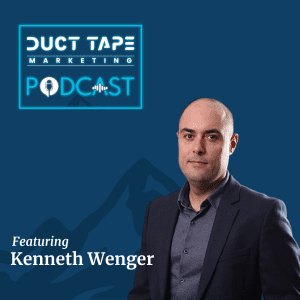
Marketing Podcast with Kenneth Wenger

Kenneth Wenger, a guest on the Duct Tape Marketing PodcastIn this episode of the Duct Tape Marketing Podcast, I interview Kenneth Wenger. He is an author, a research scholar at Toronto Metropolitan University, and CTO of Squint AI Inc. His research interests lie at the intersection of humans and machines, ensuring that we build a future based on the responsible use of technology.

His newest book, Is the Algorithm Plotting Against Us?: A Layperson’s Guide to the Concepts, Math, and Pitfalls of AI. Kenneth explains the complexity of AI, demonstrating its potential and exposing its shortfalls. He empowers readers to answer the question: What exactly is AI?

Key Takeaway:

While significant progress has been made in AI, we are still at the early stages of it’s development. However, the current AI models are primarily performing simple statistical tasks rather than exhibiting deep intelligence.The future of AI lies in developing models that can understand context and differentiate between right and wrong answers.

Kenneth also emphasizes on the pitfalls of relying on AI, particularly in the lack of understanding behind the model’s decision-making process and the potential for biased outcomes. The trustworthiness and accountability of these machines are crucial to develop, especially in safety-critical domains where human lives could be at stake like in medicine or laws. Overall, while AI has made substantial strides, there is still a long way to go in unlocking its true potential and addressing the associated challenges.

Questions I ask Kenneth Wenger:

  • [02:32] The title of your book is the algorithm plotting against this is a bit of a provocative question. So why ask this question?
  • [03:45] Where do you think we really are in the continuum of the evolution of AI?
  • [07:58] Do you see a day where AI machines will start asking questions back to people?
  • [07:20] Can you name a particular instance in your career where you felt like “This is going to work, this is like what I should be doing”?
  • [09:25] You have both layperson and math in the title of the book, could you give us sort of the layperson’s version of how it does that?
  • [15:30] What are the real and obvious pitfalls of relying on AI?
  • [19:49] As people start relying on these machines to make decisions that are supposed to be informed a lot of times, predictions could be wrong right?

More About Kenneth Wenger:

More About The Agency Certification Intensive Training:

Take The Marketing Assessment:

Like this show? Click on over and give us a review on iTunes, please!

John Jantsch (00:00): Hey, did you know that HubSpot's annual inbound conference is coming up? That's right. It'll be in Boston from September 5th through the eighth. Every year inbound brings together leaders across business, sales, marketing, customer success, operations, and more. You'll be able to discover all the latest must know trends and tactics that you can actually put into place to scale your business in a sustainable way. You can learn from industry experts and be inspired by incredible spotlight talent. This year, the likes of Reese Witherspoon, Derek Jeter, Guy Raz, are all going to make appearances. Visit inbound.com and get your ticket today. You won't be sorry. This programming is guaranteed to inspire and recharge. That's right. Go to inbound.com to get your ticket today.

(01:03): Hello and welcome to another episode of the Duct Tape Marketing Podcast. This is John Jantsch. My guest today is Kenneth Wenger. He's an author, research scholar at Toronto Metropolitan University and CTO of Squint AI Inc. His research interests lie in the intersection of humans and machines, ensuring that we build a future based on the responsible use of technology. We're gonna talk about his book today Is the Algorithm Plotting Against Us?: A Layperson's Guide to the Concepts, Math, and Pitfalls of AI. So, Ken, welcome to the show.

Kenneth Wenger (01:40): Hi, John. Thank you very much. Thank you for having me.

John Jantsch (01:42): So, so we are gonna talk about the book, but I, I'm just curious, what, what does Squint AI do?

Kenneth Wenger (01:47): That's a great question. So, squint ai, um, is a company that we created to, um, do some research and develop a platform that enables us to, um,

(02:00): Do, do AI in a more responsible, uh, way. Okay. Okay. So, uh, I'm sure we're gonna get into this, but I touch upon it, uh, in the book in many cases as well, where we talk about, uh, ai, ethical use of ai, some of the downfalls of ai. And so what we're doing with Squint is we're trying to figure out, you know, how do we try to create a, an environment that enables us to use AI in a way that lets us understand when these algorithms are not performing at their best, when they're making mistakes and so on. Yeah,

John Jantsch (02:30): Yeah. So, so the title of your book is The Algorithm Plotting Against, this is a bit of a provocative question. I mean, obviously I'm sure there are people out there that are saying no

Kenneth Wenger (02:49): Well, because I, I actually feel like that's a question that's being asked by many different people with actually with different meaning. Right? So it, it's almost the same as the question of is AI posing an existential threat? I, I, it's a question that means different things to different people. Right. So I wanted to get into that in the book and try to do two things. First, offer people the tools to be able to understand that question for themselves, right. And first figure out how, where they stand in that debate, and then second, um, you know, also provide my opinion along the way.

John Jantsch (03:21): Yeah, yeah. And I probably didn't ask that question as elegantly as I'd like to. I actually think it's great that you ask the question, because ultimately what we're trying to do is let people come to their own decisions rather than saying, this is true of ai, or this is not true of AI

Kenneth Wenger (03:36): That's right. That's right. And, and, and again, especially because it's a nuanced problem. Yeah. And it means different things to different people.

John Jantsch (03:44): So this is a really hard question, but I'm gonna ask you, you know, where are we really in the continuum of, of AI? I mean, people who have been on this topic for many years realize it's been built into many things that we use every day and take for granted, obviously we ChatGPT brought on a whole nother spectrum of people that now, you know, at least have a talking vocabulary of what it is. But I remember, you know, I've been, I've been, I've had my own business 30 years. I mean, we didn't have the web

Kenneth Wenger (04:32): You know, that's a great question because I think we are actually very early on. Yeah. I think that, you know, we, we've made remarkable progress in a very short period of time, but I think it's still, we're at the very early stages. You know, if you think of ai where we are right now, we were a decade ago, we've made some progress. But I think the, fundamentally, at a scientific level, we've only started to scratch the surface. I'll give you some examples. So initially, you know, the first models, they were great at really giving us some proof that this new way of posing questions, you know, the, uh, neural networks essentially. Yeah, yeah. Right. They're very complex equations. Uh, if you use GPUs to, to run these complex equations, then we can actually solve pretty complex problems. That's something we realized around 2012 and then after around 2017, so between 2012 and 2017, progress was very linear.

(05:28): You know, new models were created, the new ideas were proposed, but things scaled and progressed very linearly. But after 2017, with the introduction of the model that's called the Transformer, which is the base architecture behind chat, g, pt, and all these large language models, we had another kind of realization. That's when we realized that if you take those models and you scale them up and you scale them up in, in terms of the size of the model and the size of the data set that we used to train them, they get exponentially better. Okay. And that's when we got to the point where we are today, where we realized that just by scaling them, again, we haven't done anything fundamentally different since 2017. All we've done is increase the size of the model, increase the size of the dataset, and they're getting exponentially better.

John Jantsch (06:14): So, so multiplication rather than addition?

Kenneth Wenger (06:18): Well, yes, exactly. Yeah. So, so it isn't, the progress has been exponential, not only in linear trajectory. Yeah. But I think, but again, the fact that we haven't changed much fundamentally in these models, that's going to taper off very soon. It's my expectation. And now where are we on the timeline? Which was your original question. I think if you think about what the models are doing today, they're doing very element. They're doing very simple statistics, essentially. Mm-hmm.

John Jantsch (07:39): Absolutely. I mean, I totally agree with you on artificial intelligence. I've actually been calling it ia. I think it's more of informed automation.

Kenneth Wenger (08:06): Yeah. So the, the, the simple answer is yes. I, I definitely do. And I think that's part of what, what achieving a higher level intelligence would be like. It's when they're not just doing your bidding, it's not just a tool. Yeah, yeah. Uh, but they, they kind of have their own purpose that they're trying to achieve. And so that's when you would see things like questions essentially, uh, arise from the system, right? Is when they, they have a, a, a goal they wanna get at, which is, you know, and, and then they figure out a plan to get to that goal. That's when you can see emergence of things like questions to you. I don't think we're there yet, but yeah, I think it's certainly possible.

John Jantsch (08:40): But that's the sci-fi version too, right? I mean, where people start saying, you know, the movies, it's like, no, no, Ken, you don't get to know that information yet. I'll decide when you can know that

Kenneth Wenger (08:52): Well, you're right. I mean, the question, the way you asked the question was more like, is it, is it possible in principle? I think absolutely. Yes. Yeah. Do we want that? I mean, I, I don't know. I guess that's part of, yeah, it depends on what use case we're thinking about. Uh, but from a first principle's perspective Yeah, it is, it is certainly possible. Yeah. Not to get a model to

John Jantsch (09:13): Do that. So I, I do think there are scores and scores of people, they're only understanding of AI is I go to this place where it has a box and I type in a question and it spits out an answer. Since you have both layperson and math in the title, could you give us sort of the layperson's version of how it does that?

Kenneth Wenger (09:33): Yeah, absolutely. So, well, at least I'll try, lemme put it that way,

(10:31): So basically for any word in a, in a, in a prompt or in a corpus of text, they calculate the probability that word belongs in that sequence. Right? And then they choose the, the next word with the highest probability of being correct there. Okay? Now, that is a very simple model in the following sense. If you think about how we communicate, right? You know, we're having a conversation right now. I think when you ask me a question, I, I pause and I think about what I'm about to say, right? So I have a model of the world, and I have a purpose in that conversation. I come up with the idea of what I want to respond, and then I use my ability to produce words and to sound them out to communicate that with you. Right? It might be possible that I have a system in my brain that works very similar to a large language model, in the sense that as soon as I start saying words, the next word that I'm about to say is one that is most likely to be correct, given the words that I just said.

(11:32): It's very possible. That's true. However, what's different is that at least I already have a plan of what I'm about to say in some latent space. I have already encoded in some form. What I want to get across, how I say it, that the ability to pro to produce those words might be very similar to a language model. But the difference is that a large language model is trying to figure out what it's going to say as well as coming up with those words at the same time. Mm-hmm.

John Jantsch (12:20): I, I, I have certainly seen some output that is pretty interesting along those lines. But, you know, as I heard you talk about that, I mean, in a lot of of ways that's what we're doing is we're querying a database of what we've been taught, are the, the words that we know in addition to the concepts that we've studied, uh, and are able to articulate. I mean, in some ways we're querying that to me, prompting or me asking you a question as well, I mean, it works similar. Would you say

Kenneth Wenger (12:47): The aspect of prompting a question and then answering it, it's similar, but what is different is the, the concept that you're trying to describe. So, again, when you ask me a question, I think about it, and I come up with, so I, again, I have a world model that works so far for me to get me through life, right? And that world model lets me understand different concepts in different ways. And when I'm about to answer your question, I think about it, I formulate a response, and then I figure out a way to communicate that with you. Okay? That step is missing from what these language models are doing, right? They're getting a prompt, but there is no step in which they are formulating a response with some goal, right? Right? Yes. Some purpose. They are essentially getting a text, and they're trying to generate a sequence of words that are being figured out as they're being produced, right? There's no ultimate plan. So that, that's a very fundamental difference.

John Jantsch (13:54): And now, let's hear a word from our sponsor, marketing Made Simple. It's a podcast hosted by Dr. J j Peterson and is brought to you by the HubSpot Podcast Network, the audio destination for business professionals marketing made simple, brings you practical tips to make your marketing easy and more importantly, make it work. And in a recent episode, JJ and April chat with StoryBrand certified guides and agency owners about how to use ChatGPT for marketing purposes. We all know how important that is today. Listen to marketing Made Simple. Wherever you get your podcasts.

(14:30): Hey, marketing agency owners, you know, I can teach you the keys to doubling your business in just 90 days, or your money back. Sound interesting. All you have to do is license our three-step process that's gonna allow you to make your competitors irrelevant, charge a premium for your services and scale perhaps without adding overhead. And here's the best part. You can license this entire system for your agency by simply participating in an upcoming agency certification intensive look, why create the wheel? Use a set of tools that took us over 20 years to create. And you can have 'em today, check it out at dtm.world/certification. That's DTM world slash certification.

(15:18): I do wanna come to like what the future holds, but I want to dwell on a couple things that you dive into in the book. What are the, you know, other than sort of the fear that the media spreads

Kenneth Wenger (15:38): I think the biggest issue, and one of the, I mean the, the, the real motivator for me when I started writing the book is that it is a powerful tool for two reasons. It's very easy to use, seemingly, right? Yeah. You can spend a weekend learning python, you can write a few lines, and you can transform, you can analyze, you can parse data that you couldn't before just by using a library. So you don't really have to understand what you're doing, and you can get some result that looks useful, okay? Mm-hmm.

(16:42): In a, in, in a way that can affect other people. For example, you know, let's say you work in a financial institution and, and, and, and you come up with a model to figure out, uh, who you should, who you should give some credit, get, you know, approved for, for credit for a credit line, and who you shouldn't. Now, right now, banks have their own models, but sure, if you take the AI out of it, traditionally those models are thought through by statisticians, and they may get things wrong once in a while, but at least they have a big picture of what it means to, you know, analyze data, biasing the data, right? What are the repercussions of bias in the data? How do you get rid of all these things are things that a good statistician should be trained to do. But now, if you remove the statisticians, because anybody can use a model to analyze data and get some prediction, then what happens is you end up denying and approving credit lines for people who, with you, you know, with repercussions that could be, you know, driven by very negative bias in the data, right?

(17:44): Like, it could affect a certain section of the population, uh, negatively. Maybe there's some that can't get a credit line anymore just because they live in a particular neighborhood mm-hmm.

John Jantsch (17:57): But wasn't that a factor previously? I mean, certainly neighborhoods are considered

Kenneth Wenger (18:06): Yeah, absolutely. So like I said, we always had a problem with bias, right? In the data, right? But traditionally, you would hope, so two things would happen. First, you would hope that whoever comes up with a model, just because it's a complex problem, they have to have some satis statistical training. Yeah. Right? And a, an ethical statistician would have to consider how to deal with the bias in the data, right? So that's number one. Number two, the problem that we have right now is that, first of all, you don't need to have that set decision. You can just use the model without understanding what's happening, right? Right. And then what's worse is that with these models, we can't actually understand how the, or it's very difficult traditionally to understand how the model arrived or prediction. So if you get denied either a credit line or as, as I talk about in the book bail, for example, in, in a court case, uh, it's very difficult to, to argue, well, why me? Why, why was I denied this thing? And then if you go through the process of auditing it again with the traditional approach where you have a decision, you can always ask, so how did you model this? Uh, why was this person denied this particular case in a, in an audit? Mm-hmm.

John Jantsch (19:21): So I, I mean, so so what you're saying, one of the initial problems is that people are relying on the output, the data. I mean, even, you know, I use it in a very simple way. I run a marketing company and we use it a lot of times to give us copy ideas, give us head headline ideas, you know, for things. So I don't really feel like there's any real danger in there other than maybe sounding like everybody else

Kenneth Wenger (19:57): Yes. And, and there's very, so the answer is yes. Now, there's two reasons for that. And by the way, let me just go back to say that there are use cases where, of course you have to think about this as, as a spectrum, right? Like yeah, yeah. There are cases where the repercussions of getting something wrong is worse than other cases, right? So as you say, if you're trying to generate some copy and you know, if it's nonsensical, then you just go ahead and change it. And at the end of the day, you're probably gonna review it anyway. So, so that is a lower, probably a lower cost. The cost of a mistake there will be lower than in, in the case of, you know, using a model in a, in a judicial process, for example. Right? Right. Right. Now, with respect to the fact that these models sometimes get, make mistakes, the reason for that is that the way these models actually work is that they, and, and the part that can be deceiving is that they tend to work really well for areas in the data that that is, that they understand really well.

(20:56): So, so if you think of, of a dataset, right? So they're trained using a dataset for most of the data in that dataset, they're gonna be able to model it really well. And so that's why you get models that perform, let's say, 90% accurate on a particular data set. The problem is that for the 10% where they're not able to model really well, the mistakes there are remarkable and in a way that a human would not be able to make those mistakes. Yeah. So what happens in those cases that, first of all, when we're training these models that we get, we say, well, you know, we get 10% error rate in this particular dataset. The one issue is that when you take that into production, you don't know that the incidences rate of those errors are gonna be the same in the real world, right?

(21:40): You may end up, uh, being in a situation where you get those data points that lead to errors at a much higher rate than you did in your data set. Just one problem. The second problem is that if, if you are in a, if your use case, if your production, you know, application, it's such where a mistake could be costed, like let's say in a medical use case or in self-driving, when you have to go back and explain why you got something wrong, why the model got something wrong, and it is just so bizarrely different from what a human would get wrong. That's one of the fundamental reasons why we don't have these systems being deployed across safety critical domains today. And by the way, that's one of the fundamental reasons why we created splint, is to tackle specifically those problems, is to figure out how can we create a set of models or a system that's able to understand specifically when models are getting things right and when they're getting things wrong at runtime. Because I really think it's, it's one of the fundamental reasons why we haven't advanced as much as we should have at this point. It's cuz when models work really well, uh, when they're able to model the data, well then they work great. But for the cases where they can't model that section of the data, the mistakes are just unbelievable, right? It's things that humans would never make those kinds of

John Jantsch (23:00): Mistake. Yeah, yeah, yeah. And, and obviously, you know, that's certainly gonna, that has to be solved before anybody's gonna trust sending, you know, a man spacecraft, you know, guided by AI or something, right? I mean, when you know human life is at risk, you know, you've gotta have trust. And so if you can't trust that decision making, that's certainly gonna keep people from employing the, the technology, I suppose.

Kenneth Wenger (23:24): Right? Or using them, for example, to help in, as I was saying, in medical domains, for example, cancer diagnosis, right? If you want a model to be able to detect certain types of cancer, given let's say biopsy scans, you wanna be able to trust the model. Now anything, any model essentially, you know, it's going to make mistakes. Nothing is ever perfect, but you want two things to happen. First, you wanna be able to minimize the types of mistakes that the model can make, and you need to have some indication that the quality of the prediction of the model isn't great. You don't wanna have that. Yeah. And second, once a mistake happens, you have to be able to defend that the reason the mistake happened is because the, the quality of the data was such that, you know, even a human couldn't do better. Yeah. We can't have models make mistakes that a human doctor would look at and say, well, this is clearly Yeah, incorrect.

John Jantsch (24:15): Yeah. Yeah. Absolutely. Well, Ken, I wanna take, uh, I wanna thank you for taking a moment to stop by the Duct Tape Marketing Podcast. You wanna tell people where they can find, connect with you if you'd like, and then obviously where they can pick up a copy of Is the Algorithm Plotting against Us?

Kenneth Wenger (24:29): Absolutely. Thank you very much, first of all for having me. It was a great conversation. So yeah, you can reach me on LinkedIn and for the cop for a copy of the book and get it both from, uh, Amazon as well as from our publisher website, the, it's called the working fires.org.

John Jantsch (24:42): Awesome. Well, again, thanks for solving by great conversation. Hopefully, we'll maybe we'll run into you one of these days out there on the road.

Kenneth Wenger (24:49): Thank you.

John Jantsch (24:49): Hey, and one final thing before you go. You know how I talk about marketing strategy, strategy before tactics? Well, sometimes it can be hard to understand where you stand in that, what needs to be done with regard to creating a marketing strategy. So we created a free tool for you. It's called the Marketing Strategy Assessment. You can find it @marketingassessment.co, not.com, dot co. Check out our free marketing assessment and learn where you are with your strategy today. That's just marketing assessment.co. I'd love to chat with you about the results that you get.

This episode of the Duct Tape Marketing Podcast is brought to you by the HubSpot Podcast Network.

HubSpot Podcast Network is the audio destination for business professionals who seek the best education and inspiration on how to grow a business.


from Duct Tape Marketing https://ift.tt/zJ1HEmD
via IFTTT

Wednesday, June 28, 2023

Embracing Your Entrepreneurial Superpower Being Unemployable

Embracing Your Entrepreneurial Superpower Being Unemployable written by John Jantsch read more at Duct Tape Marketing

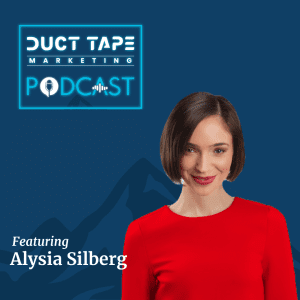
Marketing Podcast with Alysia Silberg

Alysia Silberg, a guest on the Duct Tape Marketing PodcastIn this episode of the Duct Tape Marketing Podcast, I interview Alysia Silberg. She is a leading venture capitalist in Silicon Valley, where she mentors tech startups and helps them go public. She is the CEO & General Partner of the investment firm Street Global.

Her online radio show: Global Fireside Chats, brings together global industry titans to share insights on our fast-changing world. Furthermore, Alysia is a UN Women Empower Women Global Champion and an international board director with sovereign wealth fund experience. 

Her first book, Unemployable: How I Hired Myself details her life story and guide to financial freedom. It’s a guide that helps to change your mindset from “I can’t” to “I can”. 

Key Takeaway:

Alysia changes the narrative of being “unemployable” and relates it to entrepreneurship and finding one’s superpower in business. Being unemployable is something to be proud of, as it often reflects the mindset and qualities of an entrepreneur, that can lead to innovation and generate changes. She emphasizes the importance of owning one’s uniqueness, taking risks, embracing curiosity, and seizing the opportunities presented by the digital revolution.

The current business environment, which Alysia describes as a “modern-day renaissance”, it’s a time for innovation and new opportunities. It’s important to leverage the power of AI and digital tools to start and grow a business and develop each person’s superpower.

Questions I ask Alysia Silberg:

  • [01:52] Tell me a little bit about the artwork from the book cover.
  • [03:07] Your book launch party was at a roller rink. How did that come about?
  • [04:13] Why is the book called Unemployable?
  • [07:20] Can you name a particular instance in your career where you felt like “This is going to work, this is like what I should be doing”?
  • [08:58] You talk about superpowers and finding your superpower. Does your superpower have a name?
  • [10:00] Back in South Africa you got shot, what did that story mean to your journey?
  • [11:53] Is there anything about what’s going on right now in the current business environment that you think makes us a strong time?
  • [15:25] What’s the first step you tell people to acquire the mindset you talk about?
  • [18:23] What are your thoughts on the idea that there are proven business models and you don’t have to like to create a whole new thing from zero?
  • [19:41] Based on where you see where we are today, what’s work going to look like in 10 years?

More About Alysia Silberg:

More About The Agency Certification Intensive Training:

Take The Marketing Assessment:

Like this show? Click on over and give us a review on iTunes, please!

John Jantsch (00:00): Hey, did you know that HubSpot's annual inbound conference is coming up? That's right. It'll be in Boston from September 5th through the eighth. Every year inbound brings together leaders across business, sales, marketing, customer success, operations, and more. You'll be able to discover all the latest must know trends and tactics that you can actually put into place to scale your business in a sustainable way. You can learn from industry experts and be inspired by incredible spotlight talent. This year. The likes of Reese Witherspoon, Derek Jeter, Guy Raz are all going to make appearances. Visit inbound.com and get your ticket today. You won't be sorry. This programming is guaranteed to inspire and recharge. That's right. Go to inbound.com to get your ticket today.

(01:03): Hello and welcome to another episode of the Duct Tape Marketing Podcast. This is John Jantsch. My guest today is Alysia Silberg. She's a leading venture capitalist in Silicone Valley where she mentors tech startups and helps them go public. She is the CEO and general partner of the investment firm, street Global. Her online radio show, global Fireside Chats brings together global industry tightens to share insights on our fast changing world. She is a UN Women Empower Women Global Champion, and an international board director with Sovereign Wealth Fund experience. We're gonna talk about her first book, Unemployable: how I Hired Myself. So Alysia, welcome to the show.

Alysia Silberg (01:47): Hi John. Very excited to be joining you. Thanks for having me.

John Jantsch (01:50): So listeners can't see this, although you'll see, you can see it in the show notes, the video of folks obviously will see it, but I, you have a picture of the artwork from the cover behind you there in the in frame and I just, I wanted to start there because I just absolutely love it. So tell me a little bit about, I mean I frankly it's a work of art.

Alysia Silberg (02:08): Thank you. Um, very excited to hear you say that. So you talk about being unemployable, you talk about the future of ai. I know these are themes we'll be chatting about today, but I had five designers trying to come up with what it meant to be unemployable and no one could convey that in imagery. And one of my founders who has an ed tech startup focusing on AI in Minneapolis, he said, let me sit down and let me take the book and let me put it in open AI's design platform and let's see what happens. And the, this is what the AI came up with. It's the essence of a founder's journey and it's interpreting it, you know, that drive and ambition, you know, like that all of its embodied it that in this situation happens to be my image. But I'm, I'm very excited that we created that connection with the AI and it turned out the way it did.

John Jantsch (02:55): Yeah, it's kind of a, a block, almost like a Japanese block print illustration. It's really fabulous. Okay, another totally unrelated

Alysia Silberg (03:11): Well, we're gonna be, you know, the book is about finding your superpower and you know, superpowers are often unexpected and we discovered them in the weirdest of ways. And for me, they happened to be, I went to a pair of pink roller skates at five years old. I went to them more than anything on earth and I couldn't afford them. No one in my family could afford them. And I had to figure out how I could get these pink roller skates and I built a business and you'll read all about it in the book. Crazy wild Only founders understand what it means to, to want something so badly. And I never wore those roller estates ever. I treasured them cuz they reminded me of what's possible. The dreamer, you know, anything is possible. And so the idea of having a a roller skating party for the book was the only thing I could do to honor each of our journeys. For me it's roller skates. For you it was probably something else, but once a founder, always a founder and it was just, it's the way it's meant to be

John Jantsch (04:05): Kind of sounds like a load of fun too. So there's that

Alysia Silberg (04:26): Absolutely. So I was trained as an actuary and I went for a career aptitude test at a bank. And I was like, you know, on my way thinking I joined, you know, a big bank and I was told I, I was unemployable in that attitude test and I was devastated. I was like, what do I do now? And I took it as an insult and at the time it was, you know, it wasn't a compliment and it took me decades to own that. And what I do today now is I'm a researcher and I'm an investor. Like those are the things that make me the entrepreneur that I am. Right. And it was very tough choosing the title. I did a ton of research because everyone kept saying, but you're not unemployable. How can you say you're unemployable? And I'm like, well actually I am.

(05:07): And it's okay. It's something to be proud of. The most important creators in history were basically unemployable to create innovation and change in these things. You've gotta be able to just live in a different way to many people and take risks. But there's a lot of bravery around their title And I, I hope and honors the founder's journey. So for everyone out there that feels the unemployable, as I say, I've learned to own it and be the queen of unemployable

John Jantsch (05:39):

Alysia Silberg (06:12): Absolutely. I think I suffered from huge imposter syndrome and the ironic part was it was that bank who didn't want me and because of my imposter syndrome I decided no one wanted me. So when job offer offers came, I was like whoa, I don't feel I belong here because there's something wrong with me. Versus I'm a born and bred founder and this is what I do. Like you, you've been running a company for a very long time and I think definitely, I think many people and I think that's what I hope to get out of the book where each person has something unique and instead of hiding from it and saying I have to con conform to what everybody expects me to do, rather say, okay, AI is bringing all this change. People are gonna lose their jobs, things are gonna be very different. Let me own my superpower, let me bold a business. And even if I do feel a bit like an imposter even now, I still feel like an imposter. I still have to work on it a lot. It's okay. You will find customers that will support you just the way you are and you can bold something really cool as you have done

John Jantsch (07:12): So. So you have started, have you lost track of how many companies over the years? Number doesn't matter

Alysia Silberg (07:18): Too many,

John Jantsch (07:18): Many. But uh, I'm wondering if you could in hindsight, as we always do,

Alysia Silberg (07:43): For sure. I think it was the company that we built that brought us to the US in the first place where I just, it was connecting the dots and we were solving a problem for our customer. So it was a very early voice analytics pro uh, platform, which is helping salespeople sell better. Long before sales enablement became like this very ubiquitous thing. And it was just, there was so much intensity coming at us from the market where they wanted something better that wasn't available. That even though everyone in South Africa said to us, you're mad, what are you doing going to America for a sales app? The idea that there was a probability of greater than let's say 10%, that we would bold something extremely valuable. That was enough of, I don't know, just a spark of you know, like I'm gonna do this no matter what and even whatever happens, I'm doing this and I'm gonna make it work. But absolutely that one was just clear and I think I used that to look at startups today where when I can see something that's gonna happen, you wanna be on that journey cuz it's so exciting.

John Jantsch (08:44): Yeah. And then it, and I mean this in a positive way then it becomes like a drug, right? You recognize it the next sentence like I want that high again. Right,

Alysia Silberg (08:51): Absolutely. Absolutely. It's addictive.

John Jantsch (08:57): So, so you talk a lot in this book about superpowers and finding your superpower. I'm curious, does your superpower have a name?

Alysia Silberg (09:05): I'm obsessed with pattern recognition and I think growing up people saw me as a freak. Like it was very tough growing up cuz I was so different to everyone around me, like in South Africa and absolutely I'm not and I think that's why I work so well with the AI because it's so much better than pattern rec, pattern recognition than me. And faster is absolutely

John Jantsch (09:38): It's interesting, I've for years, you know, have told people that my superpower is curiosity and I think that's probably very related to you know, pattern recognition. A lot of times, you know, I will read a book about architecture and you know, get my best ideas even though I have nothing to do with architecture

Alysia Silberg (10:18): Absolutely and I think it was a pivotal moment in the sense that I saw an environment that just made no sense to me. And I was very young and I saw the people around me where they chose to live in an environment that they believed made sense to them because they were fearful of going and as you say, being curious enough to try something that was better, even though it was very scary for me, I had no choice from that moment onwards. I knew I was gonna come to America and it never mattered what went wrong, what obstacle, what was thrown in my way. Like as you read the book, you'll see the number of times where I had visa troubles and it was like I never gave up on the American dream where you say curiosity, the idea that you can live in a place where the sky is the limit for founders and you can bolt till your heart's content and there's so much support available and you'll always find an investor, you'll always find customers, you'll always find team members. I didn't grow up in that environment and so that moment that happened, even though it was the most terrifying thing to ever happen in my life, I still have the scar to this day and I could have had it removed, but I chose to have it because it's a reminder of where I came from and to feel a sense of gratitude of where I am and that just never take for granted the luckiness to actually be here.

John Jantsch (11:44): Is there anything about this moment in time that makes it like, now is when you should jump now is when you should do your, you know, whatever you've been thinking about doing there? Anything about what's going on right now, you know, in in the current business environment that you think makes us a strong time?

Alysia Silberg (11:59): Absolutely. I think, you know, I'm a student of the Renaissance. I've studied it in depth and we are living at the most exciting time in history. You know, many people are very frightened, you know, economically, politically, there's a lot happening. But this is a time of great excitement and I think there are many people who fear the AI revolution and yes, there will be a lot of change in terms of jobs and in terms of all these things that will change, but ultimately they will change for the better. But I think going back to superpowers, why I felt it was so important to get the book into as many people's hands as possible is I know what it's like to have no money. I know what it's like to be frightened. I know what it's like to have to be poor and like all those things I've experienced those things and you don't wanna be sitting in your job thinking, what's gonna happen to me?

(12:46): What's gonna happen to my kids? Versus thinking, okay, this may happen to me, but instead of sitting waiting for it, I'm gonna take my life into my own hands. I have something of value that I can offer the world. How do I leverage the power of, let's say the internet? There are 3 billion people online. So com, the combination of your superpower and the power of the internet, you can easily start a business on the side and you can grow it. It's, and the fact that you don't need to know how to code anymore, the fact that you don't need to know how to do all these things because the AI is so easy, it's anyone can use it now it's a matter of, you said it, curiosity coming from a place of like, okay, I'm gonna learn this. This isn't difficult. Like it's there and it's there for the taking. And I think the longer people wait purely because it's new and a little bit scary for many people, the more you get left behind versus saying, okay, we are living through a modern day renaissance and it's coming out of the us let me participate, let me do it. And in yours, time at the speed things are going, you'll never, ever look back that much I can assure you of.

John Jantsch (13:50): And now let's hear a word from our sponsor, marketing Made Simple. It's a podcast hosted by Dr. JJ Peterson and is brought to you by the HubSpot Podcast Network. The audio destination for business professionals marketing made simple brings you practical tips to make your marketing easy and more importantly make it work. And in a recent episode, JJ and April chat with StoryBrand certified guides and agency owners about how to use ChatGPT for marketing purposes. We all know how important that is today. Listen to marketing Made Simple. Wherever you get your podcasts.

(14:27): Hey marketing agency owners, you know, I can teach you the keys to doubling your business in just 90 days or your money back. Sound interesting. All you have to do is license our three-step process that's gonna allow you to make your competitors irrelevant, charge a premium for your services and scale perhaps without adding overhead. And here's the best part. You can license this entire system for your agency by simply participating in an upcoming agency certification intensive look, why create the wheel? Use a set of tools that took us over 20 years to create. And you can have 'em today, check it out at dtm.world/certification. That's dtm.world/certification.

(15:11): I guarantee you, when this book comes out and you're out speaking to uh, groups or speaking to individuals, somebody's gonna come up to you and say, okay, your talk was brilliant, I'm so inspired. But like, what's the first step?

Alysia Silberg (15:27): Absolutely. I've tried to take what I've learned over the last decade with AI and simplify it in a way that empowers anyone, right? I'm obsessed with being a teacher and I hope, you know, I believe in radical open-mindedness. I hope that what I've done is going to help many people. So I have a daily AI use data that's free and it's got different sections to it. One of the sections I love the most is tools. And there's all these different tools there and when people start reading it, they'll be like, she's insane. She expects me to understand this stuff and bear with me. As I say, I've taught statistics, finance, financial, maths, go and look at the tools every day, just read about the tools and in the beginning it'll be like it's a bit new and it's a bit scary and there's videos included, there's all kinds of things.

(16:10): And give yourself, let's say seven days, then 10 days just reading it. And by the end of that you'll start noticing, Hey, this is not that difficult. Okay, I wanted to build a website instead of going the usual route of all the difficulties of building a website, it's actually an AI tool that I can use for free or next for free. And I can get an AI tool to build that website for me. And as you watch it build itself and you're like giving it the parts that it needs to build it, you'll see it's actually incredibly fun. It's, you have no idea how much fun AI's like, it's like a form of magic like I use for text messages for, you know, you're tired, you're worn down, you've had a busy day, you're trying to convey something, but you just, you're like, my brain is saturated and the fact that this machine can take what you're trying to say and just make those micro adjustments so that you're conveying the right thing, but your tone where you don't wanna come across as worn down and tired and all these things you wanna be, I'm happy and I'm happy to be talking to and it can do that for you.

(17:07): It's these tiny things where you don't have to start at the most advanced stuff. You can start at the basics and just bold up and find other people that are interested. That's being huge for me. Where if you, you bold a peer group of people who are like, I'm really interested in it, why don't we talk about it? Why don't we, like one of my friends is doing like music and AI and he's spending all his time composing music and he's like, well can you send me your music? I'm like, if I'm embarrassed, he's like, I'm embarrassed to my music too. But I'm like, okay, let's share music and see where this goes. And we've got this whole AI music group that we're creating. So I think it's like, again, taking something you are really interested in and saying, can I have more fun with this? Can I do more with this? And then finding other people who can play with you. It's a lot about playing.

John Jantsch (17:49): Yeah. You know, I started my business before we had the internet, you know, as a marketer I tell that to groups sometimes and they're like, what? I don't, I don't get how right

Alysia Silberg (18:35): Absolutely. Like what you're doing, it would be a brilliant use case and I'd love to talk to you sometime offline where it's so much fun to take what you've created and say, okay, where are the biggest problems you as the creator with mastery have over your business? Where are those things that you really, you don't wanna be spending your time on those things, you wanna be spending your time on these other things? And how do we use the AI to give you that time back so that you can spend your time on the thing you love most within your business. And it's so easy. That's the part that blows the person's mind. Where mm-hmm

John Jantsch (19:32): Awesome. Let's do it. Uh, I want you to go beyond where we are today and you know, take the crystal ball for what it's worth,

Alysia Silberg (19:46): I'm a contrarian and so

(19:51): I think this, I think people are going to have, we're gonna have all these tools, they're gonna be working for us and I think everyone will have a lot more freedom. I think the machines will be doing all the stuff no one wants to do, which I think is really cool. I think we'll also go into a very creative period in history again like the renaissance where things that people just didn't have time to do, they will have time to do. A lot of people around me spend a lot of time thinking about universal basic income. These kinds of things are important to also think about in terms of, in terms of the future, you know, I've had an interesting experience on my own team where we started bringing in like digital workers in the team. So like adv, AI avatars. And it's been very interesting because you think about the team and the team is creating these avatars and my team was like, okay, what kind of demographic do we want?

(20:41): What age do we want the avatar to be? All these things that I'm interested to see, like they were literally designing these avatars where lands us up at the same time. I'm fascinated by what young people have to say about this. So I engage a sub even for the book especially, I engage a ton with people like in this 17, 18, 19, 20 year olds and they want a lot of in real life engagement. They want what we always had, as you said, you built your business before the internet, you knew what it was like to do everything in person and they crave that engagement. Mm-hmm

(21:38): And I have a feeling a lot of that will come back where, why do you have to spend all your time in front of a machine if you know I can hang out with you in person cuz I'm not stuck to my machine doing all my work. So I don't know how it will play out, but I think ultimately things will be better. But that comes down to regulation too, in terms of just, you know, managing the AI really, really well cuz it is so powerful and it learns so well no matter how curious we are.

John Jantsch (22:05): You know, it's interesting when you talk about, you know, being a student of the Renaissance, you know, prior to factories being created, you know, people didn't work like they do today. They didn't work nine to five or whatever it was, they spent, you know, great chunks of time just hanging out in salons and doing things. So I, you know, in some ways, you know, I think what you're, what is possible if we change the mindset of the factory, so to speak, you know, I think there is a possibility that this actually aids a return to a more, more human

Alysia Silberg (22:40): I I fully agree with you. I can like, I can sense how desperate people are like, you know, I, I spend a lot of time thinking about like mental health and those things and people crave that kind of world and there's no reason why we can't partner with the machines to give us that kind of life for everyone. Where people do have more time to, like, I'm really enjoying this conversation. If neither of us were working, we could be hanging out, having this conversation in our own salon with people like us and the creativity and the things that can come out of it. We've seen the last 500 years with defined by that time in history. We can define the next 500 euros by this time.

John Jantsch (23:20): Yeah. Alysia, we could talk a long time about this stuff, but we are out of time for today's episode. You wanna, I'd, I'd love for you to invite people to connect with you or find out however they, you would like to invite them and obviously pick up a copy of Unemployable.

Alysia Silberg (23:36): Absolutely. Uh, please, I've discounted unemployable to 99 cents on Amazon because I wanted to get into as many founders' hands as possible. So please go and buy the book and review it. And if you think it sucks, I'm radically open-minded. You can tell me it sucks and I'd love to know why. Cause you know, there's always a kernel of truth and all criticism and I'm a founder who loves to learn from their customers. So please buy the book. Let me know what you think. Connect with me on social media. I love hearing from other founders and creators and in the newsletters free, I'd love to share the newsletter so your founders and everyone in your community can subscribe. And again, if they've got questions, just email me back. I've got a team of people dedicated to it. So if they start, they feel is missing, they wanna learn more about, I'm very passionate about really changing the world when it comes to, you know, the changes taking place. And so I love hearing from people just like us.

John Jantsch (24:25): Awesome. Well again, thank you so much for taking a few minutes to stop by the podcast and hopefully we'll run into you one of these days out there on the road in real life.

Alysia Silberg (24:33): I would love it. Thank you very much for hosting me. I loved every minute of it.

John Jantsch (24:38): Hey, and one final thing before you go. You know how I talk about marketing strategy, strategy before tactics? Well, sometimes it can be hard to understand where you stand in that, what needs to be done with regard to creating a marketing strategy. So we created a free tool for you. It's called the Marketing Strategy Assessment. You can find it @marketingassessment.co, not.com.co. Check out our free marketing assessment and learn where you are with your strategy today. That's just marketing assessment.co. I'd love to chat with you about the results that you get.

This episode of the Duct Tape Marketing Podcast is brought to you by the HubSpot Podcast Network.

HubSpot Podcast Network is the audio destination for business professionals who seek the best education and inspiration on how to grow a business.


from Duct Tape Marketing https://ift.tt/lcd7hpt
via IFTTT

Saturday, June 24, 2023

Weekend Favs June 24

Weekend Favs June 24 written by John Jantsch read more at Duct Tape Marketing

My weekend blog post routine includes posting links to a handful of tools or great content I ran across during the week.

I don’t go into depth about the finds, but I encourage you to check them out if they sound interesting. The photo in the post is a favorite for the week from an online source or one I took on the road.

  • Sivi – This tool turns your texts into a variety of visual content instantly using AI. It follows a human design process that generates multiple visual design variations within 2 minutes for your brand.
  • GA4 Auditor – This tool gives you a complete Google Analytics 4 audit report with a customized action plan in minutes and in just 3 steps. This will identify and fix any errors in your analytics account, so you can get the most out of your data.
  • 500apps – An All-in-One SaaS suite platform that provides 50 apps, extensions, and plugins to enhance your team’s productivity across all business departments. Their goal is to help you grow your business and run it like a Fortune 500.

These are my weekend favs; I would love to hear about some of yours – Tweet me @ducttape

If you want to check out more Weekend Favs you can find them here.


from Duct Tape Marketing https://ift.tt/0bBMf4n
via IFTTT