Tuesday, April 9, 2024

From Mentee to Mentor: Crafting a Path to Professional Growth

From Mentee to Mentor: Crafting a Path to Professional Growth written by John Jantsch read more at Duct Tape Marketing

The Duct Tape Marketing Podcast with John Jantsch

In this episode of the Duct Tape Marketing Podcast, I interviewed Ruth, an esteemed expert in mentorship and leadership development. Ruth is the Chief Learning Officer and associate professor of education in anesthesiology at Weill Cornell Medicine. She is hailed by nature, Wall Street Journal, and Columbia University as a globally recognized expert in mentorship.

Ruth sheds light on the transformative power of mentorship, emphasizing its significance in personal and professional growth, especially for women and systemically disadvantaged members of society. She shares invaluable insights into effective mentorship strategies and the difference between mentors and tor-mentors, drawing from her extensive experience in mentoring leaders across various industries.


Key Takeaways

“In every profession, those who are mentored out earn and outperform those who are not”.

Ruth underscores the transformative power of mentorship, emphasizing its critical role in personal and professional growth for both Mentor and Mentee. Effective mentorship techniques, such as active listening and fostering strong relationships, form the foundation of successful mentorship dynamics. By creating a culture of mentorship at work and seeking diverse mentorship experiences, individuals and organizations can unlock their full potential, drive innovation, and thrive in today’s competitive business landscape.

Questions I ask Dr. Ruth Gotian:

[01:44] How does working as an anesthesiologist come into the field of mentorship?

[03:26] What are the first steps that need to be taken in igniting a mentorship relationship?

[05:57] Would you say that the organizational approach outlined in your book is what people should begin using as a platform?

[10:31] How often does the mentee become the mentor?

[11:35] How beneficial is mentorship to women and marginalized groups in our society?

[14:54] How do mentorships fail?

[16:33] Can you explain the phrase from the mentor’s point of view ‘hear what’s not being said’ ?

[17:37] Should mentorships be infused in company culture?

[18:08] Where can people connect with you and learn more about the Mentorship?


More About Dr. Ruth Gotian:


Like this show? Click on over and give us a review on iTunes, please!

Connect with John Jantsch on LinkedIn

This episode of The Duct Tape Marketing Podcast is brought to you by ActiveCampaign
Try ActiveCampaign free for 14 days with our special offer. Exclusive to new customers—upgrade and grow your business with ActiveCampaign today!


Speaker 1 (00:00): I was like, I found it. I found it. This is what I've been looking for. I can honestly say it has genuinely changed the way I run my business. It's changed the results that I'm seeing. It's changed my engagement with clients. It's changed my engagement with the team. I couldn't be happier. Honestly. It's the best investment I ever made. What

John (00:17): You just heard was a testimonial from a recent graduate of the Duct Tape Marketing certification intensive program for fractional CMOs marketing agencies and consultants just like them. You could choose our system to move from vendor to trusted advisor, attract only ideal clients, and confidently present your strategies to build monthly recurring revenue. Visit DTM world slash scale to book your free advisory call and learn more. It's time to transform your approach. Book your call today, DTM World slash scale.

(01:03): Hello and welcome to another episode of the Duct Tape Marketing Podcast. This is John Jantsch, and my guest today is Dr. Ruth Gotian. She is the Chief Learning Officer and associate professor of education in anesthesiology at Weill Cornell Medicine is a globally recognized expert in mentorship and leadership development, hailed by nature, wall Street Journal and Columbia University. She was named a top one of the top 20 mentors worldwide. She is also an award-winning author of The Success Factor and a book we're going to talk about today, the Financial Times Guide to Mentoring. So Ruth, welcome to the show.

Ruth (01:42): Thank you so much. I'm excited.

John (01:44): So what's the connection between an anesthesiologist and mentoring? That was my first thought when I got your bio.

Ruth (01:52): Well, I am a doctor, but I'm not a physician. I am based in the Department of anesthesiology and what mentoring has to do with it is what it has to do with every profession, which is those who are mentored out, earn and outperform those who are not. And that's across the board across every industry, which is why I was so excited to partner with Andy Lata and write the book about mentoring.

John (02:21): Let's start with you just mentioned, those who are mentored, perform better. Let's start with the people. How do you be an effective mentor? A lot of my listeners are owners of companies. They have employees that they really should be looking at as mentees in some cases. So what are some of the factors that help somebody become a better mentor?

Ruth (02:42): I think you really need to look for what is undone and what is not said within the mentees. And if you could draw that out of people and then help them think bigger, dream bigger, see bigger, then you're able to get them to do bigger things. Giving them these stretch assignments which push them right outside their comfort zone because we know in leadership development that true learning occurs right where the comfort ends. So if you're able to do that and then you're able to open doors for them doors they didn't even know existed, that's what makes you a great mentor.

John (03:21): You zoomed right past to the amazing relationship, right? But there's a whole lot of people who have never done this before and don't even know how to get started. In fact, maybe until they listened to this show, didn't know it was their responsibility. So how, what's the baby steps?

Ruth (03:37): I think the baby step actually starts with the mentee. Sure, A mentor, they see the diamond in the rough by all means approach them, but really it's the mentee who should be taking the reins in the relationship. Now, you don't go up to someone and say, John, you're really successful. You've written seven books. Will you be my mentor? Where do you start with that? Right? Where do we even start the conversation? But if I gave some context and if I gave a timeline and if I showed encouragement as the mentee, then the mentor is more likely to step forward. So for example, if I said, John, I'd like to write my next book or my first book, I have a rough outline in place. I know you've written seven books, all the ins and outs. Could I grab 15, 20 minutes, show you my outline, tell me what you think I'm missing or how I can make it stronger?

(04:31): Well, now you're excited as a potential mentor. I never used that label, but I gave you context. I showed you I'm interested, I showed you I'm willing to work, and I told you it's only for 15, 20 minutes. It's not all day. Now all of a sudden we have something, we have a template that we can move forward with and people are so worried about that labeled mentor. And I tell people, we've got enough labels in our life. Don't worry about that one. If you start asking someone to be your mentor without doing any work beforehand, that's very stressful because that makes them feel like they need to take on another job. Don't worry about the label. That will come much later. That is an earned label.

John (05:16): It's interesting as I listened to you describe that template. That's a great template for any ask, right? That's correct. Be as specific as possible. Outline what the objectives are, what's in it for them or what their accountability or responsibility is going to be. In fact, I have had people over the years just come with that sort of blanket, would you be my mentor? And I've actually said, okay, prove that you deserve it. I didn't say that. That's right. I said, tell me this and this and come back to me with that. And half of them never showed back up again. That's right. That's right.

Ruth (05:50): They want you to illuminate a path, but which path they have to do some of the work.

John (05:57): Would you say that the approach that you outlined in the book is something that organizationally people should start adopting as a bit of a platform? Talk about how that might work.

Ruth (06:07): So the book is actually broken up into how to be a great mentor, how to be an effective mentee, and how organizations could really develop these programs. Because my co-author, Andy Lata and I, we looked at all these organizations. We all know that mentorship is needed, right? The research is crystal clear on this, but we couldn't find organizations that were doing a fantastic job with this. There were so many loose ends, the platforms weren't working, the matches weren't working. And what happened was it just sort of fell by the wayside. So we decided we were going to offer these opportunities, these blueprints, how to create these great programs, how to make more effective matches that aren't random. You're not just going to put two people together because they're both from Kentucky, that not everyone from Kentucky is the same, but that's what people are doing.

(07:00): That's what organizations are doing. So we decided we are going to offer a better strategy, which also includes an off ramp. So if you are going to match people up one-on-one, realize not every match is made in heaven and you need to allow an off-ramp so that a new better match could be made or the approach that we are pushing, which is more of a team approach to mentoring, which is the more contemporary approach. And we discuss how to set that up effectively with different layers and so on. But this is something that every organization should have and should revisit to make sure it's effective because not only is it great for the mentor, not only is it great for the mentee, it's also great for the organization. Those who are mentored actually have greater loyalty to the organization. It's one of the best retention tools out there.

John (07:53): Yeah, absolutely. So we kind of glossed over your initial statement was that we know that they perform better. So let's maybe break down kind of specific, and I don't know, it's hard to give an example maybe or case study, but in this case maybe it's not. But what are some very specific benefits to really both parties, the person being mentored? Because I'm guessing that you've got some examples of people who have been mentors that say, you know what? I get as much out of this as I give.

Ruth (08:20): Yes, we have definitely interviewed many people from all over the world, but some of the most popular examples are that people who are mentored earn more money. They're happier in their job and in their career. Why? Because your mentor will tell you, Ruth, you have been sitting in that chair doing the same job long enough. It is time to throw your hat in the ring and apply for the promotion. And then I might say, I'm not ready. I don't meet all the criteria, all the usual conversation. And they said, nobody meets all the criteria. Put your hat in the ring and try. And when you get it, surround yourself with people that can advise you and you can ask questions, et cetera. So they give you that encouragement, they give you those guardrails, and again, they push you out of your comfort zone with that promotion comes more money, et cetera, et cetera.

(09:14): Why is it great for the mentors? The mentors are also learning from the mentees because they're open to new knowledge. And I study, I'm a social scientist. I study extreme high achievers, Nobel Prize winners and astronauts and Olympians. And we share many of those stories in the book as well. And every single one who has served as a mentor will share how much they have learned from their mentees. One of the people was Dr. Bob Lefkowitz who won the Nobel Prize in 2012, and he shared the Nobel Prizes, usually shared two or three people. And one of his first questions when he got that 4:00 AM phone call was, who am I sharing the Nobel Prize with? And they told him, and it turned out it was his former mentee. And I said to him, that's strange that you're sharing that Nobel Prize, the biggest prize of your career with a former mentee. He said, strange. He said, that is the biggest honor. There is a mentor measures their success by the success of their mentees.

John (10:23): Wonder how many was

Ruth (10:23): Brilliant.

John (10:24): Well, yeah, I mean I think that's definitely the right way to look at it. I mean, as leaders, that's our job, right? That's right. So I wonder, and you might know this, how many people who have been mentored then go on inside the organization to become mentors? So they've been mentored, become mentors.

Ruth (10:41): So the mentee becomes the

John (10:43): Mentor. They had that experience. It was a great experience for them. They're like, I'm going to do that too, or I'm going to give back. You probably have some All of them.

Ruth (10:49): Yeah, all of them. Especially if they were mentored. Well, they always want to pay it forward. And that's one of the great things. I have achieved great heights because of these doors that were open for me, because of the advice that I've received, because of the guidance, because of those guardrails, because of those stretch assignments, I now want to pay it forward. And this is really how you create not just the retention, but you also create this pool of high achievers because everyone is lifting up the next person. But the truly great organizations, even the C-suite and the CEO, all of them have mentors as well. Yeah.

John (11:31): So this is a tricky question, particularly coming from a white male. Is there significant data that suggests certainly women, minorities that maybe unfortunately still face some disadvantages in the workplace that this is even a greater boost for them?

Ruth (11:47): So there's quite a bit of data on this, and a lot of it says also that women are over mentored, but under sponsored, and we know this, what we are advocating for is that you don't only look for mentors who look like you. And this is especially for women and those in underrepresented groups, and that's for two reasons. One, you'll be in an echo chamber. Absolutely, they should be on your mentoring team because there is that empathy and that emotional intelligence that you can grasp onto. But you will be in an echo chamber if you only hear about experiences like yours. Second, there's a very limited number of people who at those higher levels, and if every woman is going for the few women who are in the C-suite, they're not going to have time to do their job. And then that creates a whole other problems as well.

(12:42): This goes back to what we were advocating for at the beginning, get a team of mentors. So if you are a woman, somebody, at least one person on your mentoring team will be a woman. If you are an underrepresented group, at least one person on your mentoring team will be of an underrepresented group. But you also want people who are different than you so that you can learn from them as well. And you want people inside your industry, outside your industry, senior to you at your level, junior to you across those industries, cross departments within your organization. The more people you have and they don't all need to meet together to discuss your future, the better it's going to be, the more perspectives you'll have access to.

John (13:28): It's my pleasure to welcome a new sponsor to the podcast. Our friends at ActiveCampaign. ActiveCampaign helps small teams power big businesses with the must have platform for intelligent marketing automation. We've been using ActiveCampaign for years here at Duct Tape Marketing to power our subscription forms, email newsletters and sales funnel drip campaigns. ActiveCampaign is that rare platform that's affordable, easy to use, and capable of handling even the most complex marketing automation needs. And they make it easy to switch. They provide every new customer with one-on-one personal training and free migrations from your current marketing automation or email marketing provider. You can try ActiveCampaign for free for 14 days and there's no credit card required. Just visit activecampaign.com/duct tape. That's right. Duct Tape Marketing podcast listeners who sign up via that link. We'll also receive 15% off an annual plan. That's activecampaign.com/duct tape. Now this offer is limited to new active campaign customers only. So what are you waiting for? Fuel your growth. Boost revenue and save precious time by upgrading to ActiveCampaign today. I was going to make that point, especially smaller organizations. Definitely reaching out across industries or certainly across companies makes a lot of sense. I think some people learn from the negative as opposed to the positive aspects. What are some of the pitfalls or the ways that people fail trying to do this?

Ruth (14:59): There are the mentors that do not do a good job, what we call TOR mentors.

(15:05): These are the people who are jealous of their mentee's success. These are the people who don't want their mentee to shine because they're afraid it'll take away from them. These are people who are very possessive of their mentees, don't have the bandwidth to take on a mentee or not sharing. They're keeping some information hidden. This is not good. And the bad part about this is that bad mentorship is worse than no mentorship. And the reason for that is if I've been burned by a bad mentor, I am not rushing to find a new one. And that's the problem because of what we discussed at the beginning and that those who are mentored out earn and outperform those who are not.

John (15:47): So that leads me to, as a mentor, what are there a set, I'm sure anybody can learn to be a good mentor, but are there a set of qualities that are sort of human nature that really kind of make somebody a better mentor than another?

Ruth (16:03): There are. I think there are a lot of qualities in, the good part is they can all be learned. A lot of it is hear what's not being said, see what's not being done. Start making those connections. Start pushing your mentee of the comfort zone, the things that we talked about at the beginning. If you're able to make someone better than they could be on their own and in a shorter amount of time than having them figure it out on their own, you've succeeded.

John (16:33): So you've said here what's not being said twice now, and I'm just guessing there's some people out there that are like, wait, tell me what that really means. How do you do that?

Ruth (16:43): It takes a lot of active listening, hearing when they're telling you something. You want to start peeling layers of an onion, right? Why is it that you are saying that? Why is it that you're doing things a certain way? And start asking those why questions a lot and then start making connections for them that they might not be able to see on their own. And once you're able to make the connections and you see their face light up, that's when you know you've got them on something good. Now you can start coming up with a plan, alright, we agree that this is what you want to do. Now let's figure out how you're going to get it done.

John (17:20): So I had what I would call a mentor. We didn't officially call it that, and he would drive me crazy because he would always just say whatever I said, he said, tell me more about that, until I would loop myself into a puddle because I had nothing left to say. So at what point do you see this as culture and inside an organization?

Ruth (17:42): I think it needs to be culture. I think it needs to be inculcated into the culture of every single person who's there into the fabric of who they are into their mission. Because if we know it works and if we know it makes the employees better and the organization better, I want someone to give me an argument about why we shouldn't be doing it. Right.

John (18:04): Well, Ruth, it was great having you stop by a few moments, share with our listeners. You want to tell people where they might connect with you or certainly find a copy of your guide to mentoring.

Ruth (18:13): Absolutely. So I am Ruth, Ian, wherever you are on social media, I am there. The book is called Financial Times Guide to Mentoring. And wherever you love buying books, that's where you'll find it.

John (18:27): Awesome. Again, appreciate yourself. Hopefully we'll run into you one of these days out there on the road.


from Duct Tape Marketing https://ift.tt/amclWAt
via IFTTT

Wednesday, April 3, 2024

The “Bonfire Moment”: How to Solve People Problems for Startup Success

The “Bonfire Moment”: How to Solve People Problems for Startup Success written by John Jantsch read more at Duct Tape Marketing

The Duct Tape Marketing Podcast with John Jantsch

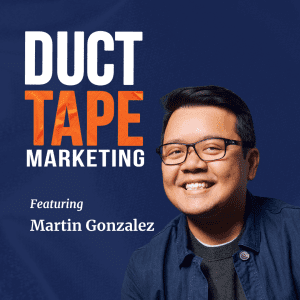
In this episode of the Duct Tape Marketing Podcast, I interviewed Martin Gonzalez, a seasoned expert in startup dynamics and co-author of “The Bonfire Moment: Bring Your Team Together to Solve the Hardest Problems Startups Face.”

Martin Gonzalez is the creator of Google’s Effective Founders Project, a global research program that decodes the factors that enable startup founders to succeed. He also works closely with Google’s engineering and research leaders on org design, leadership and culture challenges. Martin is a frequent lecturer at Stanford, Wharton and INSEAD, and has advised leaders across the Americas, Europe, Africa and Asia. He studied organizational psychology and behavioral science at Columbia University and the London School of Economics.

Martin shares invaluable insights into transforming startup challenges by revolutionizing team dynamics through a powerful workshop known as the Bonfire Moment.


Key Takeaways

Martin Gonzalez highlights the critical need for startups to address people issues early on, citing the Bonfire Moment workshop as a powerful tool for transforming team dynamics. By fostering open communication, self-reflection, and conflict resolution, startups can establish a healthy culture conducive to sustained growth. Implementing the Bonfire Moment workshop proactively enables startups to mitigate risks, promote collaboration, and optimize team performance, ultimately positioning them for success in today’s competitive landscape.

Questions I ask Martin Gonzalez:

[01:31] Is there a set of hardest problems startups face or does every case differ?

[02:41] Explain the concept of the one-day get together

[04:25] How do you effectively set up the one-day sessions up for success?

[04:30] What about people who have doubts about links?

[07:53] What have you learned from your experience facilitating healthy arguments?

[10:03] Would you say that a lack of leadership training is a blindspot for most founders?

[12:31] To what degree soes self-awareness of the leader play a role?

[13:14] Do you think it’s possible to be genuinely successful without a healthy culture?

[15:18] How important is it to have a second-in-command in the rare case of an apathetic leader?

[16:33] What are some of the tell-tale signs that show founders might need to start looking towards a bon fire approach?

[17:45] What does a typical agenda look like on a Bonfire day?

[21:03] Where can people connect with you and learn more about the Bonfire moment?


More About Martin Gonzalez:

  • Connect with Martin on LinkedIn
  • Visit his website and preorder The Bonfire Moment here


Like this show? Click on over and give us a review on iTunes, please!

Connect with John Jantsch on LinkedIn


This episode of The Duct Tape Marketing Podcast is brought to you by Work Better Now


Visit WorkBetterNow.com mention the referral code DTM Podcast and get $150 off for your first 3 months.

Testimonial (00:00): I was like, I found it. I found it. This is what I've been looking for. I can honestly say it has genuinely changed the way I run my business. It's changed the results that I'm seeing. It's changed my engagement with clients. It's changed my engagement with the team. I couldn't be happier. Honestly. It's the best investment I ever made. What

John (00:17): You just heard was a testimonial from a recent graduate of the Duct Tape Marketing certification intensive program for fractional CMOs marketing agencies and consultants just like them. You could choose our system to move from vendor to trusted advisor, attract only ideal clients, and confidently present your strategies to build monthly recurring revenue. Visit DTM world slash scale to book your free advisory call and learn more. It's time to transform your approach. Book your call today, DTM world slash scale.

(01:03): Hello and welcome to another episode of the Duct Tape Marketing Podcast. This is John Jantsch. My guest today is Martin Gonzalez. He's the creator of Google's Effective Founders Project, a global research program that decodes the factors that enable startup founders to succeed. He also works closely with Google's engineering and research leaders on org design leadership and culture challenges. We're going to talk about a book he co-authored The Bonfire Moment, bring your team together to solve the Hardest Problems Startups face. So Martin, welcome with the show.

Martin (01:37): Thanks for having me, John.

John (01:39): So is there a set of the hardest problems startups face or is it different for everyone?

Martin (01:45): Well, what's interesting is that there's a lot of research that talks about the top reasons for failure in among startups. There's a few decades of research actually, and what has been revealed by some studies out of Harvard and McKinsey is that 65% of startups fail because of people issues, and we see that in our work with startups across 70 countries today. Bill Curran, who is now a Sequoia Capital partner, said it really well once he said, engineering is easy, people are hard, which is something we like that verbiage

John (02:22): You in fact, in the writeup for the book description of the book, you actually start with building team is harder than building tech. So obviously we're going to dive into that a little bit. One of the things that I thought was interesting is that one of the core, I guess, tactics that comes out of the book is this idea of the all day get together. So talk a little bit about that.

Martin (02:46): Yeah, so the book actually shares with really the world now a workshop that we had built within the Google Accelerator about nine years ago now. Back then we had a lot of content around engineering and marketing and sales, and then when we discovered this research around why startups fail, I asked for a small budget to pilot something and then it was in Jakarta, but when we brought it there, it was rated pretty highly against even some of these really valuable programs around engineering and marketing and sales. We thought, okay, probably an anomaly. Let's try again. We tried it in Bangalore, and again, it received such rave reviews that we brought it to Sao Paulo and essentially it's reached all these countries and what we do in the book is we take what was several variations of that workshop and bring it down to a single day that founders and teams can really run on their own.

(03:44): It's called the bonfire moment because we found that in our work with these leaders, when you bring together really ambitious teams, big goals and tight resources, there's a certain kind of intensity that the team creates that feels a bit like you're in the fire constantly. And so the bonfire moment is a chance for the team to step out of that fire and examine it together, bandage up relational wounds, get back in touch with the mission and really prepare themselves for that next push. As you know, the startup life is you're constantly going from one trek to the next. So the bonfire moment is that workshop.

John (04:26): So I think in theory, I can envision this being this one day workshop that you run yourself being very effective and as you said, get people back on kind of the mission. But I also see a lot of ways it could go sideways, just kind of turn it into a bitching session or like, what's wrong here? How do you set it up for success?

Martin (04:45): Yeah, I'll give you some ways in which it's gone sideways, but I think specifically around how does this not turn into bickering and digging up additional arguments that weren't there to begin with? The ethos of the workshop is actually precisely that, which is, let's dig up all the many people challenges that we have conveniently ignored because there were many other things that were more important during that time. We talked in the book about one of the biggest traps that we've seen startups face is this thing we call the trap of speed, which is when you're running super fast, it's easy to forget about some of the more subtle issues that really could hurt you in the long run. I mean, we find that it's the people stuff that tends to get swept under the rug, and so we create a structured environment where people can raise some of these challenging issues, but really talk about it in a productive way.

(05:44): One of my favorite parts of the bonfire moment is what we call the bullshit circle, and the premise of the bullshit circle is that a lot of leaders, people in startups or in startup environments find themselves struggling with a lot of self-doubt and insecurity, and what tends to happen is that the way they mask that is through a few different ways that tends to contribute to some kind of a toxic environment for the team, whether it's a toxic form of optimism or a toxic form of showing strength or detachments. We talk about those three things actually. We talk about optimism, strength, and detachment as ways that people mask their insecurities, and we invite them to reflect on what is their cocktail of poison, so to speak, that they tend to use in these moments of deep insecurity, and it then invites people to then share that openly and then talk about how that maybe shows up and invites their team to say, look, when you see this in me, really what you're seeing is a coping mechanism.

(06:49): So we try to create a fairly structured environment so that a lot of this is done in a productive way. The one thing I will say really quickly that I think has gone sideways in these programs is we've seen some startups actually recognize that they have some issues that are just insurmountable and that they almost have to use kind of marriage language, some kind of irreconcilable differences, and some startups have parted ways after they've had this experience. Now, is that a failure of the workshop? We'd like to think that it's not because then what we've done for this team is we've allowed them to be see that sooner and part ways and perhaps apply those learnings and their next thing. Founders are never one-time founders. They tend to found again and again. So that's one way you'd say it's gone sideways, but really we see it as a positive. Ultimately.

John (07:42): Yeah, that's like ending a relationship that rather than hanging on with nobody being happy for two more years or whatever, recognize that it's over and part ways amicably. You talk about the idea of facilitating healthy arguments. What have you found that creates

Martin (08:00): The best teams we've seen have a lot of conflict, but it's conflict of ideas and not of personalities. There's a really fun story we tell in the book by a figure in the history of computer science. His name is Bob Taylor. He was a lab manager back in what was called Xerox Spark. Xerox Spark was the place where Bob Taylor was not himself a researcher. He was not himself coding and building the hardware and the tech, which was for him a big upside. He talked about how one of his biggest jobs as a lab manager was to convert class one disagreements to class two disagreements. Let me explain what he meant by that. Class one disagreements are essentially disagreements that feel like straw man arguments where John, if you and I had a disagreement, a really easy way to win that argument is I represent your idea in its weakest form possible and therefore making it easy for me to attack it and to refute it. A class two disagreement on the other hand is where you share your point of view, John, and I'm able to share back to you your point of view in a way that is satisfying to you. So instead of a strong man argument, I create a strong man argument and Bob says that his job isn't to resolve disagreements, it's to make sure that all disagreements graduate from class one to class two disagreements. I think that's one really useful thing that managers and leaders everywhere could really think about.

John (09:38): So one of the things that I've certainly recognized, and I'm sure you've recognized working with startup founders, a lot of startup founders never got any kind of formal leadership training. I mean, they had an idea, they jumped into it, they tried to make it happen, and then next thing they turn around and there's 15 people standing around that they really have no skills, but maybe just no experience on how to manage. Do you feel like that's really the sort of the blind spot for most startup founders?

Martin (10:08): Yeah, and I think that's why this workshop really gained popularity, not because there was anything groundbreaking about it, but really it's because a lot of founders come into this work wanting to just build product, and they realize that as soon as they need to scale this product, they need to put a team around it and then build a company around it if they wanted to scale. And so indeed, I think there's another element to this too, John, which is there's something in our culture that looks at these people problems as maybe not that difficult to solve for, and you'll see that in the language. People will say, oh, it's not rocket science, but we write in the book actually that what's ironic about that statement, it's not rocket science, is that as a civilization, we're incredibly good at rocket science. We can launch a person on the moon within two kilometers of the estimate, but we're not so good at the people stuff. So it's an interesting expression in our culture.

John (11:07): It's my pleasure to welcome a new sponsor to the podcast. Our friends at ActiveCampaign, ActiveCampaign helps small teams power big businesses with the must have platform for intelligent marketing automation. We've been using ActiveCampaign for years here at Duct Tape Marketing to power our subscription forms, email newsletters and sales funnel drip campaigns. ActiveCampaign is that rare platform that's affordable, easy to use, and capable of handling even the most complex marketing automation needs, and they make it easy to switch. They provide every new customer with one-on-one personal training and free migrations from your current marketing automation or email marketing provider. You can try Active Campaign for free for 14 days and there's no credit card required. Just visit activecampaign.com/duct tape. That's right. Duct Tape Marketing podcast listeners who sign up via that link will also receive 15% off an annual plan if purchased by March 31st, 2024. That's active campaign.com/duct tape.

(12:12): Now, this offer is limited to new active campaign customers only, so what are you waiting for? Fuel your growth, boost revenue and save precious time by upgrading to active campaign today. So a lot of trying to think of the way to say this, A lot of the leadership dysfunction, there's a good way to say it probably comes about because we talked about not having the experience, but also maybe their own fears and insecurities are really masked by having to be in charge. What level or to what degree does self-awareness of the leader play a role?

Martin (12:48): I think it's huge though. I will say that I have learned in my years of supporting leaders that I think it's important to firstly know thyself and then get over thyself, which I think is an element of the advice that is often lost, which is it's important to know what your defaults are, who are you authentically, and then recognize what context you're in and then make the shifts accordingly. I think being completely, I think just being completely yourself and knowing yourself is not nearly enough.

John (13:25): Do you think it's possible to build something extraordinary without a healthy culture?

Martin (13:33): So surely we've seen a lot of really successful companies get built on a very toxic environment, and when founders come to me and ask me, well, how about this company and that company? My often response is that I go by the data. You can be an anomaly where you kind of beat the norm where you can create very toxic environments and beat the odds and build something tremendously successful, and then you can go by the data where the data shows that good healthy cultures actually surpass. There's this really interesting study that was done out of Germany, a university in Germany. They looked at about four decades of data and they looked at what was the real economic upside of a healthy culture. What the study showed was that on regular years, on decades where there was not a big financial crisis, the benefits of a culture were very subtle, almost nil. It's in those crisis decades during the global financial crisis or the.com crisis. That's where you saw the real upside of these healthy cultures. And so we tell founders that the value of a good culture is subtle in calm waters, but pronounced in a storm.

John (14:51): I think we saw that from the pandemic. Frankly, the whole quiet quitting thing was really just people saying, I don't want to work here anymore.

Martin (14:59): And look, John, if you look at all the really successful toxic companies these days, I'll bet you that the moment their stock drops by a bit, their best people are gone. Money and a big mission can only keep someone there long enough for so long. At some point, good people realize they have options and they go,

John (15:24): I don't think you talk about this in the book, but I'm curious, let's say a startup. I mean there are some people that just aren't good people that don't have empathy, that don't have self-awareness. Maybe how important is it to maybe find a second in command, so to speak, type of role that can play that part for a founder?

Martin (15:42): So I think it definitely can mitigate, it can definitely help. There are certain things you just can't delegate, like being a decent human being to your team. There's a really interesting study that,

(15:56): There was an interesting study that came out of MITI believe, that looked at whether adult supervision actually helped mitigate some of the downsides of maybe an inexperienced founder, CEO. And you see this a lot in the startup in the tech startup world, and what it found was that adult supervision actually was effective if the founder CEO had the certain amount of openness and allowed the adult in the room to make decisions on their behalf. But in environments where founder CEOs have brought in the token adults and then anyway made decisions themselves without giving control to the adults in the room, then you see no, in fact, you might even see negative effects of that.

John (16:44): What are some of the signs that a founder should start recognizing that would say, Hey, we need to do something intentional, like a bonfire type of approach.

Martin (16:55): We like to tell founders that you should do the bonfire moment as early in the journey as possible. We see this as good prevention now. We've also seen a lot of breakthrough in founder teams in startup teams when they do it even down the line. I think when you start to see elephants in the room, those issues that everyone knows about but no one wants to talk about, that's one red flag. When you see issues where their feelings of unfairness between equity holders, that's another red flag. When people are feeling like we're not as committed as one another, we aren't pulling our weight to make this succeed. Those are other signs too, but I'd say as early as possible is always better.

John (17:44): Yeah, it's probably harder to fix a damaged culture than it is to just create a good culture, right?

Martin (17:49): Yeah, no, this is true. It is so true.

John (17:52): Yeah. So walk us through, and it doesn't have to be the full one, but walk us through what a kind of typical agenda of a bonfire day. Is that what you call it? Bonfire day?

Martin (18:01): Well, we call it the bonfire moment. It's four parts. It's facing hard truths. It's part one. Part two is noticing hidden dynamics. Part three is dropping the masks, and then part four is resolving unspoken issues. So at the start of the day, we really begin by creating a moment for feedback and self-reflection. We ask founders to think about how they're performing as members of that team. We offer them a self-assessment, which they can access through our website. It has them reflect on what we've seen to be the best strategies that founders have deployed, and through that exercise, we then invite them to help each other through some of the biggest gaps that they've seen. By the way, for those who want to go even deeper, we also have an option for them to do a 360 degree feedback option where they invite feedback from their co-founders, their employees from their investors, and then we ask them to write up what we've called a user guide, which is part two, which is we invite them to think about what are some of the defaults I have as I do my work.

(19:11): We also invite them, and this is one of the more popular parts of the user guide, we invite them to reflect on what are their motivations for being here. We talk about the head heart in the wallet as what we've found to be three of the most typical motivations that founders or startup folks bring into their work. It's either head, is this about the intellectual challenge of solving a difficult problem with very elegant technical solutions? Is it hard? Is it because you're committed to a user group that you want to improve their lives or improve some part of that industry? Or is it wallet, which is yes, money, but it's also what we've called a social wallet, which is I get access to people, I get to associate with other people or have a title that I would otherwise not have because of this without this startup.

(20:01): So that's the second part of the day. Then we invite them to what I've mentioned earlier on called the bullshit circle, which is we invite them to reflect on the biggest insecurities they bring, and then finally, we then have them look through really the top 20 sources of conflict that we've seen in our work with startups, and we invite 'em to reflect on which of those 20 items have they not yet prepared for or spoken about. And to give you a sense, we talk there about how do we want to spend our money or do we value things like an expensive office space, or if the media asks one of us to represent the work, who's going to be that spokesperson? Because we've seen this phenomenon of the Invisible Founder where there's a spokesperson that's public, meanwhile everyone else is working hard in the back room. You don't want that kind of imbalance of receiving recognition for the work. And that's the day, as you can imagine, it's an intense day. It's intense, it's uncomfortable. It's teams emerge from that day with a lot of renewed energy for the work.

John (21:09): Awesome. Well, Martin, I appreciate you taking a moment to share with the Duct Tape marketing audience. You want to invite people where they might connect you and obviously find out more about the bonfire moment.

Martin (21:19): Yeah, great. And thank you for having me. So you can find more information on bonfire moment.com, and we're also active on LinkedIn, and so you can find us there. Thank you so much for having me, John.

John (21:30): You bet. Well again, appreciate you. Bye-Bye. And hopefully we will run into you one these days out there on the road.


from Duct Tape Marketing https://ift.tt/HlSp6N8
via IFTTT

Tuesday, April 2, 2024

Premium Pricing for Professional Services

Premium Pricing for Professional Services written by Shawna Salinger read more at Duct Tape Marketing

Are you tired of the race to the bottom in pricing your professional services? Pricing is tough and it pushes many to commoditization. There’s a better route: premium pricing. Charging a premium elevates your services above the price wars but also transforms the very nature of your client relationships.

In this post, I’ll share keys to a premium pricing strategy for your professional services. After reading this, you’ll understand the role of messaging and how to build long-term client relationships. You won’t just be adding a few dollars to your rates; you’ll completely change how you’re perceived in the marketplace and how you deliver your services.

Table Of Contents:

Eliminate Commodity Thinking in Your Pricing Strategy

When you start treating your services like they’re just another product on the shelf, you’re headed down a slippery slope. Commodity thinking is by far one of the most common pricing tactics out there and is a surefire way to get stuck in a race to the bottom. 

If you want to charge premium rates and stand out in your market, you’ve got to shift your mindset and eliminate commodity thinking.

So, what exactly is commodity thinking? It’s when you start viewing your services as interchangeable with everyone else’s. With this approach, you’ll be selling packages that focus more on a certain set of deliverables than a strategic solution. 

The Impact on Pricing Strategies

When you treat your services like a commodity, it has a big impact on your pricing strategies. You start feeling pressure to lower your rates to compete with everyone else. 

But that’s a losing game. You end up working harder for less money, and it’s tough to sustain long-term. If you want to charge premium prices, you need to break free from commodity thinking and focus on providing a valuable solution. Often, it’s fear that holds people back from charging premium rates, because it’s scary to be different from everyone else.

Premium Pricing Approach: Selling Solutions, Not Hours

In the professional services realm, the traditional billing model has long been trading time for dollars. But here’s a transformative thought: what if instead of selling hours, we sold solutions? 

When you trade time for dollars, you inherently limit your growth. There’s a cap to how many hours you can work and, consequently, how much you can earn. 

More critically, this model positions your services as a commodity, where the only differentiator becomes your hourly rate. It’s a precarious position that invites price comparison and undermines the unique value you bring to your clients.

Offering Complete Solutions

Selling complete solutions means focusing on the outcome you deliver, not the hours of work it takes to get there. It’s about understanding the profound challenges your clients face and offering a packaged solution that addresses these challenges head-on. This approach doesn’t just elevate your services; it makes you an indispensable partner in your client’s success.

premium pricing

Here are a few key benefits of selling solutions over time:

Value Perception: Your clients aren’t just paying for your time; they’re investing in a result that has a tangible impact on their business or life. This shifts the conversation from cost to value.

Scalability: Solutions can be scaled and replicated across clients without directly increasing your workload. This opens the door to exponential growth that isn’t possible when you’re limited by the number of billable hours.

Differentiation: By offering a complete solution, you differentiate your services based on the unique outcomes you deliver. This sets you apart in a crowded market where many are still selling time.

Implementing Premium Pricing

Making the transition from selling time to selling solutions begins with a deep dive into understanding your clients’ needs and the challenges they face. It involves productizing your services in a way that clearly articulates the end result and the path to get there. 

It also requires confidence in the value you provide, allowing you to price based on impact rather than effort. Lack of understanding is a top customer complaint when it comes to professional services. If you can demonstrate that understanding, you’ll have a major competitive advantage.

Premium Pricing Through Trust and Value

In order to command premium pricing, you’ve got to build trust with your clients and demonstrate the value you bring to the table.

One effective way to do this is by creating productized packages that offer clear value propositions. When clients can see exactly what they’re getting for their money, they’re more likely to invest in your services.

Crafting Productized Packages

To create a productized package, start by identifying a specific problem or need that your target clients have. Then, develop a solution that addresses that problem in a comprehensive way.

Your package should include all the elements needed to achieve the desired outcome, whether that’s a certain number of consulting hours, a set of deliverables, or access to specific resources.

The Role of Initial Engagements in Building Trust

Initial engagements are another great opportunity to build trust and set the stage for premium pricing. When you knock it out of the park on one project, clients are more likely to invest in an ongoing engagement.

Use these initial projects to demonstrate your expertise, reliability, and value. Aim to provide outstanding results, and you’re on your way to justifying those top-tier prices.

Establishing Long-term Client Relationships

Finally, don’t underestimate the power of long-term client relationships in sustaining premium pricing. When you build strong, ongoing partnerships with your clients, they’re more likely to see the value in your services over time.

Aim to always bring your A-game and knock customer service out of the park. Check in regularly to ensure you’re meeting their needs and exceeding their expectations.

By creating a productized package with a clear value proposition and set pricing, you can attract clients and build trust. And by developing that trust through an initial engagement, you can lay the foundation for long-term client relationships and recurring revenue.

Key Takeaway: 

Stop seeing your services as just another option out there. Your unique skills and approach are your ticket to premium pricing. Focus on what sets you apart, communicate that value clearly, and build trust with top-notch results.

Becoming a Premium Brand 

If you want to charge premium prices, you can’t focus on transactions. You’ve got to build real, meaningful relationships with your clients. 

This is how you become a premium brand – a must, since brand-based referrals are a limitless source of clients, if you can get them. 

Creating Brand Loyalty Through Transformational Relationships

Transactional relationships are all about the here and now. You provide a service, the client pays you, end of story. There’s no real depth or ongoing connection.

But transformational relationships? That’s where the magic happens. You become more than just a service provider – you’re a trusted partner invested in your client’s success.

And here’s the thing: clients are willing to pay a premium for that kind of relationship. When you’re truly in their corner, price becomes less of an issue. They know your value.

Strategies for Cultivating Customer Loyalty

So how do you build these game-changing relationships? It starts with really listening to your clients. Don’t just hear their words – dig into their challenges, goals, and aspirations.

Show up consistently. Be responsive and reliable. Anticipate their needs and go the extra mile to deliver. Continuously look for ways to add value beyond the scope of your engagement.

Invest in your clients’ growth. Let others in on what you know, connect them with the right people at the right time, and don’t hold back on celebrating their successes. Show that you’re not just there to invoice them – you’re genuinely invested in their success.

There is less competition in charging premium pricing for professional services compared to lower price points.

Remember, transformational relationships take time. But when you get them right, you’ll have clients who stick with you, advocate for you, and happily pay your premium prices. That’s the power of going beyond transactions.

High Value Messaging for Premium Pricing

Your pricing is premium, and your messaging should be too. The way you communicate your value plays a huge role in justifying those premium price tags.

But here’s the key: it’s not about you. The most effective messaging is all about your client. Let’s dive into how empathy and targeted communication can be your secret weapons for premium pricing success.

Empathy as a Marketing Strategy

Empathy is everything. Put yourself in their shoes. What keeps them up at night? What does success look like for them? 

The more you can empathize with their situation, the better positioned you’ll be to communicate your value.

When your messaging comes from a place of genuine understanding, it resonates on a deeper level. Clients feel heard, understood, and confident that you’re the right partner to help them achieve their goals.

Marketing to High Value Clients

Generic messaging just won’t cut it. To nail that higher price point, your messaging has got to hit the bullseye with the people you’re really trying to reach.

Speak their language. Use the words, phrases, and examples that resonate with them and their specific challenges. Show that you “get” them on a fundamental level.

Highlight the outcomes and transformations you help clients achieve. Paint a vivid picture of what success looks like – and how your premium services are the key to getting there.

Use case studies, testimonials, and storytelling to bring your value to life. Show the real, tangible impact you’ve had on clients just like them.

Keep in mind, getting your message across isn’t about showing off or trying to be too cute. It’s about communicating your value in a way that deeply resonates with your target audience and makes your premium pricing feel like a no-brainer.

Key Takeaways: 

Want premium prices? Build real, deep connections with clients. Go beyond transactions to become a trusted partner in their success.

Listen deeply, show up consistently, and invest in your clients’ growth. This approach makes price less of an issue because they see your value.

Your messaging should scream empathy and understanding. Speak directly to client challenges and how you’re the solution, making premium pricing feel justified.

The path to charging more for your professional services is built on a foundation of strategic messaging, empathy, and clear differentiation. It’s about shifting focus from the service you offer to the solution you provide—a solution to a problem so well understood and articulated that your target client feels seen and heard in a way they haven’t before.

Adopt this approach, and you’re not just selling services; you’re building relationships and creating value that justifies premium pricing. This is how you distinguish yourself in a crowded market and build a sustainable, scalable business model centered on meaningful client relationships.


from Duct Tape Marketing https://ift.tt/X1PmkrH
via IFTTT

Fractional CMO Insights Survey: Why Businesses Hire Them & How to Become One

Fractional CMO Insights Survey: Why Businesses Hire Them & How to Become One written by John Jantsch read more at Duct Tape Marketing

What is a fractional CMO? What does it take to be one? 

And what is the benefit of a part-time marketing leader to companies? To the CMO? 


What is a Fractional CMO?

Think of a fractional CMO (fCMO) as a highly experienced marketing strategist on a part-time basis. They bring the expertise of a full-time CMO without the full-time cost commitment. But how does this model benefit businesses and marketers? 

In this post is hot-off-the-presses survey data from strategic marketing agency, Duct Tape Marketing,   Databox, and ActiveCampaign shows why fractions of a CMO’s time may be worth more than the whole.

For more information on what a fractional CMO does check out the Ultimate Guide to Scaling a Fractional CMO Business.


First of its Kind Fractional CMO Survey - Key Findings

Our survey polled over 260 respondents, including fractional CMOs, agencies using the model, and businesses who hire them. This gave us unique insights into the reasons behind its popularity and the potential benefits for all involved.


  • Adoption is booming. Almost half (48.6%) of respondents said they are currently working as fractional CMOs. Survey results show that most fractional CMOs are in demand for their strategic guidance and cost-effectiveness.
  • Experienced marketers thrive.  Over 70% of fractional CMOs indicated having more than 10 years of marketing experience.
  • Strategic services are key. Services like strategic planning (92.67%), marketing strategy development (88.67%), and content strategy (82.67%) ranked as top fCMO services.
  • Professional Services and SaaS industries lead. These industries see the biggest benefits from an fCMO, with SaaS/Software/Tech (65.33%) and Professional Services (55.33%) being  the top client industries.
Key Discovery: Businesses aren't just saving money with fCMOs – they're gaining access to top-tier strategic guidance that can transform their marketing results.

The Ideal Fractional CMO Profile

Our survey reveals the skills and experience that set top performers apart. While a solid marketing background is important, strategic thinking and adaptability are just as crucial. To thrive as a fractional CMO, be ready to offer in-demand services like strategic planning and digital marketing, while excelling at communication.

The 2024 Fractional CMO Insights Survey shows the ideal fractional CMO profile:

  • Most have 10+ years marketing experience
  • Balanced to busy workloads reflect healthy demand
  • Provide strategic planning, marketing strategy, content strategy, digital marketing, and other marketing services
  • Strong communication skills and ability to develop strategies are crucial
  • Clients are mainly in SaaS/tech and professional services


Market Opportunities for Companies and Fractional CMOs

Businesses are increasingly choosing fCMOs for their strategic expertise and specialized skills, particularly in digital marketing. This model offers cost-effective access to senior-level guidance and an unbiased perspective on marketing challenges. While finding the right fCMO takes some effort, the benefits make this a highly attractive option for many companies.

Why are businesses turning to the fractional CMO model?

  • Strategic Guidance: Companies seek fCMOs for their expertise in developing winning marketing strategies.
  • Specialized Skills: In-house teams often lack the niche knowledge fCMOs offer, especially in digital marketing.
  • Cost Savings: Fractional CMOs provide senior-level guidance at a fraction of the cost of a full-time hire.
  • Unbiased Perspective: Businesses value the fresh, objective insights an fCMO brings.


Implications: A Thriving Market for Strategic Marketers

Our survey highlights a significant demand for experienced marketers willing to work on a fractional basis. This presents several opportunities:


  • High-Value Services: Fractional CMOs can provide strategic guidance and specialized marketing expertise, becoming invaluable extensions of their clients' teams.
  • Skill Development: This model encourages continued growth in strategic planning, digital marketing, and other high-demand skills.
  • Essential Soft Skills: Emphasizing flexibility, communication, and strategy development are crucial for success in the fCMO role.
  • Industry Specialization: Focusing on clients in SaaS/tech and professional services will maximize your impact and streamline your client acquisition efforts.


The 2024 Fractional CMO Survey Results

The survey reveals a growing trend in adopting the fractional CMO model, driven by its strategic benefits, above everything else - for all parties.

The demand for these roles is reflected in the balanced to busy workloads of current fractional CMOs. Success in this model requires a blend of extensive marketing experience, strategic and digital marketing skills, and strong soft skills like communication and adaptability.


Who Did We Survey?

Of 261 respondents who took the survey, almost half (48.66%) are currently fractional CMOs. 17.62% are agencies currently offering fractional CMO services, 14.56% are considering becoming a fractional CMO, 6.13% are companies that hired a fractional CMO, 4.60% are agencies considering offering fractional CMO services and 2.68% are companies considering hiring a fractional CMO. 5.75% didn’t fit in any of the offered options. 


Fractional CMO Perspective

There are 128 Current fCMOs and 38 who are considering becoming a Fractional CMO.


The Workload of a Fractional CMO

Fractional CMOs mostly describe their workload as balanced (26.49%) or busy (25.83%), indicating a healthy service demand. The majority have substantial experience in marketing roles before becoming a fractional CMO, with over 70% reporting having more than 10 years of experience.

How Fractional CMOs Work with their Clients

Respondents have top-ranked Strategic planning.

Main Services Offered by Fractional CMOs

Key services provided by fCMOs include strategic planning (92.67%), marketing strategy development (88.67%), content strategy and development (82.67%), digital marketing (78.67%), brand positioning and messaging (78.67%), Customer Segmentation and Targeting (72%), Brand Development (68.67%), Marketing Operations (67.33%), Lead Generation Strategies (67.33%), Product Launches (58%), and Marketing Technology (tech stack) Consulting (50.67%). This diverse range of services highlights the broad skill set required for the role.

Crucial success factors for most of them are client communication skills, comprehensive strategy development and flexibility to adapt to client needs.

Main Industries for Fractional CMO Work

Fractional CMOs primarily work with clients in SaaS, Software or Technology (65.33%) and Professional Services (55.33%), highlighting these industries' need for marketing expertise.

Find the Right Fractional CMO for Your Business - Ideal Fractional CMO Profile

10+ years of expertise; strong foundation in various marketing disciplines (hard skills) with focus on Strategy development and Digital marketing, while also possessing excellent soft skills like communication and adaptability. Targeting industries like SaaS, Software or Technology and Professional Services could be a wise initial focus.


Marketing Agencies: The Benefits of Adding Fractional CMO Services

Agencies are getting into the fractional CMO game too! Here's why:

  • More strategic positioning: Offering fCMO services boosts an agency's strategic value. This was reflected in survey responses, where 'Makes us more strategic as an agency' was a top benefit for agencies.
  • Stronger client relationships: Clients get more personalized marketing leadership.  'Enhanced client relationships' was another highly ranked benefit for agencies offering fCMO services.
  • Adapting is easy: Most agencies find the shift to offering fCMO services smooth.  [Insert the percentage of agencies who found adapting their model easy].

There are 46 agencies currently offering fCMO services and 12 agencies that are considering offering Fractional CMO services.


More Agencies are Adapting the Fractional CMO Model and Services

Most of the agencies stated that they are engaged in the fCMO concept in some way: 17.65% are Actively engaged, with numerous ongoing engagements, 47.06% are Moderately engaged, with a few ongoing projects, 21.57% are exploring the model and considering future engagements.

More Strategic Positioning

Main areas in which they help clients: main areas in which agencies most often provide (or plan to provide) assistance with Fractional CMO services are Strategic planning, followed by Digital Marketing.

Adoption is Easy

Adapting to the model: Most agencies experienced slight to no challenges adapting agency services to fit the fCMO model. No agency found it very challenging.

Strong Client Relationships

Benefits: As the primary benefits for agencies offering Fractional CMO services, Agencies mostly stated that it Makes them more strategic as an agency and Enhanced client relationships.

Success Factors: For most agencies, the Ability to develop comprehensive strategies, Client communication skills and Flexibility to adapt to client needs are crucial for success.

Client Industries: Agencies offering fCMO services primarily work with clients in SaaS, Software or Technology (57.69%) and Professional Services (51.92%), highlighting these industries' need for marketing expertise.

Adapting to the model isn’t challenging for most agencies. On the other hand, the benefits of including the model are substantial - it’s about positioning own business as more strategic and enhancing relationships with clients. The industries they work with are, as for fCMOs - SaaS and Professional Services. Also, agencies rank soft skills are crucial for the success.


Business Owners: Find the Right Fractional CMO for Your Business

There are 16 companies that hired a Fractional CMO and 7 that are considering hiring a Fractional CMO

Top-ranked factors influencing companies’ decision to hire are the Need for specialized expertise, cost-effectiveness (compared to a full-time CMO), and desire for unbiased guidance, and the need for specialized expertise.

What drives businesses to hire fCMOs? It's about:

  • Top-tier expertise: Specialized knowledge is harder to find in-house. 'Need for specialized expertise' was a top factor influencing companies' decision to hire an fCMO.
  • Cost savings: Get senior-level guidance without the full-time salary. 'Cost-effectiveness' also ranked as a major reason for hiring.
  • Outside perspective: fCMOs offer unbiased advice for better decision-making. The 'Need for unbiased guidance' was another significant hiring factor identified in the survey.

Main areas they in which fCMO helps them: Respondents top-ranked Digital marketing and Strategic planning.

Companies reported encountering slight challenges in finding a suitable fractional CMO.

When it comes to the greatest benefits attributed to hiring a fractional CMO, companies have top-ranked Strategic expertise. Cost savings come as second.

When it comes to the importance of the factors when choosing a Fractional CMO to hire, the companies have top-ranked Ability to develop comprehensive strategies and Depth of industry knowledge, closely followed by Flexibility to adapt to client needs and Understanding and navigating market Trends. Pricing is at the bottom.

Ready to Hire an Part-Time CMO or Become One?

Our survey shows significant demand for experienced marketers to fill fractional CMO roles. This model offers high-value services while fitting seamlessly into the way clients operate.

At Duct Tape Marketing we help business owners find the right fractional CMO to help them scale and for agencies we help them transition to the Fractional CMO model themselves.

Download our free growth tools to help get you started.

Free Marketing Strategy and Fractional CMO growth tools


from Duct Tape Marketing https://ift.tt/hWErIAt
via IFTTT

Monday, April 1, 2024

Weekend Favs March 30

Weekend Favs March 30 written by John Jantsch read more at Duct Tape Marketing

My weekend blog post routine includes posting links to a handful of tools or great content I ran across during the week.

I don’t go into depth about the finds, but I encourage you to check them out if they sound interesting. The photo in the post is a favorite for the week from an online source or one I took on the road.

  • CourseBox – Coursebox is designed to simplify course creatio. Ideal for educators and entrepreneurs alike, it leverages AI to transform your content into engaging, interactive courses with ease.”
  • HeyGen – HeyGen takes the guesswork out of generating engaging content. Perfect for marketers and content creators, it uses AI to craft posts that resonate with your audience, saving you time and boosting your creativity.
  • Descript – Descript is a game-changer for podcasters and video creators, offering an all-in-one editing platform that makes producing professional-quality media a breeze. If you’re looking to streamline your workflow and elevate your content, this tool’s for you.

These are my weekend favs; I would love to hear about some of yours – Tweet me @ducttape

If you want to check out more Weekend Favs you can find them here.


from Duct Tape Marketing https://ift.tt/Jbp0lTM
via IFTTT