Thursday, June 5, 2025

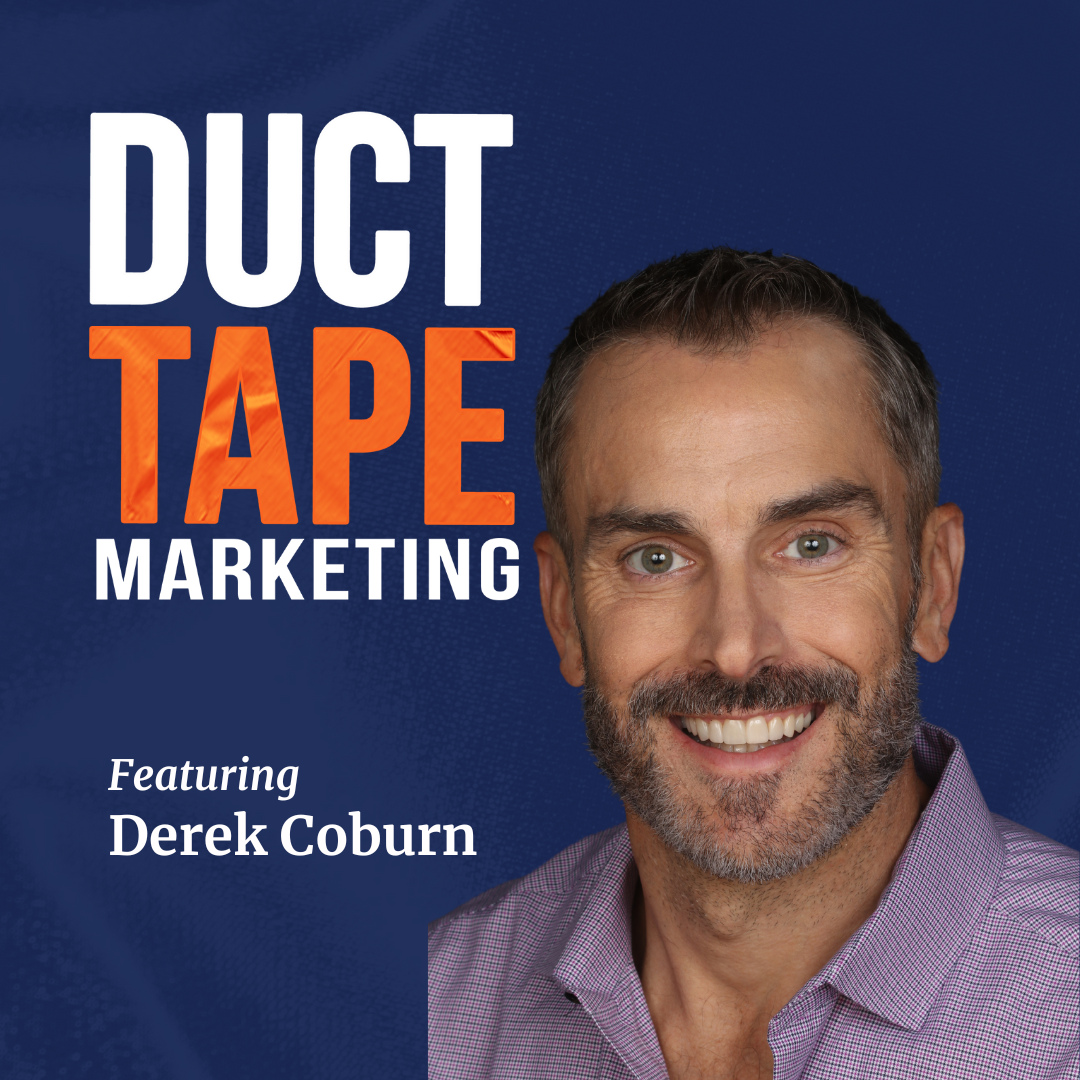
Why It’s Time to Retire the Idea of Retirement with Derek Coburn

Why It’s Time to Retire the Idea of Retirement with Derek Coburn written by John Jantsch read more at Duct Tape Marketing
 

Episode Summary

In this episode of the Duct Tape Marketing Podcast, host John Jantsch sits down with Derek Coburn — seasoned financial advisor, entrepreneur, and author — to challenge the traditional notion of retirement. With insights from his new book, Let’s Retire Retirement, Derek outlines why the current retirement model is outdated and how a mindset shift can help people live more fulfilled lives both now and later. Whether you’re a business owner, working professional, or planning for what’s next, this episode offers a fresh framework for thinking about purpose, wealth, and work-life design.

Listen to the Episode

About Derek Coburn

Derek Coburn is a financial advisor with over 25 years of experience and the co-founder of Cadre, a curated community of CEOs and entrepreneurs. He’s the bestselling author of Networking is Not Working and a sought-after speaker on networking, wealth strategy, and purpose-driven leadership. In his latest book, Let’s Retire Retirement, he reframes what it means to live a meaningful and financially secure life—one that doesn’t hinge on the outdated idea of “stopping work at 65.”

Key Takeaways

  • The modern concept of retirement is less than 150 years old—and it no longer matches today’s realities.
  • Living longer and more actively means we need to redefine what “working years” and “rest years” really mean.
  • Deferring joy for some idealized retirement later can lead to disappointment—the time to live fully is now.
  • Working longer can dramatically reduce the pressure to save aggressively in early and mid-career years.
  • Even entrepreneurs fall into the trap of deferring dreams until “after the exit”—a dangerous delay tactic.
  • Small shifts in financial strategy (like converting to Roth 401(k)) can have big long-term impacts.

Episode Highlights and Timestamps

  • 00:01 – Introduction and guest welcome
  • 01:00 – The true history of retirement: Bismarck, FDR, and outdated milestones
  • 03:00 – Why 25–30% of retirees are going back to work
  • 05:00 – The concept of redefining retirement for personal fulfillment
  • 07:00 – Entrepreneurs and the myth of “I’ll do it after I exit”
  • 09:30 – Real-world case study: Jay Baer’s pivot from agency to tequila influencer
  • 11:00 – Financial math: how working longer cuts required savings dramatically
  • 13:00 – The 401(k) rethink: taxes, Roth conversions, and planning smarter
  • 15:00 – Parenting, presence, and valuing your $50,000 moments
  • 17:30 – The mindset shift needed to fully embrace this new paradigm
  • 19:30 – Grandparenting, legacy, and how to stay connected across generations
  • 20:30 – Where to learn more and connect with Derek

Learn More and Connect with Derek Coburn

To dive deeper into Derek’s thinking and explore tools to reframe your financial future, visit:

Enjoyed This Episode?

If you liked this conversation, be sure to subscribe to the Duct Tape Marketing Podcast for more candid discussions with authors, entrepreneurs, and thought leaders shaping how we work and live. Share this episode, leave a review, and let us know what part of Derek’s perspective resonated most with you.

John Jantsch (00:01.085)

Hello and welcome to another episode of the Duct Tape Marketing Podcast. This is John Jantsch. My guest today is Derek Coburn. He's a seasoned financial advisor and entrepreneur with over 25 years of experience. He is the co-founder of Cadre, an exclusive community of CEOs and entrepreneurs, which he launched with his wife, Melanie. Derek is also the author of the bestselling book, Networking is Not Working. And we're going to talk about his latest book today.

Let's retire retirement, how to enjoy life to the fullest now and later. So Derek, welcome back to the show.

Derek Coburn (00:34.85)

Thanks, John. So happy to be here.

John Jantsch (00:36.797)

So I know you've done some research on this, so I'm just going to ask you, like, where did retirement come from? Did people in the Middle Ages retire, or is that like a kind of a new thing?

Derek Coburn (00:45.838)

Yeah, it's barely 100 years old. It first started in 1889. It was the first social program developed in Germany by a chancellor named Otto von Bismarck. And they selected the age of 70 at the time because that was the age that most people died. They brought it down to 65 about 10 years later.

FDR when he was setting up social security in 1935, thought it sounded like a good number at a time when life expectancy in this country was 71. So, you know, it's barely over 100 years old and it was certainly never intended to be this thing that you, you know, did for 30 plus years.

John Jantsch (01:28.883)

So is that, is that, is, was that an alternate title of your book? Work till you die?

Derek Coburn (01:35.328)

I'm not sure, you know, I think that might not have gone over as well. Dan Pink like five or six years ago told me, like, I think a good title for your book would be How to Never Retire. And I thought it's a good title, but I told him that I think that there's just not enough people, certainly not then, that were raising their hand and knew they already did not want to work. I felt like I needed to have a title that was more inclusive to bring people in and with, you know, with dangling a carrot and then kind of trick them once I got their attention.

John Jantsch (01:38.683)

You

John Jantsch (02:05.235)

Yeah. Well, and we'll get back to how you're defining retirement because that's key to this. you know, as a financial advisor, mean, most financial advisors spend a whole lot of time talking about people saving for retirement. So how, I mean, has that been something you've had to kind of correct in your own advising or is that something that's never really been a part of your MO?

Derek Coburn (02:27.694)

You know, I've just been doing this. And the reason that I wrote decided to write this book in 2017 is I realized that collectively the best thing that I had done for the majority of my clients is help them come to the realization that they weren't going to be happy sitting around doing nothing for 30 years. And I started off writing this book with the intention to use it as a business card to attract more high net worth clients that I might want to work with. But I sold my practice to a private equity company in 2019 and

got some flexibility and then COVID happened. I kind of set it aside for a number of years and I feel like now, because I'm not looking to grow that practice, I was able to write a book that would appeal to a broader audience, be helpful to a broader audience. to your point, financial advisors are not saying, do you want to retire? They're saying, what age do you want to retire? And everyone is being opted into this concept and they're just going along with it, I think, without really questioning whether it's going to make sense for them or not.

John Jantsch (03:27.251)

Yeah. And of course, one variable to this whole thing is that we're all living longer, right? mean, 65, you you were maybe incapable of doing a whole lot more, you know, a hundred years ago in the workplace, but right. now, you know, well, it's Warren Buffett, like 90. You know, I mean, so, so how does that factor into this idea that, you know, if you retired 65, I mean, you are probably looking at 25, 30 years.

Derek Coburn (03:38.765)

Yeah.

Derek Coburn (03:44.429)

Yep.

Derek Coburn (03:54.22)

Yeah, well, you're seeing this, this on, on retirement movement that's starting to happen. Brian Clark is doing some cool things around it with his new project further, but essentially 25 to 30 % of people who have, who have traditionally retired or going back to work. Some of them are doing it for the money, but most of them are doing it because they missed the connection, the purpose, the ability to, to, to contribute in, in a meaningful way.

And I think there's just a lot of people that have gone along with this. They were told if they made sacrifices and did things a certain way that they were going to be rewarded. They were going to be rewarded with this free time and this happiness and this ability to do whatever they want to do. it's not playing out the way that they thought it was going to.

John Jantsch (04:36.925)

Well, and even worse, maybe they worked themselves to the bone, worked more hours, sacrificed their family with the promise of what comes after, right? And then when they got there, it didn't come, right?

Derek Coburn (04:45.518)

Yeah.

Derek Coburn (04:49.802)

Exactly. Yep. Like the arrival fallacy, this promise that it would be a certain way and then it's not.

John Jantsch (04:55.719)

Yeah. So that's a big part of your book. And that's why I saying, I think you're saying let's retire retirement, but you're also redefining retirement. Aren't you a little bit in this and a big part of the book is like, let's have a personally fulfilling life right now.

Derek Coburn (05:10.882)

Yeah, I think that a lot of people just don't realize how well the math works out. So I'm saying to work longer, but I'm also saying that by recognizing that you'll probably work longer, it should translate into you not feeling like you have to work a lot of extra hours now when maybe your kids need you more, or maybe when you want to travel or date your spouse more aggressively. It's more about taking advantage of the fact that this income will be coming in in the future.

And it's sort of sponsoring the idea that you can do these other things and invest in these other relationships and skills and experiences in a way that maybe you didn't think you were able to when you wanted to stop at 65.

John Jantsch (05:48.243)

Your next book, I'm sorry I got distracted there, Derek, your next book is Date Your Spouse More Aggressively.

Derek Coburn (05:54.478)

That's maybe like the second or third time I've said that out loud, but.

John Jantsch (06:01.407)

So, you know, there's a book I read a few years ago that I thought made a lot of sense. I I might get the title wrong. was something like Die Broke, but the idea was that a lot of people also just hang on to all this money that they, you know, squirrel away for retirement instead of like giving it to their kids or their grandkids to send them to college now. You know, like my children when they're 55 probably don't need my money.

as, as much as they might now. And, I think that idea of take that, you know, take that vacation now, you know, do that big trip, you know, now, because when you're 75, 80, maybe you don't go to China or you don't go to Vietnam or something, because it's hard.

Derek Coburn (06:40.724)

Yeah, you I think you're referring to Die with Zero by Bill Perkins and really good book, you know, and I think that one area where maybe we differ a little bit is he's making the case that you're going to enjoy a trip to Europe more when you're 35 than when you're 50. You're not going to be as physically capable to do some of these things, but I'm of the belief, and there's a lot of science that backs this up, to where if you're taking better care of yourself now, if you're going on more trips now, if you're

John Jantsch (06:43.813)

Yeah, that's it. That's right. That's right. Yeah. Yeah.

Derek Coburn (07:09.29)

If you're more active now, you're more likely to be able to continue doing those things in the future. It's really the people that aren't doing those things that I think are going to have a harder time with

John Jantsch (07:14.803)

Yeah, yeah. Yeah, I'm actually an avid bike rider and I'm doing a triathlon this year, you know, and I'm 65 and my fear is if I stop doing those, I won't be able to do it anyway.

Derek Coburn (07:26.499)

Yeah.

Derek Coburn (07:31.424)

I think it's a valid fear and it's a fear well backed by science that agrees with you.

John Jantsch (07:35.953)

Yeah. I do have to let the cat out of the bag there. The triathlon I'm doing is a run fish drink. So not exactly, not exactly the same thing, but so you have obviously in your financial practice, I mean, that's, that's like literally your research lab, right? To some degree, but then also cadre, you know, you work with a lot of high powered CEOs, folks that run their own companies in that that are

Derek Coburn (07:46.85)

That's a good one. Yeah.

John Jantsch (08:05.117)

probably looking at, you know, they're not looking at the pension plan, you retirement. How has that kind of informed some of your views?

Derek Coburn (08:09.325)

Yeah.

Derek Coburn (08:12.738)

What's interesting is even the people that sort of know that they're never going to stop working, they're still living their life like they're going to. They're still making financial decisions and choices based on the fact they're going to retire at 65 like everyone else. So for example, when they meet with their financial advisors, they're saying, like, what do I need to do to stop working at 65 and to stop doing this? And I would say that with entrepreneurs and business owners, sometimes it's not

John Jantsch (08:28.465)

Run.

Derek Coburn (08:42.262)

retirement, but it's I'll get around to doing X once I have an exit, once I bring in a CEO, once I bring in someone else. And I think that that it's the same story. It's the it's justifying deferring maybe things in relationships that deserve more of your attention right now in the name of getting around to it once you have a certain amount of money or a certain financial experience or exit from your business.

John Jantsch (09:04.637)

Yeah, yeah.

Are you finding, you know, I think some, to some degree, we're talking about just extending how long you work, but what about a major pivot? You know, it's like, I've, I've been doing this for 30 years, done what I want to do here. I want to go do something different. I'm not going to retire, but I'm going to do something totally different. Maybe something that I think is seems totally cool or that I'm more prepared to do today.

Derek Coburn (09:28.59)

Yeah, like so I have an entire chapter. It's the longest chapter in my book that's that's that are case studies about people that have that have taken this and they've gone into a lot of different directions. And one one maybe that might be fun to share with you is just our mutual friend, Jay Bear, who I spoke with for the book and Jay sold his agency, I think early on in covid and was sitting around and decided he wanted to start making videos about tequila.

John Jantsch (09:43.475)

Mm-hmm.

Derek Coburn (09:54.73)

And, you know, so he went from that to really leaning into one of his passions and one of his interests. And after sharing the case study, I have a callback later in the book to say, look, I mean, if J. Bear can make a lot of money, you know, drinking tequila and talking about it on video, then I'm sure that there's a lot of different cool ideas out there that are waiting for you as well.

John Jantsch (10:17.489)

Yeah, that also necessitated some amount of travel to some places he hadn't spent time into. I think it really...

Derek Coburn (10:25.484)

I think he's mostly hurt by the fact that more people recognize him as the tequila guy than the keynote speaker.

John Jantsch (10:32.595)

He's still doing a fair amount of that too. talk about some of the changes, maybe they're not changes, but if somebody is going to read you, pick up your book and, and really the ideas in it just resonate. What are some of the changes that you they're probably going to encounter or, maybe it's just mindset.

Derek Coburn (10:54.57)

Yeah, one of the first things that I want to want to point out is just the financial impact it's going to have. And so I share an example in the book about a fictitious guy named Tony who's 45 years old. makes one hundred and fifty thousand a year and he has one hundred and fifty thousand dollars saved up for retirement. You could call it two fifty five hundred, one hundred thousand, whatever you want it to be. But if Tony wants to have a traditional retirement at sixty five, he has to save about twenty five hundred dollars per month in order to make that happen, which is.

20 % of what he's bringing home, which is a non-starter for most people. That would mean that you are saving about what you're living on. If Tony decides to work until he's 75 instead of 65, the amount he has to save on a monthly basis goes from 2,500 down to $110 per month. It goes down by 96%. And even if he doesn't want to work until he's 75, he wants to go until he's 70, it goes down 75 % to 600 bucks a month.

John Jantsch (11:40.136)

Mm.

Derek Coburn (11:50.518)

And so we've all seen these articles that make us feel really dumb about how we should have saved more when we were 22 years old and taking advantage of compounding interest. And while a lot of us didn't do that, and even if we would have done that, we weren't really earning a lot of money at that time compared to what we're earning now. Anyways, there aren't a lot of articles talking about the benefits of having the advantage of compounding interest by letting it sit in for an extra five or 10 years longer.

Immediately, I want people to know, I want people to see they have a lot more money and a lot more time that they can spend differently once they realize, you know, I'll probably be doing this a little bit longer than what I was originally thinking.

John Jantsch (12:28.657)

Yeah, I mean, doesn't even factor in, assuming it'll be there for a few more years. Doesn't even factor in the escalation to social security, right? Yeah.

Derek Coburn (12:36.022)

Yeah, exactly. I'll tell you like something maybe more specifically 401k plans became all the rage, mainly because the idea that I can put money away on a tax free basis while I'm working get a tax deduction based on my current tax bracket. And when I pull it out, I won't be working. So I'll be at a lower tax bracket. And that seems like a no brainer to anyone when you lay it out like that. But once

John Jantsch (12:42.259)

Mm-hmm.

John Jantsch (12:56.315)

Over. Yeah.

Derek Coburn (13:02.166)

someone realizes there's a good chance they might be working into their 70s and they're going to be taking required minimum distributions from their 401k plan and they're still earning an income, then maybe they're not in a lower tax bracket.

John Jantsch (13:13.331)

Also, also that tax got tax higher bracket

Derek Coburn (13:17.546)

Yeah, maybe this 401k plan isn't as good of a deal as it seems. without getting too technical here, like an easy fix for that, right, is I think over 90 % of 401k plans right now have the option to convert it to a Roth. And that might be something that people want to do where they're making their contributions on a post-tax basis. But that's just one example of maybe how your thinking should change a little bit once you realize you might be working a little bit longer.

John Jantsch (13:22.696)

Grrrr

John Jantsch (13:43.251)

You've also missed, you know, I know in our case, we have a 3 % match on the, you know, employer match. So that certainly helps that out a little bit.

Derek Coburn (13:52.406)

Yeah, and I say that's the place even like even maybe before you work to aggressively build up your emergency reserve fund. If you're getting a match, probably take advantage of that.

John Jantsch (14:01.233)

Yeah. Yeah. Plus owners, you know, have the ability to profit share into a 401k. So, you know, which I may or may not have taken full advantage of every one of those.

Derek Coburn (14:11.95)

Wow, amazing. Yep.

John Jantsch (14:17.455)

Is there any lifestyle change? Because I am here, I'm just going to work longer, right? So how does that affect my spouse? How does that affect other lifestyle things? that something that's going to be realistic in that regard?

Derek Coburn (14:37.39)

I'll give you like an even short-term example of how it's playing out for me and some people I know. So I have a 15 and a 12 year old and I spend a significant amount of time with them, with my wife, with my friends compared to most people I know. Yeah, exactly. And one of the driving factors behind that is that when my youngest moves out of the house in five and a half years,

John Jantsch (14:52.115)

as your Instagram account will attest.

Derek Coburn (15:05.006)

I'm going to be ready to turn it up a notch. I'm going to be ready to work even more than I'm working now. And just knowing that I'm going to have this income coming in in five or six years really frees me up and liberates me to lean into spending as much time with them as possible. And I think that's just the more shorter term, more abbreviated version of how it works in my mind for thinking about what I'm going to be doing 20, 30 years from now.

John Jantsch (15:29.713)

Are you doing any coaching workshops, anything outside of the book?

Derek Coburn (15:35.2)

Yeah, I'm not. know, I'm open to it. I'm interested in it, but I feel really good about where I'm where I'm going right now in this message that I have to share. you know, we'll see where it goes. I've been a lot of people ask me, but I've just never.

John Jantsch (15:47.443)

Because I could, yeah, yeah. And because I think one of the challenges, it's not necessarily just a, implement these five steps in this framework. you'll be, I mean, it's really a mindset first, right? I have to accept this idea because I've spent my whole life thinking a different idea.

Derek Coburn (16:05.71)

Yeah. Yeah. mean, look, and I'll give you an example of that. I mean, I have clients who are in their 70s who have significant assets, right? I'll say client A has, client A and client B both have $15 million. Client A and client B could spend their money as much as they want from now until they pass away and they're going to be fine. Client A is working a job making about $100,000 $150,000 a year.

doing things the way they want to do on their terms, how they want to do it, and client B is not doing anything at all. Client A is spending their money in so much more of a carefree way. I think mainly because they know they're still making money, that's still coming in. They haven't entered that phase where, my gosh, all I'm doing is taking out right now. So I'd better be.

John Jantsch (16:51.635)

Or or or watching the news or the stock market to see what happened to my retirement account, right?

Derek Coburn (16:57.038)

Yeah, exactly. But I agree with you. mean, it's, you know, even again, like even the people that that know they're going to work longer, they haven't really done the software update to to, you know, make a change to how they're living their lives.

John Jantsch (17:10.407)

Yeah. Yeah. So are there first steps? mean, is there like, how do you, how do you get people rethinking their retirement plans?

Derek Coburn (17:18.956)

Well, you know, it's a couple of ways. One is I shared the example about how they now have more money just by realizing, and that usually makes people feel a lot better about leaning into it. gosh, yeah, I'll easily work an extra couple of years. I would say that

John Jantsch (17:33.777)

Are there, there calculators? mean, have you developed calculators that could actually allow somebody to put that, those numbers in? Yeah. Okay.

Derek Coburn (17:39.168)

Yeah, I have a calculator on my website, which I can share with you. It's DerekCoburn.com forward slash never retire. And it kind of allows people to enter in their own numbers and, plug in and see the difference that it would make. But, but it's that, but it's also combined with, with maybe, you know, appealing to their fears and their concerns. So one of the, one of the examples I share in the book is when my boys were 10 and five or 10 and seven, we had a nighttime routine where we would take turns.

John Jantsch (17:48.349)

Good, good. Yeah.

Derek Coburn (18:07.606)

my wife and I laying in bed with them for 10 or 15 minutes and helping them settle down and go to sleep. And it's really nice when they're that little. and I caught myself with my oldest. I'm like, this is not going to last much longer. And here I am most nights wishing it would hurry up and end, hurry up and fall asleep. I'm not telling him this, but I'm saying it to myself. I want to go watch a show. I want to go finish this work, respond to this email. And I really worked hard. was like, I want to appreciate this and value it more.

John Jantsch (18:23.187)

Yes, yes, yes.

John Jantsch (18:28.659)

Right, right, right.

Derek Coburn (18:36.046)

So I had this thought, you what if a company invents a time machine? And 20 years from now, they offer me the opportunity to stroke a check, to go back in time for one night with the 10 year old version of my kid for one nighttime routine, one nighttime snuggle, what would I pay for that? And I called it 50 grand. I'd pay more than that, I know that 65 year old me would pay 50 grand in a heartbeat to do that. And I think we're just having...

parents are having these $50,000 moments happening all the time that we're taking for granted. And I think me personally, I'm gonna really miss my kids when they're gone. And I know there's gonna be a new phase. I know that it's gonna be good, hopefully. I know that our relationship will evolve, but I really don't think that parents are spending the amount of time that they'll wish they would have spent with their kids.

John Jantsch (19:26.523)

Yeah, it's interesting. I'm in a different phase and then I, you know, I have grandchildren now and I will tell you that, you know, college is a different phase. But, you know, post college is really, I mean, we, we spend, you know, they're all over the country now and we spend a fair amount of time, you know, with them as individual family units. And, you know, I will say that's pretty cool as well.

Derek Coburn (19:30.648)

Yeah.

Derek Coburn (19:48.376)

Yeah, I see how you're doing it, man. I have a lot of respect and I have no doubt that you guys are just amazing grandparents.

John Jantsch (19:55.859)

Well, that's one that there's, you know, just like parenting, there's no like course or book that you can read that will actually allow you to know how to do it. So making it up every day. Absolutely. Well, Derek, I appreciate you taking a few moments to stop by. It's always great to catch up with you. Is there someplace you'd you already mentioned Derek Coburn.com? Is there anywhere else you'd mentioned that people might want to connect with you or find more about the book?

Derek Coburn (20:06.786)

First time that we're all doing this, yeah.

Derek Coburn (20:21.676)

Yeah, that's great. Like I've already been writing and elaborating on a lot of the ideas from the book that aren't in the book on my website. I'm really just looking forward to starting a movement and seeing how far we can take this thing. So I appreciate you having me here and it's always wonderful to spend the time with you.

John Jantsch (20:32.486)

Awesome.

John Jantsch (20:35.953)

Yeah. Well, again, appreciate you coming by and hopefully we'll see you one these days out there on the road.

Derek Coburn (20:40.834)

Thanks, John.


from Duct Tape Marketing https://ift.tt/I2betd9
via IFTTT

How The Nova Method Is Redefining PR and Brand Trust in the Age of AI

How The Nova Method Is Redefining PR and Brand Trust in the Age of AI written by John Jantsch read more at Duct Tape Marketing

Listen to the full episode:


Christine Perkett on the DTM PodcastIn this episode of the Duct Tape Marketing Podcast, I interviewed Christine Perkett, a veteran entrepreneur and marketing communications expert with nearly 30 years in the field. Christine is the co-founder and CEO of The Nova Method, a PR and communications firm grounded in what she calls an “audience-first strategy,” built for a world shaped by AI, automation, and fractured trust.

Christine shares how she and her partner merged their agencies to build a unified brand focused on aligning the speed and scale of technology with the soul of human communication. We dig into how AI is changing PR, why trust is harder (and more critical) than ever, and how to prepare your brand to resonate—not just engage—in the modern media landscape.

She introduces the Nova Method’s signature framework—Assimilate, Align, Activate—and breaks down how even big brands are still getting it wrong when they forget to deeply understand their audience before launching a campaign. From the Bud Light controversy to LinkedIn’s algorithm shift, this conversation covers the tactical and strategic shifts every marketer needs to navigate in the new era of comms.

Key Takeaways:

  • AI isn’t just automation—it’s an editorial and strategic thought partner that still needs human oversight to stay on-brand and truthful.
  • PR is now fully embedded in SEO, trust-building, and brand reputation, making it essential for discoverability and authority in search.
  • The Nova Method Framework—Assimilate, Align, Activate—ensures brands build real audience understanding before launching campaigns.
  • Brand trust is now built (or broken) in real-time, especially as social media and AI-generated content multiply.
  • Crisis communication is no longer optional—brands must have policies and playbooks, especially as employee-generated content and AI blur the lines.
  • Executive presence matters more than ever, with platforms like LinkedIn favoring individual contributors over faceless brands.
  • Small businesses need to give customers options—some want bots, others want humans. The key is understanding your audience journey.

Chapters:

  • 00:00 Intro and Christine’s Background
  • 01:00 Why Merge PR Firms Now?
  • 02:30 How AI is Reshaping PR and Journalism
  • 04:00 Building Trust in a Distrustful Landscape
  • 05:45 Using AI Strategically (Not Just for Tasks)
  • 07:12 The Nova Method Framework: Assimilate, Align, Activate
  • 09:00 Case Study: Bud Light’s Audience Disconnect
  • 11:00 Preparing for Real-Time Crisis in a Viral World
  • 14:00 Why AI Policies Are Essential for Brands
  • 15:20 Transparency and Trust as Core PR Assets
  • 16:30 PR, SEO, and AI Search Authority
  • 17:40 Assessing Brand Communications Internally and Externally
  • 19:10 Why LinkedIn Prefers People Over Brands
  • 20:30 Your Employees Are Your Brand
  • 22:00 When to Automate, When to Be Human
  • 23:00 Giving Customers Choice in Communication
  • 24:00 Final Thoughts and Where to Find Christine

Connect with Christine:

John Jantsch (00:00.888)

Hello and welcome to another episode of the duct tape marketing podcast. This is John Jantsch. My guest today is Christine Perkett. She's a seasoned entrepreneur and marketing communications expert with nearly, can I say 30 years? Is that okay to say in 30 years? I know sometimes, I mean, I start saying that about myself. Anyway, she's a CEO and co-founder of the Nova Method, a marketing communications and PR firm that emphasizes audience first strategy.

John Jantsch (00:30.626)

So Christine, welcome to the show.

Christine Perkett (00:35.561)

Thank you. Thanks for having me. It's good to see you.

John Jantsch (00:37.666)

You bet.

So I mentioned the Nova method. Let's just start there. Does the world need a merged company? I know you merged with a friend, your two PR firms to create this Nova method. How does that, what does that look like? How does that differ from what you've always done?

Christine Perkett (00:59.677)

Well, it's very different in that I, as you mentioned, almost 30 years of doing this on my own and leading an agency on my own with really wonderful people, one of whom was Michelle in the very beginning. She was my managing director for some time. But the reason that we merged is we see power in the pair and more brains the better and we are...

wonderfully very similar and at the same time bring very different strengths. So my agency started out as strictly PR as you know because I think we talked a lot back then as well and then in the early 2000s we sort of merged into more marketing and PR. We did a lot of social media. We led the way in content on Twitter and those sorts of things, video content and so we started dabbling in more of that and that's kind of where I've been focused the last 10.

to 12, 15 years, and she stayed on the PR side. So we had complimentary skill sets and teams to bring together.

John Jantsch (02:03.63)

And you're in the Boston area and she's in Denver, right? I'm just up the road then in the mountains in Denver as well. you mentioned already, started to mention, know, the digital, when digital came along that really dramatically changed the traditional PR landscape. AI is probably changing it in a whole new set of ways. You want to talk a little bit about kind of

Christine Perkett (02:09.951)

So, beautiful.

John Jantsch (02:30.38)

what's been the transformation of what we've called PR over the years.

Christine Perkett (02:35.327)

Sure, I mean, think it's merging and melding with so many other parts of marketing now, ever since, you know, social media came on to the scene and we started turning into content creators as well as communicators. So our focus is on marketing communications and PR and that continues to be a lot of media relations, but even with the PR side anyway, even with media relations, there's a lot of AI written journalism. There are a lot of journalists who are saying,

I'm going to send you an interview to do video writing. Don't use AI. Don't do that. So, you know, there's a lot of pressure, I think, on the the PR world to pivot and stay abreast of these new technologies, but also be leading them to help clients understand how to navigate the new world of communications with AI integrated into that.

John Jantsch (03:28.696)

You know, I've always thought brand is one of the most important elements of a marketing strategy. And I think that a lot of companies, it's getting, you know, the, you know, we used to just go to Twitter and say, click on my link and we'd send people back to our website, right? All the social platforms are, you know, they penalize you for sending people away. But by the same token, a lot of people are getting their information.

exclusively from AI overviews or maybe from watching TikTok videos, right? So I feel like we're entering this era where people are re doubling down on, you know, what it means to be a trusted brand. And I think PR has probably always been one of the best tools for that.

Christine Perkett (04:14.803)

Yes, I would agree. And I think you're right. I don't know, last week or the week before, I had a bit of a back and forth with some folks on LinkedIn about this, that the trust is more important than ever now, and building it is more difficult than ever. Because there's deep fakes, there are automated content that isn't very thoughtful. If folks are not training their staff, if leaders are not training their staff and their teams to be thoughtful about their use of AI or even

John Jantsch (04:27.842)

Mm-hmm.

Christine Perkett (04:44.021)

how to integrate it into their daily work, everyone's work ends up looking the same, right? You can't just throw something in the chat GPT and then send it to your client. It would be very vanilla, it could be wrong. So I think that there are some steps that some brands have skipped when it comes to AI in terms of making sure or even acknowledging that their staff will be using it, especially communications and marketing staff or writing and content and ideation.

acknowledging that that is happening, whether they blessed it or not, and then giving guidelines and processes on how to integrate it. That's a big part of what we're seeing from the communication side on the internal piece, internal communications is how do we navigate this? How do we create a process around it? How do we keep our employees communicating in an honest and authentic way while still taking advantage of all the benefits that AI does deliver, right? In terms of...

speed and ideation and those sorts of things.

John Jantsch (05:44.642)

Well, and I, you know, we, I just did an interview with Jeff Woods, who's written a book called the AI Driven Leader. And, you know, he often refers to it as a thought partner. And I think that, I think that's really where a lot of people miss the boat is it can actually help you think more strategically, not just do tasks.

Christine Perkett (06:02.129)

Yes, and I love that. also think it's a great editor. So it's really leveling the playing field with communication specifically, since that's my area of expertise is, you know, everyone can spell now and everyone can turn out thoughtful content, but you still need to build the trust by having it be authentic to you, authentic to your brand, authentic to the brand's voice. So it still takes that human touch. We like to say,

John Jantsch (06:14.157)

Yeah.

Christine Perkett (06:28.435)

at the Nova method that we are at the intersection of humanity and technology. And I don't think that's so different than what I've always done since we're in tech PR and marketing, but it is a stronger, faster moving technology than the past tools that have come along.

John Jantsch (06:37.837)

Yeah.

John Jantsch (06:44.622)

Well, I always think it's funny because, know, a lot of, a lot of times people are like, you don't want to just give this and cut and paste. Well, like, you know, what we used to do is hire interns to do that first draft. Right. And we never would just say, yeah, send it to the client. You know, I don't need to see it. Right. I mean, it's kind of the same thing. You wouldn't just do that. Would you, you know, why would you do that with this automated tool? So tell me a little bit about, I know that you are,

Christine Perkett (07:05.417)

I really like that. That's a good analogy. Yes.

John Jantsch (07:12.578)

Developing a framework or have developed a framework that you are putting out there is somewhat unique. I think I read three A's, assimilate, align, activate as part of what you're calling the Nova method. You want to kind of go through a little bit of a dive into that.

Christine Perkett (07:28.661)

Sure, thank you for the opportunity. there are a lot of PR, the competitive landscape is large for PR marketing. And, you know, we really took a year to build this brand, our own brand and say, what can we do that's different? What do we really need to be doing in the landscape of AI and, fast moving technology and security and cookies changing and all of those things. So as we both actually, Michelle, my partner and I both

John Jantsch (07:35.352)

Yeah.

Christine Perkett (07:57.639)

have taught at the college level as well. So I teach a graduate social media and branding program at Northeastern. She teaches PR or taught PR rather. And so we both have the advantage of understanding and staying abreast of what's happening. And that involves a lot of case studies. And we were taking a look at those as we were forming our brand. What's missing? What happens when there's a crisis? What caused it? And just one example is

It seems that every marketer tactically knows you should be coming at your marketing communications from an audience-first mentality. What does the audience need? How do they think? What are their aspirations and motivations? Yes, intellectually, everyone knows that. From a tactical execution standpoint, even the best and biggest brands have faltered recently with that. And one of the...

most popular case studies that I like to go through with my students and what helped us build this brand in terms of step one, which is assimilate, really dig in, not just demographics, but get into the psyche of your audience, whether it's internal, whether it's external being media, VCs, partners, what are their motivations? What do they really want to hear from you? What are their pain points? And I think that one of the biggest brands that faced some pain around that in the last few years is Bud Light.

when they tried to connect with the LGBTQ community without a very audience-centric campaign plan. They sent a transgender spokesperson a can with their face on it, and they went on to TikTok and did a recording. Thank you, Bud Light. This is great. I love it.

But it wasn't well planned and there wasn't a deep audience immersion before they made that decision, which ended up alienating both their existing customers. I think it was Kid Rock took Bud Light out and shot them the cans up and said he would never drink it again. And the community they were trying to connect with for the first, well, one of the first times. And they really had an opportunity to connect with that audience, but I don't think they understood the audience well enough before they did this.

Christine Perkett (10:11.539)

It wasn't even a full campaign before they did this event or whatever you want to call it. So if even a storied, well-known, well-resourced brand like Bud Light can get it wrong, we thought, well, there's probably a lot of other brands that could use help really digging in and connecting with their audience. So that's a long-winded way to say that step one. So assimilating with whatever audience it is that this particular campaign is going to focus on. And then...

So it's assimilate, align, then align that information with what the brand wants to say. What does the brand want to accomplish? What are the goals? How do we align that with what the customer or prospect wants and needs? And then activate is pretty self-explanatory, activating it in an ongoing campaign or process or whatever it may be. So whether it's internal communications, external communications, et cetera.

John Jantsch (11:04.448)

One of the biggest challenges that certainly social media brought AI is probably accelerating this a little bit, but, you know, brands have a lot of exposure now because that they didn't have, you know, 20 years ago, because as long as you didn't show up on page one or two of the business section, it didn't really matter what you did. it seemed like what's that or paid six, right? it almost didn't matter, you know, to

Christine Perkett (11:24.329)

page six in New York.

John Jantsch (11:31.042)

too much. mean, you could always spin it and control it, but now you can have hundreds of people making videos about how awful your brand is. so, so what kind of challenges does that really present? And some, mean, some of them are completely legit. Some of them are, you know, taken out of context or faked or, you know, done as, mean, can be done for, you know, by somebody just trying to hurt the brand, not necessarily, you know, a, a true, act. So, you know, how do you,

You know, how do you protect brands from really kind of, you know, stepping into, you know, situations, because it's so darn easy to do now. mean, even, you know, every employee's got a tick tock, know, account, and, know, can really be doing something to damage the brand, you know, intentionally or unintentionally.

Christine Perkett (12:22.869)

So that's a really good point. I do think brands are more exposed than ever, which goes back to our previous point that they need to work harder than ever to build authentic trust. so brands have a, communicators, marketers have a big challenge between using something like AI, which can be very fast and efficient, but can turn out false information if you're not checking it. So we still need that human touch and that human

qualification if you will to make sure that anything you're putting out there as a brand is authentic and if you remain true to that over time and consistently in all of your campaigns even if there's a crisis you will be able to recover because you've built up that credibility and that reputation but it has to connect it has to connect over time and it has to connect over campaigns so

Brands need to think about it holistically, even if they're doing all of these individual campaigns. What is the brand promise ultimately to audiences? And it almost goes back to fundamentals of communication, which is to be straightforward, consistent, aware, and accountable. A brand's gonna get nowhere if they don't take accountability if they make a mistake or if they communicate something incorrectly.

or they offended someone because they used a hashtag, well, hashtags are kind of dying, but if they use a hashtag that was related to something that they didn't double check before they use it and it was a negative situation, for example. Brands have to fall on their sword, always and forever. And sometimes you do have to deal with internet trolls and that's a challenge in and of itself, which should have a crisis communications around it that you have built and...

John Jantsch (14:03.992)

Yeah.

Christine Perkett (14:13.973)

have practiced internally, regardless of whether or not you've ever needed it. But other things come up with the AI say, again, you have an employee maybe puts information out there because they use ChatGP, GPT, they didn't have a supervisor check it, or they didn't have a teammate check it, or they didn't even check it themselves. They just trusted the AI and it was false information. So again, that goes back to one of my points in the beginning, which is

have a policy, you need to have an AI policy and make sure that you're training people on how to use it and how to use it specifically to your brand and what your brand promises. So I think it's simple in its finest point, which is going back to being authentic, but it has to go across everything that you do, including the use of AI. And that means admitting your brand probably uses AI, right?

I think saying that you won't use it probably gets more of a side eye these days than if you say, yeah, I'm using it.

John Jantsch (15:17.698)

Yeah, I'm, actually starting to see, you know, like we have privacy and disclaimer policies on our websites. I'm starting to see our use of AI statement, showing up as pages, just so people are very clear about how they're using it how they're not using it. think, I think transparency is obviously always been a big part of PR. So what, one of the reasons I always loved PR early on, w in the digital age is because it was always really a great SEO play. I mean, getting a backlink from.

Christine Perkett (15:26.676)

Yes.

John Jantsch (15:45.592)

New York times.com businessweek.com, know, would really helped your, your online presence. I think that that's becoming even more so because a lot of it appears that the, you know, the AI tools are actually putting a lot of emphasis on, on authority and on brand mentions, as, know, because when they're turning up results now, when somebody goes searching and they're sourcing, results, I'm seeing a lot of emphasis on brand mentions and authority.

So do you, and maybe you don't play in that, you know, that sandbox, you know, as part of what you're doing, but do you see PR, how do you see PR kind of intersecting with the evolving world of search these days?

Christine Perkett (16:31.093)

I think it goes back to that, you know, our step one of assimilate and really understanding what sort of communications your audience is searching for and how they're searching for it and where they're searching for it. Are they using the SEO terms that you think or have you, have you double, doubled down on digging into the terms that you're looking at, whether you get it from

piece of software or tool or your amazing intern or whatever it is, are you testing and vetting those, you know, with the audience to make sure that they're resonating? And I think a lot of focus in the past was on engagement. I think we need to take that a step further to resonance. Is it resonating with the right audience? They might engage with it, but it could have been a negative comment or it could have been a negative share. That's an engagement, right? But is it resonating? So I think

really understanding SEO terms that are working, how they fulfill and align with your brand promise, authenticity and resonance.

John Jantsch (17:41.262)

So when you start.

When you start engaging a client or a client engages you, do you have a process that you go through to try to understand their brand, to try to understand the stories that exist there, to try to understand what they've been doing that works? It doesn't work. you have, have you developed a bit of a, an assessment, I guess, before you ever get started?

Christine Perkett (18:06.973)

Yes, we deliver, we do a full analysis and assessment and then we give them basically what's a digital booklet that breaks it all down from everything from internal stakeholders and how they communicate the brand to what their external authority looks like, how it aligns with the brand promises they're putting out there, as well as the engagement and resonance from the audience. So it's that three step framework, the assembly align activate, but the assembly

is where we really do that analysis and then give them the assessment. And then we say, now that you understand the bigger picture and the deeper ways that your campaigns or marketing or PR has been working, let's align it with what your goals are. Because a lot of times, know, we have all the right keywords, but you still don't have any credibility or authority. And I think a lot too now, even LinkedIn, issued...

a report earlier this year that talks about the algorithm favoring individual contributors on LinkedIn versus brand content. So we're working a lot with executives who are kind of hemming and hind sometimes like, don't want to do all that stuff on LinkedIn or this channel or that channel. we're talking about how, again, it comes back to in the world of AI, which is amazing and great and wonderful, but

John Jantsch (19:10.7)

Mm-hmm.

Christine Perkett (19:29.981)

just as important and at the same time rising is that trust and trust comes from the top. Who's running the company? What is their ethos? What did they say? What kind of brand promises are they talking about? So really trying to align all of those things and help them to understand that each, how each piece works into what they want in step two and step three, which is line and activate.

John Jantsch (19:53.646)

You know, what I always tell people is, go, we work with a lot of smaller organizations and you know, we studied their reviews all the time. and to your point, I challenge you to do this. If you go read 10 reviews on service companies, like home service businesses or something, seven of the reviews that are positive will mention the person that did the work. You know, Rusty fixed our boiler. He was amazing.

Nothing about the company. mean, because Rusty is the company, you know, to that, to that individual. And I think if you, I think you can help make that point when, people start realizing that that's, you know, that's the brand, you know, for them.

Christine Perkett (20:32.841)

At end of the day, people buy from people, right? mean, is, and that social media has has played such a big role in that because at least from a consumer side, if you're doing B2B, it might be a little bit different. If you're doing B2C, the consumers, they want to know that you care about them, or at least they want to feel that even if they don't really know it. But it matters to them now. It matters that if they leave a comment on your brand's campaign or whatever, they, some, someone's going to respond to them that they're

John Jantsch (20:35.394)

That's right.

Christine Perkett (21:02.171)

engagement matters. And I still see that more and more. I think again, with AI, it's more important than ever that the brand's messaging and interactions are again, authentic and consistent, even though we use a lot of automation, right? There is a lot of automation. It makes business more, you know, more successful and moves things along faster. But at the same time, you know, we have to

connect with those audience members in an authentic way and in a humane way.

John Jantsch (21:37.41)

Yeah. One of the things I think, you know, a lot of people like, this can allow us to do things faster, maybe even cut head count. I mean, you see a lot of that kind of talk. And I actually think about a healthier way to look at it is this will actually allow us to do more with the same people, but actually give them the ability to be more human, to interact with customers more, you know, because we've taken a little, we've taken a lot of the so to speak grunt work off of a lot of people's plates. Yeah.

Christine Perkett (22:02.675)

Right, I agree. it will allow us to do more and to do things better, which is not a bad thing, right? you know, and I think you want to audit the journey of your audience and really understand, you know, at which touch points does AI work and at which touch points do they want to hear from a human or feel like they're connected with someone?

John Jantsch (22:10.168)

Yeah, yeah, awesome.

Christine Perkett (22:25.843)

I mean, I just tried to call a business the other day and I couldn't get a human to save my life. And I had a very specific question that the bots were not able to answer. They just kept giving me automated responses and it was maddening. And I think, you know, we see the industry go up and down through this in terms of how much automation is great, how much automation is too much. It's no different with AI, but we, just have to make sure that we're understanding when

John Jantsch (22:39.149)

Yeah.

John Jantsch (22:48.408)

Yes.

Christine Perkett (22:54.741)

Again, when AI is good or when automation is good and when a person needs to step in to save that brand relationship and really build that resonance with the audience.

John Jantsch (23:02.862)

Well, you know, what's hard is because everybody has their own idea of how they want to interact. And so I think the real challenge for businesses is we just have to give people choices. You know, I was on a website the other day and you know, I got kind of through the process of finding out more information and they were like, would you like a video? Would you like somebody to call you? Would you like to send an email? And it was, and I, and I think that's kind of where we are is people, need to let people make a decision. want.

They want what they want immediately and we need to give them the choice of how they get that. Which I think is sometimes challenging, but that's why there's chat bots. Those chat bots work great for some people. Some people just think they're the worst thing ever created. So I think we have to give people choices.

Christine Perkett (23:39.752)

Yes.

Christine Perkett (23:45.075)

I agree. And that goes back to understanding what they want, right? And taking the time to work that into your marketing communications campaigns, you know, and not doing, don't set it and forget it. It needs to be an ongoing communication that's checked in on, you know, every few months. How are you feeling about this? How are you feeling about that? Do you appreciate this? Do you appreciate that? What would you like to see? What are we not doing? You know?

John Jantsch (23:47.522)

Yeah, yeah.

Christine Perkett (24:07.859)

And again, that makes your brand human that you are reaching out to them and that they get to chime in. People love that. That makes them feel important to your company and your brand.

John Jantsch (24:16.556)

Yeah, 100%. Well, Christine, I appreciate you taking a moment to come by and tell us about your new ventures. Is there some place you'd invite people to connect with you and find out more about your work?

Christine Perkett (24:26.393)

They can find everything at thenovamethod.com, including a link to my LinkedIn, which is where I'm most active these days.

John Jantsch (24:33.898)

Awesome. Well, again, appreciate you stopping by. It's good to see you and hopefully we'll run into you one of these days out there on the road.

Christine Perkett (24:39.465)

Yes, thank you so much. appreciate it. Nice to be back.


from Duct Tape Marketing https://ift.tt/vwM8hr1
via IFTTT

Tuesday, June 3, 2025

Agency Dependency vs. Marketing Ownership: What’s Right for Your Business?

Agency Dependency vs. Marketing Ownership: What’s Right for Your Business? written by John Jantsch read more at Duct Tape Marketing

Is outsourcing your marketing giving you what you really want?

With endless tools, AI platforms, and marketing experts available today, it’s no surprise that small business owners often feel overwhelmed. One common response to that overwhelm is hiring an agency or consultant to manage marketing on your behalf.

But here’s a question worth asking:
Is agency dependency actually helping your business grow—or is it keeping you stuck?


What Agency Dependency Really Looks Like

Hiring an agency promises relief. It offers expertise, bandwidth, and the chance to focus on everything else your business demands. And initially, it may seem like a perfect solution.

Over time, however, a few common issues tend to surface:

  • Loss of Control: You’re unclear about what’s being done, why it’s being done, or how decisions are made.

  • Lack of Transparency: Reports come in, but the connection between cost and outcomes is hard to track.

  • Recurring Costs: Monthly fees accumulate quickly, reducing your marketing ROI.

  • Knowledge Gaps: When the contract ends, the strategy, tools, and data often leave with the agency.

One business owner described it this way:

“We hired an agency hoping for peace of mind but ended up feeling more confused. When the contract ended, we were right back at square one.”

If that sounds familiar, you’re not alone.


The Case for Marketing Ownership

Marketing ownership means developing strategy, systems, and execution capabilities inside your business. Rather than relying entirely on outside vendors, you build something sustainable and adaptable.

Here’s what ownership can provide:

  • Clarity: You understand what’s happening, how it works, and how it ties to your business goals.

  • Brand Consistency: Your messaging aligns with your vision across every channel.

  • Empowered Teams: Even small teams can produce meaningful results with the right tools and support.

  • Long-Term Value: Campaigns, data, and insights stay with you, adding equity to your business.

Importantly, ownership does not mean doing everything yourself. With smarter frameworks and AI, small businesses now have more support than ever.


Pros and Cons: Agency vs. Ownership

Agency Dependency
Marketing Ownership
Expert execution, fast turnaround, reduced internal oversight
Full control, strategic consistency, long-term asset building
Less visibility, ongoing fees, and knowledge loss after the contract ends
Requires internal time, learning curve, team participation


Agencies can be helpful in specific scenarios—like short-term projects or when specific expertise is required. But if you want lasting, self-sustaining growth, building internal marketing capability is the better long-term play.


How AI Levels the Playing Field

AI tools have made it easier than ever for small businesses to compete with larger teams and agencies.

Rather than replacing your team, AI can empower it by:

  • Streamlining Content and Research: Generate content drafts, perform keyword research, and develop outlines faster.

  • Automating Processes: Simplify campaign tracking, reporting, and routine workflows.

  • Personalizing Output: When trained on your brand and tone, AI can support messaging that aligns with your unique voice.

With the right systems in place, even small internal teams can deliver agency-quality results with greater ownership and lower cost.


Making the Shift to Ownership

If you’re ready to move from outsourced dependency to strategic ownership, here’s a practical roadmap to begin:

1. Audit Your Current Marketing

Identify what you’re currently outsourcing and what you could realistically bring in-house with the right resources.

2. Clarify Your Strategy

Document your business goals, your ideal customer, and your unique value proposition.

3. Equip Your Team

Provide training, templates, and processes that enable your team to execute effectively and repeatably.

4. Integrate AI Tools

Use AI to support research, content creation, and workflow automation—helping your team focus on high-impact work.

5. Partner Strategically

If needed, bring in a fractional CMO or advisor who enables your team rather than replacing it.


Upcoming Training: Take Back Control

If you’re ready to build a marketing system you own and understand, we invite you to join our next mini class:

Take Back Control: How Small Businesses Can Lead Marketing with Confidence in the Age of AI
June 24th, 12:00 pm MDT | Live on Zoom

In this free session, we’ll cover:

  • How to evaluate agency support vs. in-house ownership

  • Practical steps to develop internal marketing capability

  • A simple framework for building marketing systems and assets

Register for the Mini Class Here


Final Thoughts

Agency support can provide short-term relief, but long-term success comes from marketing ownership. When you build strategy, tools, and execution into your business, you gain more than results—you gain control, insight, and a valuable asset.

Instead of renting your marketing, start building something that lasts.


from Duct Tape Marketing https://ift.tt/ia7mW0u
via IFTTT

Why Most Small Business Marketing Fails (and How to Fix It in the Age of AI)

Why Most Small Business Marketing Fails (and How to Fix It in the Age of AI) written by John Jantsch read more at Duct Tape Marketing

If you're a small business owner struggling to understand why small business marketing fails, you're not alone. With so many tools, agencies, and AI solutions available, it should be easier—but for many, it's more confusing than ever.

Here’s the good news: It’s not your fault. And it’s absolutely possible to turn things around.


Why Marketing Feels So Complicated in 2025

The marketing landscape has evolved rapidly, and not always for the better. Business owners are facing an overwhelming number of options, platforms, and “can’t-miss” tactics. But instead of simplifying things, this abundance has created common pain points such as:

  • Agency churn: Constantly switching vendors without ever truly owning your strategy.
  • Tool overload: Investing in software that doesn’t solve your underlying problems.
  • AI confusion: Struggling to determine whether technology is helping or hindering your marketing efforts.

If any of this sounds familiar, you’re not alone, and there is a better way.


Common Mistakes That Cause Small Business Marketing to Fail

After working with thousands of small businesses, we’ve identified a few key patterns that tend to hold owners back:

1. Renting Expertise Instead of Building It Internally

Outsourcing can be helpful, but if your team doesn’t understand or own the strategy, you’ll always be starting over with each new agency.

2. Chasing the Latest Marketing Tactic

The newest tools and trends rarely move the needle unless they’re part of a larger, documented marketing strategy.

3. Disconnected Tools and Teams

When messaging, platforms, and team members aren’t aligned, marketing becomes fragmented and inconsistent, weakening your brand.

4. Misusing AI

AI is a powerful asset, but relying on it to replace human insight can strip away the personality and uniqueness that sets your business apart.


What Actually Works in 2025

In today’s marketing environment, success comes from building internal capability and creating a sustainable marketing ecosystem. Here’s what that looks like:

Ownable, Sustainable Systems

Build marketing frameworks that live inside your business—not in an agency's hands.

Empowered In-House Teams

Small, agile teams can deliver great results with the right strategy, tools, and guidance.

Repeatable, Documented Frameworks

Use SOPs and templates to streamline execution and maintain consistency across campaigns.

AI as a Strategic Assistant

Let AI handle repetitive tasks like content research or initial drafts, but always within your brand voice and guided by your overall strategy.

Small business marketing in 2025


Using AI the Right Way

AI can be a huge productivity booster when used with intention. With the right setup, it can:

  • Accelerate research and content production
  • Help optimize campaigns quickly
  • Free up your team to focus on high-impact work

However, if AI isn’t aligned with your brand’s voice or systems, it can create more mess than momentum. The goal is not to replace your people, it’s to amplify their impact.


Introducing the Anti-Agency Model

At Duct Tape Marketing, we believe small business owners should own their marketing, not rent it.

That’s why we created the Anti-Agency Model:

  • We help you build your own strategy, systems, and internal capabilities.
  • We train your team and your AI to operate with clarity and confidence.
  • We offer ongoing support, but you always own the marketing asset.

The result? A marketing system that’s scalable, sustainable, and built for long-term success.


Ready to Take Back Control of Your Marketing?

If you’re ready to stop chasing shiny objects and start building a real marketing asset, join us for our upcoming free training:

Take Back Control: How Small Businesses Can Lead Marketing with Confidence in the Age of AI
June 26th at 12:00 pm MDT | Live on Zoom

In just one hour, you’ll learn:

  • Why marketing feels more complicated than ever—and how to fix it
  • How to empower your team and use AI strategically
  • The proven system for building marketing that you actually own

[Save Your Spot Now] 

Marketing doesn’t have to feel overwhelming. Let’s make it manageable together.


from Duct Tape Marketing https://ift.tt/EKY9VFG
via IFTTT