Wednesday, June 21, 2023

Rewiring Organizations For A Successful Digital Transformation

Rewiring Organizations For A Successful Digital Transformation written by Felipe Orrego read more at Duct Tape Marketing

Marketing Podcast with Rodney Zemmel
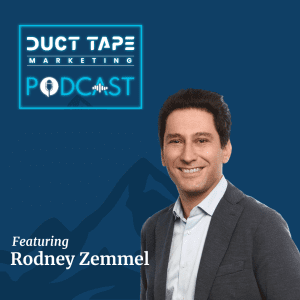
Rodney Zemmel, a guest on the Duct Tape Marketing PodcastIn this episode of the Duct Tape Marketing Podcast, I interview Rodney Zemmel. He is co-leader of the McKinsey Digital Practice,  a senior partner based in New York, and a member of McKinsey’s Shareholders Council, the firm’s board of directors. He serves clients across a range of industries on growth strategy, performance improvement, and value creation by harnessing the power of data and analytics, digital culture and capabilities, and modernized core technology.

He is the co-author of Rewired: the McKinsey’s Guide to Outcompeting in the Age of Digital and AI. This book shares the lessons McKinsey has learned helping companies deliver successful digital and AI transformations into a detailed “how to” manual. 

Key Takeaway:

Digital transformation requires organizations to rewire their processes and operations, leveraging new technologies to achieve value. It’s important that organizations take ownership of their digital transformation as an ongoing journey and actively learn to implement changes in order to keep improving. Rodney highlights the significance of selecting the right areas for transformation that can deliver a differentiating value, plus the importance of upskilling and reskilling existing talent within digital changes.

Questions I ask Rodney Zemmel:

  • [01:48] How much collaboration or maybe fighting goes on to structure a book like the McKinsey guide, that’s effectively going to represent the brand itself?
  • [03:20] Do you see this book as something you can take to a client and say we’re going to walk each of the sections here?
  • [04:28] Why is the title of the book “Rewired”?
  • [08:56] How does somebody start addressing what is essentially a line-by-line audit of everything they’re doing?
  • [12:22] Would you look at the value derived by digital technologies differently than by producing customer value or revenue?
  • [14:23] Are you advising companies that they might need to get different people or new people on these digital changes?
  • [16:32] Are there organizations that are significantly behind in this rewiring?
  • [17:50] Is there a correlation between leadership inside of an industry by how digital it is?
  • [19:02] Are you seeing people wasting a lot of time and money on AI because it’s the trendy thing of the moment?
  • [20:07] How crippling is any of this without access to data inside an organization?

More About Rodney Zemmel:

More About The Agency Certification Intensive Training:

Take The Marketing Assessment:

Like this show? Click on over and give us a review on iTunes, please!

John Jantsch (00:00): Hey, did you know that HubSpot's annual inbound conference is coming up? That's right. It'll be in Boston from September 5th through the 8th. Every year inbound brings together leaders across business, sales, marketing, customer success, operations, and more. You'll be able to discover all the latest must know trends and tactics that you can actually put into place to scale your business in a sustainable way. You can learn from industry experts and be inspired by incredible spotlight talent. This year. The likes of Reese Witherspoon, Derek Jeter, Guy Raz are all going to make appearances. Visit inbound.com and get your ticket today. You won't be sorry. This programming is guaranteed to inspire and recharge. That's right. Go to inbound.com to get your ticket today.

(01:03): Hello and welcome to another episode of the Duct Tape Marketing Podcast. This is John Jantsch. My guest today is Rodney Zemmel. He's a co-leader of the McKinsey Digital Practice, a senior partner based in New York, and a member of McKinsey's Shareholders Council. The firm's board of directors serves clients across a range of industries on growth strategy, performance improvement, and value creation by harnessing the power of data and analytics, digital culture and capabilities, and modernizing core technology. We're gonna talk about a book that he co-authored called Rewired: The McKinsey's Guide to Out Competing in the Age of Digital and AI. So Rodney, welcome to the show.

Rodney Zemmel (01:46): Thanks for having me on, John, it's a pleasure to be here.

John Jantsch (01:48): So I have to ask as an author also, but as an author who basically has only an editor to answer to, I'm wondering how, how writing a McKinsey guide like so a, a tool that's effectively going to represent the brand and be put out there as the tool that everybody uses. How much collaboration or maybe fighting goes on

Rodney Zemmel (02:11): Your podcast is only 20 minutes, right?

John Jantsch (03:19): So, so is this the, you know, junior consultant at McKinsey's, you know, book to take into a client and say, this is, you know, we're gonna walk work through, you know, each of the sections here. Obviously everybody's different, but I mean, is that how you see it?

Rodney Zemmel (03:32): I actually think this is the client's book to read, right? And for them to like understand how to do things themselves in their own organizations, and of course by all means, call us if there's a need to help. But, you know, we actually do think there's a better way to do this. And you know, we know the fact that only 30% of digital transformations are hitting the value that they're intended to hit. And we wanna see the world do better. And frankly, we we're, we're far enough down the learning curve here that I know we're putting sort of a lot of intellectual property out in the world through publishing this book and, you know, anybody that can have it and therefore, you know, do you, do you need to call us or not? We're confident that this is about sort of a learning journey for clients and people who are further down the learning curve are always gonna want to get better and better. So I feel like we've sort of published the, you know, the 2.0 version here and there's always gonna be a 3.0 and a 4.0 that people will need help on.

John Jantsch (04:25): So why rewired? I mean, I think a lot of people would say, well, you know, for the last 20 years I guess since we came on the internet, we've been wired, right? I, again, I'm tossing that up for you to smack it outta the park, but, but I think that, you know, a lot of people would think, why are we having to rewire what's different?

Rodney Zemmel (04:44): Great

John Jantsch (04:44): Question. Is it just an evolution?

Rodney Zemmel (04:46): No. So I look, I I'll give you an example, uh, the answer to that using like generative AI, which is like the hottest conversation topic in the world right now, right? Generative AI is the coolest thing and it's deceptively easy to go pilot and go trying your business, you know, in the marketing function, in customer engagement and go do a cool pilot and get things up and running. However, it's really hard to get it working at enterprise scale and get real measurable value from it, right? So if you wanna write somebody a birthday poem or if you want to on a one-off basis send some cool customized things to a customer, it's easy to do. If you want to build a system where you can send tens of thousands of customized things to customers every day in a way that is safe, in a way that really reflects the personalization preferences of that customer in a way that doesn't let bias creep in a way that has measurable economic impact, then it's not enough just to go launch a piece of technology. You actually need to rewire your commercial function around that technology. So there's this idea that it's not about like, you know, sticking a coat of paint on it that you actually do need to go and fundamentally rewire the house to take advantage of these technologies.

John Jantsch (05:58): A and do you get the sense that all over, you know, companies

Rodney Zemmel (06:12): Absolutely. So, you know, when we did our interviews with companies, so what we tried to do is say, look who's creating value from digital transformation? And you know, there's about a quarter of companies who we think are really hitting their economic targets between 25 and 30%, depending on the kind of transformation. And we did interviews with them and then we did interviews with the ones who were missing and then with some who were somewhere in between. And one of the most common things we heard, like one of the most common failure modes was I've got more pilots than an aircraft carrier

(07:01): And a real fundamental change in the operating model. If you'll let me actually, sorry, this maybe a longer answer than you're looking for, but there's a beautiful example in the banking industry. Um, so if you use any banking app, right, the customer banking apps, the private banking apps, whatever, every bank's app is basically the same, right? Some are designed a little bit better than others, but they all have the same functionality. So we were at a round table with consumer banking CEOs and a few of them said, you know, digital is table stakes. It's something we have to invest in, but it's not, uh, competitively differentiating. We said, we don't think that's true, let's actually go look at the data. And what we did was we got the data on actually how they were doing digital. We looked outside in and did some interviews at the work practices across the different banks, and then we looked at their economics and we saw that actually again, it was about the same ratio.

(07:47): About 25% of them were actually making money. Were showing positive return on equity, were showing positive growth per, in value per customer through their digital initiatives. You could not tell that if you just looked at the customer apps, right? They were the same mm-hmm.

John Jantsch (08:32): Yeah. It's kinda like the apps were just an interface and really nothing more

Rodney Zemmel (08:36): Yeah, yeah. And the necessary, right, but not sufficient.

John Jantsch (08:39): Yeah, they were, they, they replaced tellers though

Rodney Zemmel (09:04): Yeah. So I don't think it shouldn't feel like an audit, right? So I will, I'll use generative AI as an example again, right? So I was with a company a couple of weeks ago who said they've got 75 different pilots going across their organization on Gen AI. And their question for us was how should they organize and govern those and prioritize them and resource them and so on. And you know, answer to that a little bit qui is don't do that, right? It's just right. If you're doing 75 things in this new and fast moving area, you're not gonna be able to do them well. What you actually need to do is to step back and say, where is the value really going to be in changing your business? And yes, there are easy things to do with gen ai, maybe in HR around recruitment or maybe in finance with, you know, being able to pull from different feeds across your finance systems and so on.

(09:53): But is that really gonna drive differentiating value for your business? Is that something you should spend time on? Or is that something that all the various software companies you work with, they're gonna go innovate within their own product? Instead, pick the area that's unique to you and that can really drive value. Don't pick tons of areas, pick one area. It has to be an area that's big enough to matter. And our rule of thumb is 20% of ebitda, it's not gonna drive a 20% EBITDA improvement in a particular area. It's not gonna be big enough to sustain people's attention. So pick an area unlike that and then develop the real plan around that. And it's never gonna be one use case, right? A while ago, five years ago, there was this idea of like the silver bullet use case, right? If only we could do amazing, you know, supply chain forecasting, right? We wouldn't get caught out in the chip shortages or whatever it is, but it's multiple use cases that need to sort of feed together Our, our data actually says it's 11 companies who had 11 use cases within a particular domain or adjacent domains were the ones who were more likely to sort of cut through into being in that quadrant that's creating value.

John Jantsch (10:58): And now let's hear a word from our sponsor, Marketing Made Simple. It's a podcast hosted by Dr. JJ Peterson and is brought to you by the HubSpot Podcast Network. The audio destination for business professionals marketing made simple brings you practical tips to make your marketing easy and more importantly make it work. And in a recent episode, JJ and April chat with StoryBrand certified guides and agency owners about how to use ChatGPT for marketing purposes. We all know how important that is today. Listen to marketing made simple. Wherever you get your podcasts.

(11:34): Hey marketing agency owners, you know, I can teach you the key to doubling your business in just 90 days or your money back. Sound interesting. All you have to do is license our three-step process that's gonna allow you to make your competitors irrelevant, charge a premium for your services and scale perhaps without adding overhead. And here's the best part. You can license this entire system for your agency by simply participating in an upcoming agency certification intensive look, why create the wheel? Use a set of tools that took us over 20 years to create. And you can have 'em today, check it out at DTM world slash certification. That's DTM world slash certification.

(12:22): So, so let's talk about value then for a minute. Because some of the AI, for example, or some of the tech technology, digital technology, maybe it doesn't deliver customer value, it actually delivers convenience or efficiency inside the organization. So would you look at that as a different, would you look at that value derived in that manner differently than you would say producing customer value or revenue?

Rodney Zemmel (12:48): So again, we've seen a shift here, right? So when we looked at our sort of digital transformation surveys of three, four years ago, cost was 70% of the focus, right? Um, and that's because it was the most measurable part and because a lot of the early customer journeys were very tractable to cost. Like how can we, you know, get people out of branches, right? And into the app. How can we get people instead of making phone calls to using the website, right? And you can very easily look at, you know, sort of per employee productivity and manage that cost down what we're seeing now, it's not, that's gone away, right? That's still there, but there's been a flip, I would say it's now 70-30 growth to cost and even things that initially look like cost. So again, I'll talk gen AI cuz it's the flavor of the moment, right?

(13:34): Gen AI is gonna be a great way of saving cost in customer contact centers, but it's even better at creating unbelievably strong customer engagement, right? I mean there's this amazing survey from the UK where people who were using a gen AI chat bot, instead of talking to a real physician, they could tell it was a chat bot, right? So the original test was can you tell whether it's a robot or a human? And they could tell it was a robot, however they found it more engaging and more empathetic, right? Than the real doctor, right? So if you think about what that means for a customer center, yes you'll be able to save some costs, but more importantly you'll be able to create a level of engagement that's gonna drive cross sell, that's gonna drive growth, that's gonna drive new product ideas in a much better way than what you're doing today. So we're really seeing a shift to people using it for growth.

John Jantsch (14:22): Would you, are you seeing or are you advising companies that they might actually need to get different people or new people on the bus?

Rodney Zemmel (14:32): I'll give you a yes, but right. So there was this giant trend, you know, five to eight years ago around go to Silicon Valley or you know, go to London or you know, New York and you know, sort of hire the cool kids from digital natives to come to your company. And that turned out to be a great way to change the dress code

(15:29): We work with a company in, in Baghdad that's Baghdad, Arizona, not the other Baghdad

John Jantsch (15:57): Yeah. And I've seen a lot of initial research that is suggesting, again, AI is actually allowing people with maybe less experience to do more complicated work. And so I think there is part of that, that they're using the tools to, up to your term upscale, uh, some of the workers. But I think it's also allowing people, you know, call center example, you know, they have access to real time answers and you know, they're, even though they're less skilled. So I think that's, it's a combination of those things probably.

Rodney Zemmel (16:24): That's right. Provided you do it with the senior management layer as well. Right? So any upskilling needs to be about the frontline and the senior people.

John Jantsch (16:32): Are you finding that there are organizations that we maybe wouldn't guess this to be true, that are just significantly behind in, in this, uh, rewiring?

Rodney Zemmel (16:42): You know, there's a chart, I can't remember if we put the chart in the book or not, actually I think we didn't. But we have a survey that we call dq or Digital Quotient survey. And it's basically a, a questionnaire you can rent to see how digital a company is. When we first started doing this, there were very nice patterns by industry, right? You'd see like high was all the way at one end and you know, public sector was all the way at the other end. Retail was somewhere in the middle. And you know, energy was also, you know, off to the slow end. What we see now is first all industries have moved, but second of all, the variation within industry is actually bigger than the variation between industries. Mm-hmm. So, you know, the energy company that has really embraced digital is as digital as the average high tech company. And the consumer goods company that's been on laggard in embracing digital is as behind as, you know, the public sector or, or you know, or healthcare services company. So the spread has gone much, much wider. In addition to that, there's a learning curve, right? It takes a while to get going, but then once people are going, you see them getting better and better on the digital quo.

John Jantsch (17:49): And are you also, is there a correlation with leadership inside of an industry by how you digital it is?

Rodney Zemmel (17:53): Great question. So one of the things we asked in the survey where we were passing the companies into sort of the digital leaders, the digital average and the digital magnets was how many people on your executive team are digitally savvy? Mm. And when I first saw the data from that, I actually thought the team was giving me a chart with like the dummy data. Like this was like the chart to fill in once we have the real data. Cuz the correlation was sort of perfect, but it turns out that was the real data. And if you have an executive team that might have, I don't know, a dozen members on it, if you've got seven or more people who are digitally savvy, your chance of ending up in the high performing segment are really high, like 80%. And if you've got one or two people who are digitally savvy in that group, your chance of being in the high performing segment are less than 20%. So the thing it most clearly correlates with is actually the savvy, the tech savviness of your leadership. Now of course there's correlation and causation there and you can debate the order and so on. Yeah, yeah. But it's still very clear that, you know, it's hard to be a digital leader if you're just, if you know, if every conversation someone's looking to the CDIO or the CMO, right? It needs to be the team.

John Jantsch (19:01): Yeah. So are you also seeing people wasting a lot of time and money on we gotta do that AI thing

Rodney Zemmel (19:10): You know, I, that's sort of why we wrote the book. I mean, it's, this is being done. There's so much swirl, right? It sort of gives the field almost a bad name, right? There's so many people who are running around, you know, saying they're agile or, you know, launching the demonstration projects or talking about things in their annual report or in investor days that don't actually follow all the way through. It's just massive wasted effort. I mean, you know, if you'd have bought stock in the world, digital transformation in 2015, right? You'd be very wealthy now just based on word usage. This is why we're sort of arguing for this more organized and less wasteful approach. And you know, while I'm excited about gen ai, I think part of the worry with Gen AI is there's a little bit of a risk that it sends us, like back to 2018 in digital transformation where it's just so easy to fire up these pilots. But if you don't actually rewire the house, then you're not gonna get the value from it.

John Jantsch (20:06): How, um, crippling is any of this without access to, uh, data inside an organization?

Rodney Zemmel (20:16): So there is no question that all these trains ride on rails of data, right? You need the data. So, but maybe like, maybe just a couple of surprises to us, or maybe they're not surprises, but things that we learned did the research, first of all, it isn't just about your own data, right? That there's almost no company who's been super successful here just relying on their own, you know, amazing trove of proprietary data. It's actually about how you put your own data and the world's data together in interesting and safe ways. That's thing one. Think two is while data is critical, having the most modern systems in the world is not critical. And I think one of the big unlocks in digital transformation has been moving away from an excessive focus on core technology modernization and into a focus on solving back from where the value is.

(21:09): So we've worked with companies who've had the data, I mean literally in filing cabinets, right? Not even digitized, right? And by being very selective with what are you trying to do? Therefore, what data do you need? Now that data, the data you need, you know, does need to be in the cloud, right? But you can build very efficient now sort of cloud, you know, we explained in the book sort of cloud like data extraction layers, just focus around what you need and the old fashioned approach that says, first let's build this like giant data lake with everything in it. Right? Then let's splash around in the lake for a while and see what comes out. Right. Ends up being quite wasteful.

John Jantsch (21:45): Yeah. I mean that's part of the challenge with data is there's so much of it and we can measure everything. And like you said, most of it doesn't matter, probably

Rodney Zemmel (21:53): But we would say in data, start back from where you think the value is. Think as much about the world's data as your own data, and then think about quality over quantity. And then don't get concerned about legacy systems. There's almost always a workaround, right? To allow you to decou on looking at the data from, you know, pinging your system every time. Yeah.

John Jantsch (22:14): So final question. Uh, do you see Rewired making any, some fun summer beach reads, uh, list, uh, this year

Rodney Zemmel (22:23):

John Jantsch (22:28): The other problem is it's a bit of a beast. So it, it was way down that bag.

Rodney Zemmel (22:32): You know, I just flew across the country with a few copies of it in my backpack and I certainly, uh, got, got some, uh, some exercise from it. Look, I think that it, it, it, it is definitely written to be dipped into, right? It is the manual to say, okay, let's talk about technology. Right? Let's go to chapter four on technology rather than the straight end-to-end read. But, uh, you know, I hope people, if people enjoy reading it nearly as much as we enjoyed writing it, then we'll have succeeded.

John Jantsch (22:57): Awesome. Well, Rodney, I appreciate you taking a few moments to stop by, uh, the Duct Tape Marketing podcast. You wanna invite people where they might connect with you or obviously get a copy of the book.

Rodney Zemmel (23:07): Sure. I mean, all the info's on, mckinsey.com or you can, uh, reach me directly on, uh, rodney_zemmel@mckinsey.com. And, uh, I hope you liked the book.

John Jantsch (23:17): Awesome. Well, again, I appreciate you taking a few moments to stop by and hopefully we'll run into you one of these days, uh, soon out there on the road.

Rodney Zemmel (23:25): Fantastic. And John, you can read more about the book on, I think it's mckinsey.co/rewired, but I'll, I'll correct that URL if I'm giving you the wrong URL

John Jantsch (23:33): Background. Okay. And we'll have that in the show notes as well. All right.

Rodney Zemmel (23:36): Okay. Thank you.

John Jantsch (23:38): Hey, and one final thing before you go. You know how I talk about marketing strategy strategy before tactics? Well, sometimes it can be hard to understand where you stand in that, what needs to be done with regard to creating a marketing strategy. So we created a free tool for you. It's called the Marketing Strategy Assessment. You can find it@marketingassessment.co, not.com. Co. Check out our free marketing assessment and learn where you are with your strategy today. That's just marketing assessment.co. I'd love to chat with you about the results that you get.

This episode of the Duct Tape Marketing Podcast is brought to you by the HubSpot Podcast Network.

HubSpot Podcast Network is the audio destination for business professionals who seek the best education and inspiration on how to grow a business.


from Duct Tape Marketing https://ift.tt/2peZ5Uh
via IFTTT

Saturday, June 17, 2023

Weekend Favs June 17

Weekend Favs June 17 written by John Jantsch read more at Duct Tape Marketing

My weekend blog post routine includes posting links to a handful of tools or great content I ran across during the week.

I don’t go into depth about the finds, but I encourage you to check them out if they sound interesting. The photo in the post is a favorite for the week from an online source or one I took on the road.

  • Anyword – This AI copywriting tool assists marketers to generate and optimize marketing copy for various channels and formats, offering a predictive performance score for decision-making and enabling the customization of content based on customer personas.
  • Wudpecker – This tool automatically joins your meetings, records them, transcribes them, and generates high-quality notes.Allowing users to save time and focus on more important tasks.
  • Softr – This user-friendly platform enables you to build personalized web apps and client portals using your Google Sheets or Airtable data, without requiring coding skills.

These are my weekend favs; I would love to hear about some of yours – Tweet me @ducttape

If you want to check out more Weekend Favs you can find them here.


from Duct Tape Marketing https://ift.tt/XNd3HTA
via IFTTT

Wednesday, June 14, 2023

The 5 Key Skills That Successful Managers Possess

The 5 Key Skills That Successful Managers Possess written by John Jantsch read more at Duct Tape Marketing

Marketing Podcast with Dave Dodson

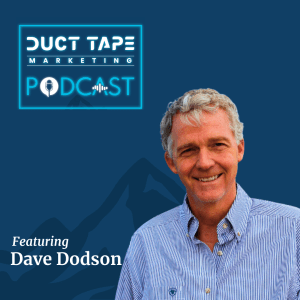
Dave Dodson, a guest on the Duct Tape Marketing PodcastIn this episode of the Duct Tape Marketing Podcast, I interview Dave Dodson. He is on the faculty of Stanford University’s Graduate School of Business, where he guides students in tactical execution. He was a McKinsey & Company consultant and left to become a serial entrepreneur, where he operated six companies as CEO or Executive Chairman. 

Dave is also the co-founder of Sanku, a company that developed the only successful technology to fortify grains with lifesaving micronutrients in rural African mills. Sanku was listed by Fast Company as one of the “Most Innovative Companies.” and named by Time Magazine’s 100 Best Inventions.

His newest book The Manager’s Handbook: Five Simple Steps to Build a Team, Stay Focused, Make Better Decisions, and Crush Your Competition; will help managers, executives, and other business leaders interested in dramatically improving their ability to lead people and inspire loyalty.

Key Takeaway:

Have you ever wondered why some people are better at getting things done than others? Dave identifies 5 skills that these individuals have mastered in order to become successful managers: team building, setting and adhering to priorities, seeking and taking advice, being a good custodian of your time, and being fanatical about quality. These skills combined with one another can be learned and practiced by anyone, regardless of their inherent attributes or personality traits. Dave emphasizes that this is a how-to manual rather than just theoretical concepts. Each chapter focuses on actionable steps where the goal is to make readers acquire and apply these skills effectively in their professional lives to become better leaders.

Questions I ask Dave Dodson:

  • [02:08] How do you define the term manager?
  • [03:27] How’d you come up with five steps that you lean on as being the critical elements?
  • [05:11] Can you mention the five skills in the compact organization?
  • [06:28] What do you feel like you’re adding new to the genre of leadership books?
  • [08:19] Can you explain this idea of hiring for outcomes and how that’s different than hiring for resume experience?
  • [09:47] Please develop the idea of curing the digital disaster.
  • [12:36] Where does a board or a mentor fit into a company’s structure or an individual’s structure?
  • [14:05] You introduce the operating plan, can you please explain that?
  • [17:51] So the fifth step is quality, how do you make quality a part of culture in organizations?
  • [19:10] How would you recommend that people make the ideas in this book stick?

More About Dave Dodson:

More About The Agency Certification Intensive Training:

Take The Marketing Assessment:

Like this show? Click on over and give us a review on iTunes, please!

John Jantsch (00:00): Hey, did you know that HubSpot's annual inbound conference is coming up? That's right. It'll be in Boston from September 5th through the eighth. Every year inbound brings together leaders across business, sales, marketing, customer success, operations, and more. You'll be able to discover all the latest must know trends and tactics that you can actually put into place to scale your business in a sustainable way. You can learn from industry experts and be inspired by incredible spotlight talent. This year. The likes of Reese Witherspoon, Derek Jeter, guy Raz are all going to make appearances. Visit inbound.com and get your ticket today. You won't be sorry. This programming is guaranteed to inspire and recharge. That's right. Go to inbound.com to get your ticket today.

(01:03): Hello and welcome to another episode of the Duct Tape Marketing Podcast. This is John Jantsch. My guest today is Dave Dodson. Dave's on the faculty of Stanford University's Graduate School of Business where he guides students in tactical execution. He was a McKinsey and Company consultant and he left to become a serial entrepreneur where he operated six companies as CEO or Executive Chairman. He's a co-founder of Sanku, a company that developed the only successful technology to fortify grains with lifesaving micronutrients in rural African mills. Sanku was listed by Fast Company as one of the most innovative companies, and named by Time magazine's 100 best inventions. We're gonna talk about his book called The Manager's Handbook: Five Simple Steps to Build a Team, Stay Focused, Make Better Decisions, and Crush Your Competition. Boy, a lot of promise in that

Dave Dodson (02:01): Good to be here.

John Jantsch (02:02): So this may seem like a really dumb question, but I think it's actually going to be helpful to hear how you actually define the term manager.

Dave Dodson (02:12): Yeah. You know, John, I struggled quite a bit with whether I should be saying entrepreneur or manager or leader and manager seems sort of vanilla, right? Yeah. But that's what most of us do every day. We're managing and one of the things I wanted to do with the manager's handbook is to take it from sort of some lofty concept down to what do you do every day Monday morning so you can get stuff done?

John Jantsch (02:33): Yeah. Cuz you're right. I mean, entrepreneurs, business owners, you know, they, they may not have manager in their title, but they wear the manager hat every day. Right.

Dave Dodson (02:42): 100%. And the biggest leap that somebody makes is not becoming a manager per se, where you've got two or three people reporting to you, but it's when you become a manager of managers because then you can't cheat anymore. You can't sort of stay up late or redo someone's work. You have to manage through the organization. And one of the magical things about it, if you learn the skills on how to manage managers, is that's completely scalable. All the way up to running the biggest companies in the world. Yeah.

John Jantsch (03:10): So, so with your McKinsey and Company credentials, you know, you had to have a framework here, right? Five simple steps, uh, to build a team. So kind of in obviously a great deal is drawn from your own experience managing companies and teams. How'd you come up with five steps that, that you lean on as being really the critical elements?

Dave Dodson (03:33): Well, first of all, I am the least likely entrepreneur. I grew up in rural Colorado. The closest town was about 300 population of 300, and we were kind of divided between farmers and ranchers. And I was on the farmer's side cuz my dad made farm equipment. My, my stepdad built houses and my two grandfathers, one ran an auto dealer and the other ran a coal mine of all things. And what links all four of these people together is all of their businesses failed. Huh. And so I should have just gone out and been a McKinsey consultant, but I didn't want to do that for whatever reason. In spite of that background, I decided to wa wanted to be an entrepreneur, and things were going well. And then the first time I really stubbed my toe hard and I was like, holy smokes, everything I do doesn't work out.

(04:22): That's when I started to look around and say, how come some people are just better at getting stuff done than other people? And that led to this three, three year search really to try to understand what is the difference. And what I quickly realized is the difference is not that people have certain attributes, they're born a certain way, they're charismatic, introvert, extrovert, but that they've mastered five skills. And I wasn't looking John for a framework when I wrote that the manager's handbook. I was just out of curiosity, and it just ended up being five skill areas that was universal. I don't care who you were, you, Oprah Winfrey, you know, Rupert Murdoch, everybody mastered these five skills. It's very interesting.

John Jantsch (04:59): And when we're gonna call them skills, I mean, there is a o obviously there's an implication that that can be learned, that can be practiced

Dave Dodson (05:25): Yeah. So for example, the first one was the ability to build a team, right? The second one was an ability to set and then adhere to priorities. One was to be able to take advice from others, be able to seek and take advice. Another was to be a good custodian of your time. And then the last one was to be fanatical about quality. So those were the five. And I, again, I didn't start out looking for five, but I ended up with those five. But then I had this predicament, John, because I didn't wanna create a PowerPoint presentation or have a academic paper now that I teach at Stanford. I wanted something that people use. And so the trick was then how do you convert this insight that I had into a practical way that people could easily acquire these skills? Yeah. And that, that was my biggest challenge, honestly. Yeah.

John Jantsch (06:09): All right. So let's dive into the first one. Team building, you know, frankly, every leadership book, every book on running a company, and it has at least a chapter

Dave Dodson (06:35): Oh my gosh. You know, I teach at the Sanford Business School, right? And every class says, you gotta build a team. You gotta, but nobody says how to do it. Right? The inside here is that act. Actually, interestingly enough, John, it was, I was watching somebody play the piano, and I was thinking about how do you learn to play the piano? And I realized, well, first you learn how to get, position your fingers over the keyboard, 88 keys. Then you learn the difference between a sharp and a flat. Then you learn what the pedals do. And I realized that you learn to play the piano because you learn a set of sub skills, you combine 'em together and you can play the piano. And I realized the same thing was true with these five skills. So in, in, to use your example about building a team, then I looked at, okay, of the people who were great at building a team, this is not about how I did things.

(07:20): I studied the best, the very best leaders for the manager's handbook. What were the characteristics or what were the, the sub-skills that they had mm-hmm.

John Jantsch (07:59): So hiring for outcomes has become a, a pretty hot topic, I think mainly because, you know, the whole quiet quitting or whatever the silly terms of, of the day are about those, that, that, I think it's changing how people think about who they hire and who they, you know, what, who needs to be doing what roles and how to keep them happy

Dave Dodson (08:26): Yeah. So I completely turned the whole notion of hiring on its head. And you start with building a scorecard, which is what is, what do you want this person to do? Not what they did, not what their credentials are, but what you want them to do. And then you hire against it. So I remember when I first started hiring, I looked at clever interview questions. So this question that I used to ask everybody is, when you close the refrigerator door, how do you know the light goes out?

(09:08): I don't care what school they went to. I don't care how old they are, I don't care what they do before. Can they drive sales by 15%, sales by 15%? And then you ask the question, well, how will I know? What are the things that I can do to determine that? And that's what you interview against. And it's a completely different way to interview. And by the way, though, in terms of insights of the book, I do this all in about 15, 20 pages. You don't need to read seven books on hiring to learn how to be good at hiring.

John Jantsch (09:32): But you could

Dave Dodson (09:50): Oh my gosh,

John Jantsch (10:00): A

Dave Dodson (10:00): Year. Wow. Today it's 30,000. 30,000 and growing John. Yeah. And all these productivity tools are just making us less productive. So we all know it's a mess out there. We all know that we read unproductive email. In fact, 50%, it's reported 50% of the email that we read, we don't think we needed to read. So we all know we have a problem. But the problem, but the issue is we wake up every morning, we do the same thing over and over again. So I didn't wanna just sort of present a problem that everybody knows, and I didn't wanna ask people to radically change how they think and how they behave and where their habits are and where their weaknesses are. So I said, you know what? I'm gonna give you seven tips. You do these seven tips and you'll save 40 minutes a day. That's it. And so that's kind of throughout the book. That's what I do, is I say, look, I'm not gonna try to change your life. I'm gonna give you seven things to do tomorrow morning that will solve this problem.

John Jantsch (10:53): Yeah, I actually just hired somebody to delete email for me. That was the solution to that one.

Dave Dodson (10:58): Well, John, I'm glad you answered my emails, at least.

John Jantsch (11:01):

(11:39): Hey, marketing agency owners, you know, I can teach you the keys to doubling your business in just 90 days, or your money back. Sound interesting. All you have to do is license our three step process that gonna allow you to make your competitors irrelevant, charge a premium for your services and scale perhaps without adding overhead. And here's the best part. You can license this entire system for your agency by simply participating in an upcoming agency certification intensive look, why create the wheel? Use a set of tools that took us over 20 years to create. And you can have 'em today, check it out at dtm.world/certification. That's dtm.world/certification.

(12:27): So, so the next category is advisors. So, you know, especially since we're addressing the manager's handbook, you know, where does a board or a mentor, you know, fit into a company's structure or an individual's structure?

Dave Dodson (12:43): Yeah, you don't have to be the CEO and you don't have to have a board of directors to be really good at seeking and taking advice. And, you know, as a, as an effective manager, you wanna do two things. You wanna be able to make decisions on a timely basis, and you also wanna make right decisions. And most of the problems that day-to-day managers face are not new. Someone has already faced those problems. So the idea is to go out and create a group of advisors that you can use, either formal or informally, and then know how to use them. So what I do is, first of all, I say, here's the criteria that you look for finding an advisor. You don't let it be, don't let 'em ha happen randomly or organically. Go find those people. And then how do you use 'em?

(13:23): So, so John, I get called all the time from my former students, and I'm an investor in about a hundred companies, CEOs who call me, and usually most of the time is utterly wasted. I'll have a, I'll have a 30 minute call with someone and they'll take 27 minutes to describe the problem. So what I do is I say, here is a simple four-step process on how to have a really effective 15 minute call with an advisor where they hang up the phone and they feel like, wow, I really added value. I hope this person calls me back again. And instead of you telling stories about your problem, you hung up the phone and you thought, okay, I got my problem solved. Now I can go work on something else. Yeah,

John Jantsch (14:01): Yeah. All right. Priorities. Y you know, the thing that jumped out to me in that section is I think everybody's accepted whether they use it or not, that they need a business plan or a marketing plan. Those are kind of accepted things you introduced to something that I personally haven't heard said this way makes total sense. But I'd wonder if you could unpack the operating plan.

Dave Dodson (14:21): Yeah, so the kind of, one of the many things that I turn on its head in the Man manager's handbook is don't this whole thing about an annual budget, forget about it. That's just a crystal ball guess on what your sales are gonna be or whatever it is. What you need is an operating plan and an operating plan. You go through a process and I walk people through the process that you go through to figure out what are the two or three things that you need to work on over the following year in order to move the company forward. And one of the things that was screamed out, whether I was looking at Warren Buffett or Steve Jobs or any of the other managers, that we all look back and we say, wow, I wanna be like them. They were brutal about setting and adhering to priorities.

(15:04): And in fact, Steve Jobs has his famous quote, he was at the Apple Worldwide Conference, and he says, he said, you have to say, you have to learn to say no. And when you say that, it pisses people off, but it's the only way you can get things done. And I'm quite close to one of his former board members, Andrea Jung, and I've talked to her about Steve Job and is the myth about him being so relentless about setting priorities and having an operating plan? True. And she said, I've never met anybody who was more brutal with priorities than Steve Jobs in, in fact, Joni Ives, who I I who was his design developer, sorry, he was the chief designer for Apple. And he said that Steve Jobs would come to him almost on a daily basis and said, what have you said no to today?

John Jantsch (15:49): Yeah. And that's, you know, obviously we're talking about Apple, but I mean, down to the three person, you know, entrepreneurial, you know, venture, you're gonna get 27 emails today,

Dave Dodson (16:16): Oh, it is. And the, yeah, two insights for me is one, setting an adhering to priorities is not about not doing the things you shouldn't do. That's easy. It's supposed to, that's table stakes,

John Jantsch (17:12): Well, not to mention that it takes your eye off the ball of what they're actually got some momentum on

Dave Dodson (17:55): So nothing about the manager's handbook is about slogans or attributes or anything. It is a how to manual. So, so for example, there's a chapter on how do you find out from a practical way, how do you find out what your, how your customers view quality, literally down to what are the types of questions you should ask your customers and what types of question, what types of customers you should ask. So, so there's a chapter on how do you define quality. So it's not just a slogan, you know, let's go out there and be good to our customers. You gotta find out what matters to them. Then there's a chapter on how do you, how do you measure quality? And there's a lot of ways you measure quality that are all historical. They're, they're trailing indicators like NPS would that, well, that by the time you get a bad NPS score, John, you're already, your customers are already disappointed. So the book says, how do you find out what the leading indicators are and how your customers are feeling so they, so you create happy customers, not how you identify whether what you did worked or not. So every chapter is a how-to,

John Jantsch (18:58): So we've all read books, even books that, as you said are, you know, very, very practical, how would you know? But then we have our job, right? We read the book,

Dave Dodson (19:17): Well, I tried to write it as much as a Paint by numbers book as possible. And I had this kind of post-it note that said, write the book you wish someone handed you, you know, and then I didn't have to write it out, but when I first became a manager, so that was my watchword throughout the whole thing. Then I said, okay, how do you structure the book in a way that makes it a how to manual? So one of the big insights of the book, or one of the structures of the book is at the end of every chapter, there's a single page that just says, here are seven things, or here are 10 things. There's no gimmick. E if there's only seven, I only put seven down there

(20:02): And then the, so, so, so it's written in a way that you read it once and then you've got basically, you know, 22 little quick references. And then the last part is that, and this is the hard part, I'd written the whole book and I was sitting down with a mentor of mine, a guy who's given me a lot of guidance of Michael Porter, who's sort of the Michael Jordan of MBA professors written 19 books. And he was helping me with the book. He had read the book and he said, you know, the problem with your book is you created a checklist and people are gonna just pick the pieces that they want off of here, and they're only gonna pick the easy ones. And he said, what you actually created here was a unifying theory of execution. And he showed me that, you know, you can't, to go into things that John, you and I talked about today, you can't put together a good operating plan unless you have a good team and you can't have a good team or, and you can't execute that if you're not providing good quality, etcetera, etcetera.

(20:58): Mm-hmm.

John Jantsch (21:26): Well, Dave, we, I appreciate you taking a moment to stop by the Duct Tape Marketing Podcast. You want to invite people to, to where they might find your book, uh, obviously also where they might connect with you.

Dave Dodson (21:37): Yeah, so the two really easy places go on barnesandnoble.com and pre-order or Amazon pre-order. Those are, you know, the two kind of classic places to order the manager's handbook by myself, David Dodson. And easy way to reach me is through my, uh, just go on the Stanford University website.

John Jantsch (21:55): Awesome. And the book will be out, depending upon when you're listening to this show. The book will be out in mid July of 2023. So you can either pre-order or order when it's available at all your fine book sellers. So Dave, again, thanks so much for stopping by the Duct Tape Marketing Podcast and hopefully we'll run into you one of these days out there on the road. Hey, and one final thing before you go. You know how I talk about marketing strategy, strategy before tactics? Well, sometimes it can be hard to understand where you stand in that, what needs to be done with regard to creating a marketing strategy. So we created a free tool for you. It's called the Marketing Strategy Assessment. You can find it @marketingassessment.co not.com. Co. check out our free marketing assessment and learn where you are with your strategy today. That's just marketing assessment.co. I'd love to chat with you about the results that you get.

This episode of the Duct Tape Marketing Podcast is brought to you by the HubSpot Podcast Network.

HubSpot Podcast Network is the audio destination for business professionals who seek the best education and inspiration on how to grow a business.


from Duct Tape Marketing https://ift.tt/0wSE3My
via IFTTT

Saturday, June 10, 2023

Weekend Favs June 10

Weekend Favs June 10 written by John Jantsch read more at Duct Tape Marketing

My weekend blog post routine includes posting links to a handful of tools or great content I ran across during the week.

I don’t go into depth about the finds, but I encourage you to check them out if they sound interesting. The photo in the post is a favorite for the week from an online source or one I took on the road.

  • Landing Pages Explained – This platform will help you discover a selection of leading SaaS and landing pages, explaining the ideas and techniques used to increase conversion by experts.
  • Botsonic – This no-code AI chatbot allows you to build custom ChatGPT-like chatbots trained on your own data to increase your website potential.
  • Oppflow – This all-in-one content marketing tool will help you manage with automated workflows implementing AI into your content, allowing you to maximize your profits.

These are my weekend favs; I would love to hear about some of yours – Tweet me @ducttape

If you want to check out more Weekend Favs you can find them here.


from Duct Tape Marketing https://ift.tt/NU84cyv
via IFTTT

Saturday, June 3, 2023

Weekend Favs June 3

Weekend Favs June 3 written by John Jantsch read more at Duct Tape Marketing

My weekend blog post routine includes posting links to a handful of tools or great content I ran across during the week.

I don’t go into depth about the finds, but I encourage you to check them out if they sound interesting. The photo in the post is a favorite for the week from an online source or one I took on the road.

  • Castmagic – This AI tool turns podcast audio into ready-to-use content. Instantly generate transcripts, guest bios, timestamps, key takeaways, blog posts, social media content & more.
  • UpViral – This referral marketing platform is designed to run effective and profitable viral marketing campaigns and help businesses of all sizes generate more site traffic, increase their customer base, and boost sales with its leads and templates.
  • Power Pages -This software by Microsoft allows you to quickly create and host secure, low-code business websites to get out to the market at a low cost.

These are my weekend favs; I would love to hear about some of yours – Tweet me @ducttape

If you want to check out more Weekend Favs you can find them here.


from Duct Tape Marketing https://ift.tt/FVtk4l1
via IFTTT

Saturday, May 27, 2023

Weekend Favs May 27

Weekend Favs May 27 written by John Jantsch read more at Duct Tape Marketing

My weekend blog post routine includes posting links to a handful of tools or great content I ran across during the week.

I don’t go into depth about the finds, but I encourage you to check them out if they sound interesting. The photo in the post is a favorite for the week from an online source or one I took on the road.

  • Glimpse Extension – Enhances Google Trends by enabling users to discover, track, and receive alerts about new or growing online trends and keywords. It also enriches data and provides insights on any topic of interest.
  • AudioPen – This tool transcribes and summarizes unstructured voice notes into texts that are easy to read and ready to share. You can use them to write messages, emails, blog posts, and more, in a short time.
  • Twinr – An easy-to-use platform designed to help entrepreneurs create ready-to-use apps, eliminating all technicalities in the process. No coding experience is needed, and it supports app development for both iOS and Android.

These are my weekend favs; I would love to hear about some of yours – Tweet me @ducttape

If you want to check out more Weekend Favs you can find them here.


from Duct Tape Marketing https://ift.tt/P2lyK1q
via IFTTT

Saturday, May 20, 2023

Weekend Favs May 20

Weekend Favs May 20 written by John Jantsch read more at Duct Tape Marketing

My weekend blog post routine includes posting links to a handful of tools or great content I ran across during the week.

I don’t go into depth about the finds, but I encourage you to check them out if they sound interesting. The photo in the post is a favorite for the week from an online source or one I took on the road.

  • Rephonic – A database with any kind of data in the podcast industry. This tool will help you save time and make better decisions with instant access to data and research of shows in any niche.
  • Content at Scale – An AI writing platform for marketers, agencies, or freelancers that helps adapt AI content without losing the human touch. This tool is free of charge, detects robotic-sounding content, and adapts it to make the SEO content more profitable and productive.
  • QuillBot – A free and easy-to-use AI-powered paraphrasing tool that will help you enhance your writing by using the right words, tone, and style for any occasion. This tool integrates directly into different platforms such as Chrome or Microsoft.


These are my weekend favs; I would love to hear about some of yours – Tweet me @ducttape

If you want to check out more Weekend Favs you can find them here.


from Duct Tape Marketing https://ift.tt/GMYDdTO
via IFTTT