Wednesday, September 18, 2024

Simplify Your Marketing: How the Marketing Snapshot Can Transform Your Business

Simplify Your Marketing: How the Marketing Snapshot Can Transform Your Business written by John Jantsch read more at Duct Tape Marketing

Marketing is a word that can stir up a lot of emotions for business owners. For some, it’s excitement – the thrill of attracting new customers and watching your business grow. 

But for many, it’s more like frustration, confusion, and even dread. Why?

Because marketing today can feel incredibly complex. There are countless channels to manage, strategies to execute, and metrics to track. It’s no wonder so many business owners feel overwhelmed.

But what if I told you that marketing doesn’t have to be complicated?

What if there was a way to cut through the noise and focus on what really matters?

That’s exactly what I’m going to show you today with the Marketing Snapshot – a simple, yet powerful tool that can transform your approach to marketing and set your business up for success.

The Problem: Marketing Has Become Too Complex

Let’s start with a harsh truth: most businesses overcomplicate their marketing. It’s not your fault – the marketing world is filled with shiny objects, new trends, and endless tools that promise to deliver incredible results. The problem is that chasing these trends often leads to fragmented efforts, wasted time, and frustration. Instead of clarity, you get confusion. Instead of results, you get noise.

Here’s what I’ve learned after years of working with small business owners: the best marketing is simple. Simple because it’s focused. Simple because it’s consistent. Simple because it’s based on a system.

Marketing Snapshot Training With John Jantsch

Tired of feeling overwhelmed by marketing?

 In this hands-on training, I’ll guide you through creating a clear, actionable one-page Marketing Snapshot that cuts through the noise and sets you on a path to success. Learn the key elements of a winning strategy, and leave with a personalized plan you can put into action right away.

Let's simplify your marketing and get results.


The Solution: A Simple, Systematic Approach

What if you could distill your entire marketing strategy onto one page? What if you had a clear, concise plan that guided every marketing decision you made? That’s the idea behind the Marketing Snapshot.

The Marketing Snapshot is a one-page tool designed to capture the essential elements of your marketing strategy. It’s not about cramming everything you do onto a single page – it’s about focusing on what really matters. It helps you identify your ideal client, craft a compelling core message, and choose the right channels to reach your audience. It’s a simple, systematic approach that brings clarity and direction to your marketing efforts.
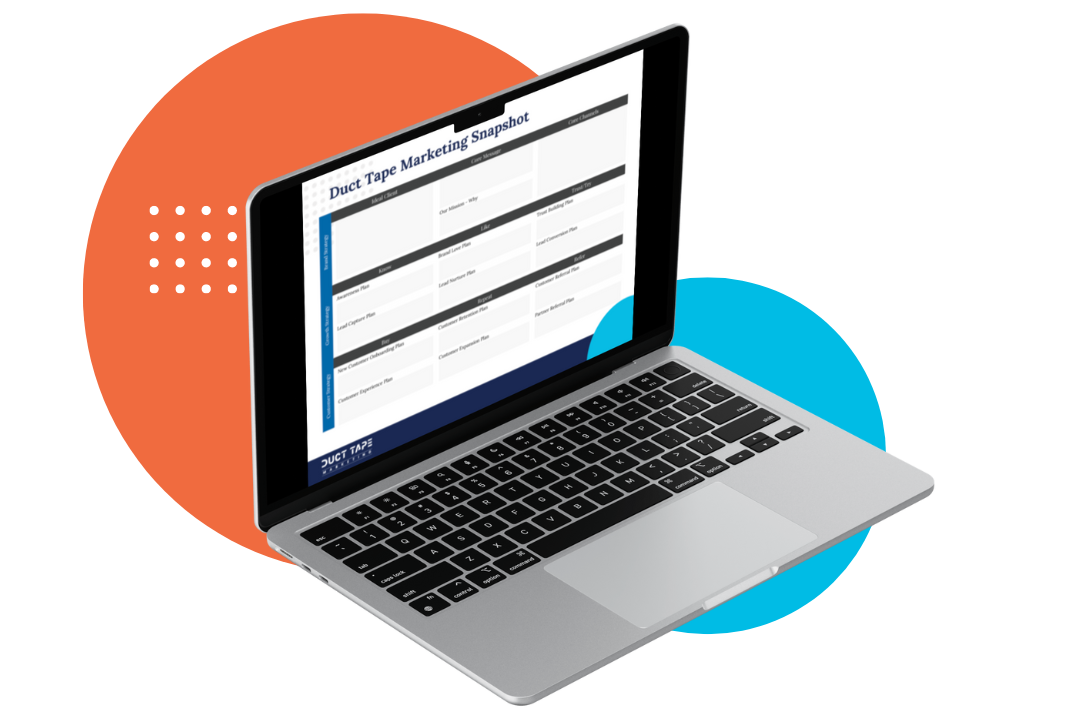
Marketing Snapshot


Breaking Down the Marketing Snapshot

So, what exactly does the Marketing Snapshot include? Let’s walk through each section.


1. Ideal Client

This is where it all begins. You can’t create an effective marketing strategy if you don’t know who you’re trying to reach. The Ideal Client section helps you define exactly who your best customers are – not just in terms of demographics, but also their needs, challenges, and behaviors. By understanding your ideal client, you can tailor your marketing efforts to attract more people like them.


2. Core Message

Your core message is the heart of your marketing. It’s the promise you make to your customers – the reason they should choose you over your competitors. In this section, you’ll craft a message that resonates with your ideal client, speaks to their pain points, and clearly communicates the value you offer.


3. Core Channels

With your ideal client and core message defined, the next step is to figure out where to reach them. The Core Channels section helps you identify the most effective marketing channels for your business. Whether it’s social media, email, content marketing, or something else, this section ensures that your efforts are focused where they’ll have the biggest impact.


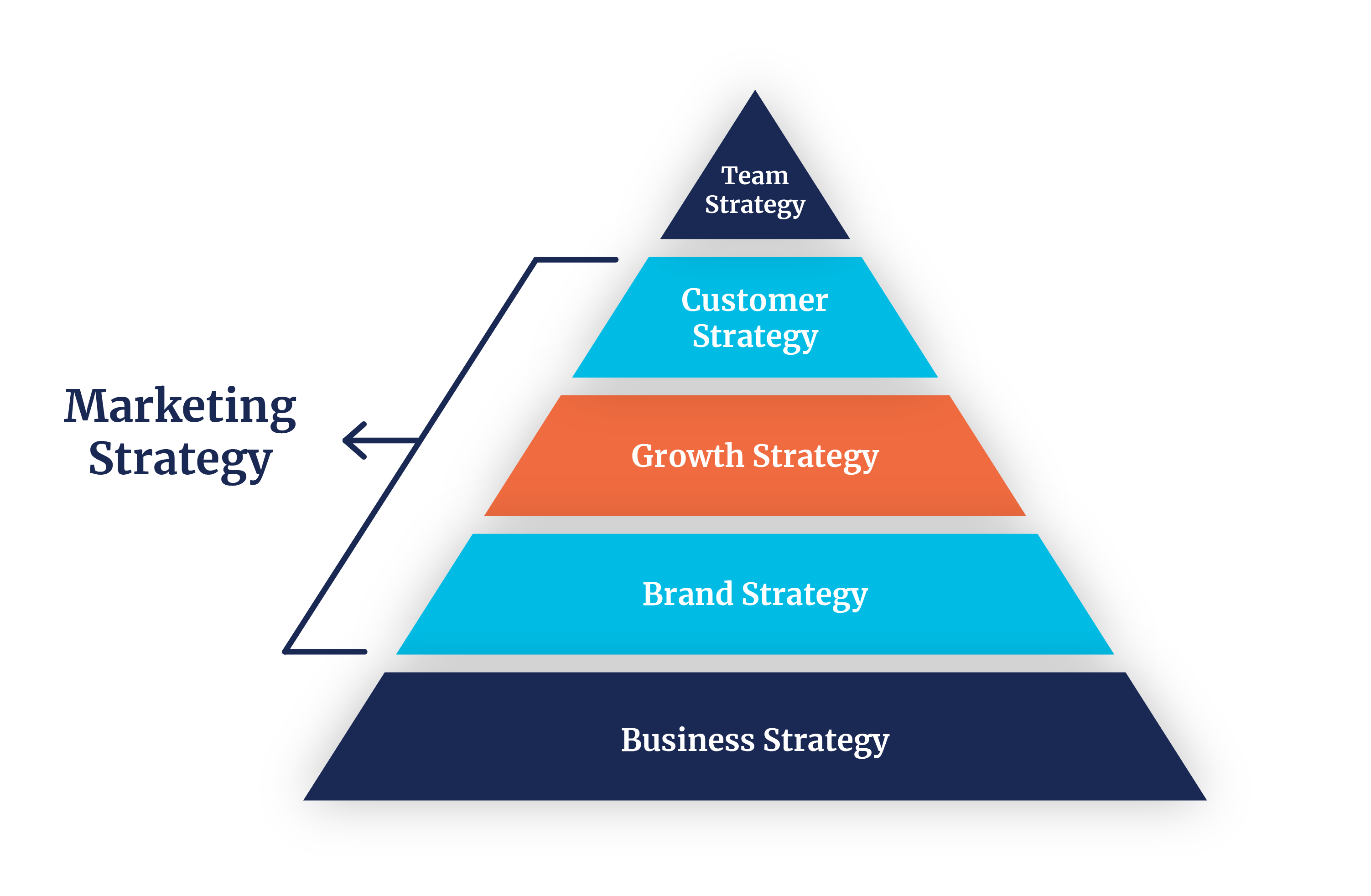
4. Brand Strategy

Your brand is more than just a logo or tagline – it’s the perception people have of your business. In this section, you’ll define your brand’s mission, vision, and values, and ensure that everything you do aligns with your brand identity. A strong brand strategy helps you build trust and loyalty with your customers.


5. Growth Strategy

This section is all about scaling your business. Whether it’s through new product lines, expanding into new markets, or increasing customer lifetime value, your Growth Strategy will outline the steps you need to take to achieve your business goals.


6. Customer Strategy

Your marketing doesn’t end once someone becomes a customer. The Customer Strategy section maps out the entire customer journey – from awareness to advocacy. It ensures that you’re not only attracting customers but also nurturing them into loyal, repeat buyers who refer others to your business.

Why the Marketing Snapshot Works

You might be wondering, “Can something this simple really make a difference?” The answer is a resounding yes. 

The Marketing Snapshot works because it forces you to focus on the most important aspects of your marketing strategy. It eliminates the distractions and helps you see the big picture.


Here’s why it’s so effective:

  • Clarity: With everything distilled onto one page, you gain a clear understanding of what you need to do and why. No more second-guessing or getting lost in the weeds.
  • Focus: The Marketing Snapshot helps you prioritize your efforts. Instead of spreading yourself thin across dozens of tactics, you focus on the strategies that will have the biggest impact.
  • Consistency: Marketing success doesn’t happen overnight. The Snapshot keeps you consistent by providing a roadmap to follow, ensuring that your efforts are aligned and working together.
  • Simplicity: There's beauty in simplicity. The Snapshot cuts through the complexity of modern marketing and brings you back to the basics- the things that really matter.


How to Get Started with the Marketing Snapshot

How can you start using the Marketing Snapshot in your business?

The first step is to take a step back and assess your current marketing efforts. Are they aligned with your business goals? Are you targeting the right audience? Is your message clear and compelling?

Once you’ve answered these questions, it’s time to fill out your own Marketing Snapshot. If you’re not sure where to start, don’t worry – I’m here to help.

I’m offering a free training where I’ll walk you through the process of creating your own Marketing Snapshot. By the end of the session, you’ll have a clear, concise plan that you can put into action right away.

Marketing Snapshot Training With John Jantsch

Tired of feeling overwhelmed by marketing?

 In this hands-on training, I’ll guide you through creating a clear, actionable one-page Marketing Snapshot that cuts through the noise and sets you on a path to success. Learn the key elements of a winning strategy, and leave with a personalized plan you can put into action right away.

Let's simplify your marketing and get results.


Start Transforming Your Marketing with the Marketing Snapshot

Marketing doesn’t have to be a headache. It doesn’t have to be complicated. With the Marketing Snapshot, you can simplify your approach, gain clarity, and start seeing real results. It’s time to stop chasing trends and start focusing on what really works.

If you’re ready to transform your marketing and grow your business, I invite you to join me for this free training. Let’s make marketing simple, effective, and fun again.


from Duct Tape Marketing https://ift.tt/mFqHEou
via IFTTT

The Senior Living Marketing Boom and How to Get Smart(er) with Your Strategy

The Senior Living Marketing Boom and How to Get Smart(er) with Your Strategy written by John Jantsch read more at Duct Tape Marketing

The Duct Tape Marketing Podcast with Debbie Howard

Duct Tape Marketing Podcast Debbie Howard Senior Living Smart

In this episode of the Duct Tape Marketing Podcast, I interviewed Debbie Howard. Howard is the co-founder and CEO of Senior Living SMART, a full-service marketing agency serving the senior housing industry. She and her partner, Andréa Catizone, have successfully grown the agency from a startup to a team of 40 employees over the past 12 years and recently celebrated by publishing her book Smarter(er) Marketing for Senior Living Communities. 

During our conversation, we explored the essential strategies that senior living communities need to thrive in an increasingly competitive market. We discussed the importance of using smart marketing automation, effective strategies for attracting the right prospects, and why your website is the most important asset for lead conversion.

Whether you’re involved in senior living marketing or looking to optimize your overall strategy with quality automation and a robust online presence, this episode is packed with actionable insights.

Key Takeaways

  • The senior living industry is booming: With the aging population driving demand, senior living marketers must differentiate themselves from the crowded market. A strategic approach that combines automation, personalization, and a strong online presence is key to standing out and capitalizing on this growth.
  • Debbie’s SMART Marketing framework: Strategy, Marketing Automation, Analytics, Resources, and Technology.
  • Strategy is the foundation of successful senior living marketing – Understanding the specific needs of your audience is critical to crafting messages that attract ideal prospects. In senior living, that means targeting not just potential residents but their families too.
  • Marketing automation enhances efficiency – By automating processes like lead nurturing, senior living marketers can save time while providing personalized experiences. This allows sales teams to focus on higher-intent prospects.
  • Your website is your most important marketing asset – With 90% of potential residents and their families visiting websites during their decision-making process, having a mobile-first, user-friendly site is crucial for lead generation and conversions.
  • Not all leads are created equal – Senior living marketing needs to focus on generating the right leads. Automation helps qualify leads over time, ensuring that sales teams engage only with prospects ready to move forward.


Chapters

[00:00] Introduction to Senior Living Marketing
[02:42] Understanding the SMART Marketing Framework
[05:16] The Role of Strategy in Senior Living Marketing
[08:35] Differentiation in a Competitive Market
[12:49] Aligning Marketing and Sales Strategies
[16:59] The Critical Role of Websites in Sales
[19:56] Introducing Smarter Marketing Certification


More About Debbie Howard:


Like this show? Click on over and give us a review on iTunes, please!


This episode of The Duct Tape Marketing Podcast is brought to you by:

Nobody does data better than Oracle. Train your AI models at twice the speed and less than half of the cost of other clouds. If you want to do more and spend less, take a free test drive at Oracle.


John Jantsch (00:01.01)

Hello and welcome to another episode of the Duct Tape Marketing Podcast. This is John Jance. My guest today is Debbie Howard. She is the co -founder and CEO of Senior Living Smart, a full -service marketing agency serving the seniors housing industry. She and her partner, Andre Catazon, have grown the agency from startup to 40 employees and are celebrating their 12th anniversary by publishing the first book that we're going to talk about today, Smart Err, that errs in parentheses.

Debbie Howard (00:26.058)

you

John Jantsch (00:30.384)

Marketing for senior living communities, how to work smarter, not harder. Debbie's also, by the way, a member of the Duct Tape Marketing Consultant Network. So we've known each other a long time. Welcome to the show, Deb.

Debbie Howard (00:42.912)

Thanks, John. Great to be on and be chatting with you today.

John Jantsch (00:46.694)

So there have been, over the years, a number of folks in the network have published books. Actually, there's another one that I'm interviewing tomorrow that has book also coming out. What would you say, I mean, goals, or I should say books are a great tool for a lot of reasons. What would you say are your goals for publishing a book?

Debbie Howard (01:08.096)

Yeah, I would say number one, it's because there's been such a pivot in the really in the prospect, if you will, for senior living. we just the industry in general is just really hitting that leading age of boomers coming in. And there's just a recognition that, you know, the way that our industry has marketed in the past is not going to be effective and is not going to work moving forward with this new generation of buyers that has very different expectations.

John Jantsch (01:19.42)

Mm.

Debbie Howard (01:36.066)

So really wanting to get ahead of that. We can only serve a certain number of clients in the senior living industry. There's more need than there's our ability to really serve them from a partnership level. So it gives us a greater reach to help more people. frankly, not everybody can afford a full service marketing agency of record. And so we hope it kind of levels the playing field. Maybe serve.

for some folks that are doing marketing on their own or using a marketing agency that doesn't have senior living expertise. And then I think just selfishly, I do think that a book is also great for being able to get those keynote speakers and get on the conference stage and we'll be developing a course as well with the option to either do it as just self -paced learning or really to do it from a certification standpoint with submitting to our

John Jantsch (02:10.599)

Yes.

Peace.

John Jantsch (02:18.46)

Mm -hmm.

Debbie Howard (02:33.61)

team of experts as they work through the course in order to kind of pass to that next level and achieve an actual certification.

John Jantsch (02:42.074)

You have, as the book...

denotes smart or marketing. have a smart, maybe your business as well, living smart, smart marketing framework. Is there a way to kind of break that quickly down what that is?

Debbie Howard (02:59.136)

Yeah, I think so. So SMART is an acronym. We've used it in our business since day one, but as it applies to the book, the S is strategy, the is marketing automation, the A is for analytics, R is for resources. That really encompasses content. And then the T is for technology. And in this case, it's really more about that more tech stack and getting the right technology and then getting everything connected.

John Jantsch (03:14.14)

Hmm.

John Jantsch (03:24.779)

Right. So let's start with strategy. One of my favorite topics, the S word, as you've called it. Why is that the, mean, this is a stupid question for me to be asking you because you and I have had lot of conversations about that. But for those out there listening, why do you, why do you call strategy the foundation of all effective?

Debbie Howard (03:49.794)

mean, especially for our industry, I think people have to focus on the strategy to attract their right and ideal prospect. You know, I think the industry is really fortunate that we don't have to create any demand for ourselves. There is plenty of demand that's created just by an aging population, right? We're not out there having to, you know, really create that. But what we do have to create is a way to attract the right residents for each of our brands.

John Jantsch (04:04.594)

Hmm. Right.

Debbie Howard (04:19.008)

And I think in general, in the past, we've been able to just be better than a nursing home. And that was OK. The next generation of buyers wants a lot more than that. And so we really just can't serve up the same messaging to attract the kind of prospect that's going to be ideal in this next generation. So super easy to turn on lead generation.

John Jantsch (04:26.044)

Mm. Yeah.

Debbie Howard (04:46.722)

just open up the floodgates and you can just be inundated with leads. We have clients that have over 200 leads a month. They can't possibly work the number of leads that they have, but it's really about getting the right leads that are going to be right for your brand, that are going to engage, that are going to advance and turn into residents. And that's really the part of the strategy that I think the industry has been lacking because everyone's pretty much serving up vanilla ice cream with different color sprinkles.

John Jantsch (04:56.018)

Hmm.

John Jantsch (05:00.347)

Right.

John Jantsch (05:16.535)

Well, and not to mention, because you talked about demand, demand is actually growing, right? That demographic is growing, you know, at least for the immediate period of time. And so a lot of competition has jumped into it, right? A lot of people saw dollars and, you know, private equity as, you know, playing a big role in it now. So a big part of strategy, I'm guessing for you is helping people differentiate, you know, because there are now so many players in every market.

Debbie Howard (05:45.12)

Yeah, there are a lot of people coming in because they're looking at the demographics and the age wave and saying, I want to get in on this, but they have no experience in the industry. you know, it's very difficult industry to actually operate in. So a lot of it is helping people to find, you know, their brand voice and their differentiator. What's your better and different story? You always talk about not just listing your services and amenities, but really what is the problem that you're solving?

John Jantsch (05:51.964)

Right.

Debbie Howard (06:13.534)

And not everybody is right for every operator. Some people really want a small, cozy environment that's more home -like. Some people want the chandeliers and the brand new communities that have all the bright and shiny technologies. And so it's really about drilling down to understand what's the story that you have that nobody else has out there. Because everyone has the dining and the transportation and the care, and everyone says it's the best.

John Jantsch (06:23.922)

Mm

Debbie Howard (06:40.634)

But at the end of the day, they don't have your story, your residence, your culture, your mission, your values. And so that's what we really focus on to attract more people who look like the same people who chose that brand historically. So we do a lot with, you know, persona interviews and focus groups and all of that to really get to their special sauce.

John Jantsch (07:02.896)

understand what they do that's unique. There's a great listeners are probably getting tired of me using this quote because I use it all the time. But you know, when it comes to that kind of brand and differentiation, there's a Dolly Parton quote that she said, just discover who you are and go be it. And I think that that's a lot of there's a lot of truth in that. mean, everybody has a brand. It's just whether or not it's intentionally communicated or developed. It's you it you know, you

You can't say, you know, we want to be this or be that. You are that, right?

Debbie Howard (07:36.93)

And as being okay with being that, right? So if you are a 25 year old building, you're experienced, right? You've been serving the neighbors for decades. You probably have larger apartments, because guess what? 25 years ago, they built bigger apartments and suites, right? You probably have the A market, because now all the A locations are taken. So the new construction has to come in on a busy road or in a more industrial area, because they don't have that.

John Jantsch (07:39.258)

Yeah, yeah.

John Jantsch (07:47.514)

Right.

Debbie Howard (08:06.178)

If you're new, you're only going to be new for a short period of time. So, you know, use that. But I do think that there's always that resistance of having marketing help us pretend to be something that we're not. And that's, think, for brands, really, they just get in trouble. know, people who say to me, know, Deb, we want, we want the younger, older people in here, the people that are 50. We want you. I had a client who said, you know, I was relating that I had

John Jantsch (08:19.546)

Right, right, right, right.

John Jantsch (08:31.527)

Yeah.

Debbie Howard (08:35.648)

gone through this experience with my mother and finding a community. And they said, well, you know, no disrespect, but we don't want your mother. We want you. And I was like, okay, so if you want me, I work full time. You know, do you have, you know, a workspace for me? You do you have a shared office space? Do you have a conference room? You know, I like to do pottery. Do you have a craft studio? Can I, do you have a kiln? Like, do I like play pickleball? Do you have any, you know, pickleball courts? And they're like, no, we don't have any of those things. I'm like, well, then how do you think you're going to get me?

John Jantsch (09:05.07)

Yeah. Right. Right. Right. So the next two letters were marketing automation. it's kind of a double edged sword or can be certainly, for, for folks because we can use it as a way to, not have to actually talk to anybody, for example. So how do you balance the fact that I'm guessing, the buyer in your particular case really wants to talk to something. They want to know who's going to be, you know, helping mom, right? so how do you balance kind of that marketing automation with the need for so much human interaction?

in this type of environment.

Debbie Howard (09:37.858)

Yeah, great question. Because I think especially this leading edge of the boomers, they want to remain anonymous and autonomous for as long as possible. So it's really up to marketing. think marketing gets the sale 70 % closed. They expect a lot of transparency. They want to go download guides and ebooks, and they want to watch videos and virtual tours. And it's a very long journey. it's

John Jantsch (09:46.247)

Right.

Debbie Howard (10:02.402)

you know, depending on which level of care, if it's active adult and independent living, it's over a year. If it's assisted living, you know, it can be more than six months, 22 to 28 touch points along that journey. And the sales team cannot possibly do 22 to 28 touch points for every single prospect that they have in their pipeline. So we look at marketing automation as being a compliment and nurturing the not yet sales ready leads, those marketing qualified leads.

John Jantsch (10:14.034)

Mm.

Debbie Howard (10:32.018)

They're not opting in to schedule a tour or clicking to call. But if we let them download a brochure or a funding guide, a family decision toolkit, they will opt in and then we nurture them. And there should really be no dead ends to the prospect journey because it is so long. But you're right, when that prospect is ready to talk to sales, they expect to talk to sales immediately.

John Jantsch (10:58.639)

Yeah

Debbie Howard (10:59.99)

So it takes a long time to get somebody to pick up that phone and to make that advance from a marketing qualified lead to a sales qualified lead. But I think that's what marketing automation does so well. And we look at reverse engineering the move -ins and where did they come from? What was the original attribution source? But also how many of them entered in with an intent to talk to sales? So we're able to take that subset of people who've gone all the way through the journey, become a resident in that community, and we're able to look at every single touch point.

John Jantsch (11:21.394)

Hmm.

Debbie Howard (11:29.826)

the way. And what's interesting is about for most of our clients, about 35 to 45 percent of the move -ins, the actual residents did not start out having intent to talk to sales. They progressed all by themselves with marketing automation without the sales team having to do anything.

John Jantsch (11:50.982)

Yeah. And I think that's a part of lot of people underestimate too, is how much of that is going on without our knowledge, right? I mean, and that we can actually lose the sale before we had ever had the opportunity to make the sale, you know, without really understanding that people need, people want to go on parts of that journey on their own, you know, because nobody really wants a sales presentation, right? They quite often want to know how something's going to work and be reassured that, you know, what you promised is going to happen.

But that happens very late in the journey a lot of times. how do you, and you and I have talked about this before, so I know a little bit, how do you align then that marketing approach with sales? Because a lot of times sales, my mother and father and mother -in -law father -in -law were in assisted living facilities and sales pretty much looked like whoever was walking by the phone when it rang.

So how do you get that, you alive?

Debbie Howard (12:53.642)

It's actually a friction point that we always have to work through with every client because salespeople think if they have every call and every lead, they're going to do better. But the reality is not everyone is ready for a sales interaction. And if you force it, you will lose them and they will go somewhere else. So it's really a matter of respecting the prospect and allowing them to decide how they want to engage with you.

John Jantsch (12:56.081)

Yeah.

Debbie Howard (13:20.06)

and allowing them to raise their hand when they're ready for that sales interaction. So how it usually goes is when we're kind of talking to a new client, we're talking about how marketing automation is a compliment. It does a lot of the rote and repetitive administrative work that the sales team doesn't have to do. Somebody can go on and schedule a tour. They can pick a date and time. Marketing automation is gonna confirm their appointment, thank them for scheduling, remind them that they're coming tomorrow.

And then after the visit's over, maybe ask them for a review. And so we want to get the salespeople the right leads at the right time. They can only manage so many. So we want them to have those high intent, ready to advance prospects, but we can't lose the pipeline. So at first the sales team likes that, right? That sounds really good. I'm gonna get the high intent, ready to convert leads. I'm gonna get fewer leads to work.

can spend more time with them and do what I do best, building relationships and report. It sounds great until 70 % of their leads disappear.

And then it's like, well, where's my leads? I want more leads. Well, these are all the leads that you threw away. These are the leads that you moved to loss. These are the leads that you moved, that you tried to reach twice and then moved to cold. But there's a little bit of a panic that sets in until they start seeing that the pipeline is advancing. Marketing automation is delivering them month over month. These sales qualified leads. And what's interesting is when you look at the length of stay,

John Jantsch (14:28.144)

Yeah, yeah, yeah. Right.

Debbie Howard (14:55.298)

for somebody who comes in as a sales qualified lead with lots of urgency, like I got to move in today, mom's getting out of rehab, we need something immediately. Their length of stay is far shorter, which means your revenue is far less and they're higher acuity, it's more stress on the team. The people that actually have the longest sales site nurturing cycle and start as marketing qualified leads end up having almost double the length of stay.

John Jantsch (15:02.364)

Mm, right.

Debbie Howard (15:23.2)

So double your revenue, they stay longer, they have a better experience and it's not a crisis situation.

John Jantsch (15:30.108)

That's an interesting observation that could probably apply to a lot of industries. I sometimes talk about almost making people jump through hoops, making them consume certain content, making sure that when they do show up, they're educated as much as like why we're a good fit. I know some people push back on that. like, no, I just want the phone to ring. you really do, there's a qualification process that goes through that. I know that's not exactly what you were describing, but

But I think that's interesting.

Debbie Howard (16:00.61)

think it is because I think that the assumption is, and we get a lot of people who say, I just want sales qualified leads, like just give me phone calls and tours. Sales qualified means they have an intent to speak to sales. It doesn't mean they're financially qualified or they're going to be a good fit. And so there's always has to be that additional, you know, qualification that happens in sales.

John Jantsch (16:07.246)

Right, right.

John Jantsch (16:17.808)

Yeah, yeah, yeah, yeah.

Debbie Howard (16:26.934)

for those people that have that urgency. But I think sometimes people have a very warped definition of what a sales qualified lead is. They think you're handing them somebody who's gonna tour today and move in tomorrow. And when they find out, know, they're not a fit either from a health perspective or a financial perspective, it's like, what has marketing done for us? Well.

John Jantsch (16:35.729)

Yeah.

John Jantsch (16:39.483)

Yeah.

John Jantsch (16:48.498)

Yeah. Yeah. And, and another element I'm sure that they have to deal with a lot is the 50 year old oldest daughter of the family has never bought this product before. Right. Really.

Debbie Howard (16:59.008)

and probably never wanted to and hopefully wouldn't have to. And it's disruptive and it's expensive and it's emotional and all of those things.

John Jantsch (17:05.586)

Yeah. Yeah. Yeah. Yeah. So, I know we fight with a lot of folks over websites. was one I was just looking at today. They were like, we need you to improve our website. was like, your website's a complete takedown. You know, it is basically a brochure from 20 years ago. well, how do you explain to people the role, that their website plays in the sales process?

Debbie Howard (17:27.474)

We just tell them it's their most important marketing asset. end of story, hard stop. And so if they haven't done anything in three years, they need to do something. Now, they don't want to hear that. And they want to talk about a refresh. Will it cost us more to refresh a bad website than it does for us to stand up a brand new, contemporary, mobile first, responsive type of a website?

John Jantsch (17:30.374)

Yeah.

Debbie Howard (17:54.434)

You know, every marketing channel in our industry drives people to the website. That's where the conversion happens. That's where the attribution happens. And that's where the nurturing begins. So, you know, 90 % of people looking for a senior living community will visit the website during their journey. So we feel like it's the number one most important investment.

John Jantsch (18:14.266)

Yeah. Well, and I think what a lot of people underestimate too, is like what you just said, that's quite often where they start. Because again, you got to start somewhere. That's the easiest thing. We sit down at a desk and we do a little research and that's where we'll start. But what I think a lot of people underestimate is as I get more involved in the journey, I'll come back, but I have different objectives now. I'm there for a different reason now. Right. And so I think a lot of people underestimate that is just like, no, it just needs to have our phone number on there. Tell them what we do. But you know, no, I've got different

questions and objectives my third for time there.

Debbie Howard (18:47.394)

100%, it completely changes. We look at the three stages, the weather, the stage, the where stage and the when stage. And people in the weather stage are just trying to figure out, know, whether it's now or, you know, the new year, whether I can afford it, whether dad's going to get the veterans benefit. There's all those weather questions. And then there's where questions that are about, you know, the brand and then the when is about the urgency, but you need content, content, content to, for every single stage, every question.

John Jantsch (18:59.079)

Yeah.

John Jantsch (19:06.097)

Yeah.

John Jantsch (19:15.76)

Yeah. You, are, mentioned the course, but you were actually going as far as a smarter marketing certification. want to talk about that and maybe why, why you decided to go down that route.

Debbie Howard (19:28.298)

Yeah, well, you we think that there's so much opportunity for education. We don't have an industry certification in marketing. You know, we do have other things like a certified senior advisor. There are certain things, but we just felt like there's a real opportunity in the industry to create some good standards and benchmarks. And really, for me, it's always about how do we make this a better experience for the prospect?

John Jantsch (19:37.116)

Hmm.

John Jantsch (19:56.668)

Yes, yes.

Debbie Howard (19:57.694)

And if we can help people deliver a better experience, it's gonna be a better reflection on the industry because to a large degree for people that are serving the assisted living and memory care part of seniors housing, they are selling a product that nobody wants, hopes they don't need, have never bought, don't know how to do it. And it's challenging and it's a heavy lift. So we feel like we can deliver a lot.

John Jantsch (20:15.122)

Mm -hmm.

Debbie Howard (20:25.514)

a lot of value to the industry. And we allow people, if they just want to take the course just for learning, just to do a better job internally or maybe holding another agency accountable, they can do that without the certification. But people that are really serious, each of our subject matter experts will be doing the videos, teaching their part of the course, and then they will review the work. So for instance, if somebody's doing a class on persona development, right, they're gonna have to submit.

their focus groups and their interviews and their outcomes and their persona documentation. And someone on our team will review it and then pass them or give it back to them for some more work.

John Jantsch (20:54.642)

Mm -hmm.

John Jantsch (21:08.71)

Yeah. And I think I've always believed the more education you can do, even with somebody who turns around and becomes a client, they're a better client, right? Because they understand why you're doing what you're doing or why you're asking them to do what, what you need to do. That's always been my, my point of view. Yeah. Well, Debbie, it was great getting to some time with you. you want to tell people where they might connect with you, obviously find out about the certification and pick up a copy of smarter marketing for senior living communities.

Debbie Howard (21:23.746)

Yeah, absolutely.

Debbie Howard (21:37.184)

Yeah, thank you, John. I'm on LinkedIn, very active on LinkedIn, so you can definitely find me there. Senior Living Smart is the website. The book will be published on Amazon, so available on September 17th, which is next week.

John Jantsch (21:53.298)

Yep. Yep. Depend upon when you're listening to this September 17th, 2024. bet you believe it or not, Debbie, people come back and listen to these years later. So I always like to get the date sort of out of their relative at least, but anyway, well, congratulations. And again, hopefully we'll run into you soon out there on the road.

Debbie Howard (22:10.486)

Thanks, John.


from Duct Tape Marketing https://ift.tt/w4N80TX
via IFTTT

Saturday, September 14, 2024

How ‘Company Culture’ Became Overused

How ‘Company Culture’ Became Overused written by John Jantsch read more at Duct Tape Marketing

The Duct Tape Marketing Podcast with Brian Gottlieb

In this episode of the Duct Tape Marketing Podcast, I interviewed Brian Gottlieb, founder of Tundraland Home Improvements and author of ‘Beyond the Hammer.’

He transformed a $3,000 investment into a multi-state enterprise with nearly $1 billion in lifetime sales. Gottlieb, an inspirational business leader, and Harvard Business School executive education alumnus, champions a leadership philosophy centered on strategy, empowerment, and consistent execution while founding charitable initiatives like “Windows for a Cause” and “Baths for the Brave.”

We discuss Brian’s journey in building a successful business from the ground up, emphasizing the importance of belief in leadership, creating a positive company culture, and the impact of community initiatives. Brian shares insights on effective feedback techniques, the significance of employee engagement, and how to align a team around a common mission. The conversation highlights the role of training and development in fostering a motivated workforce and the importance of understanding employee perspectives through stay interviews.


Key Takeaways

  • Starting a business with limited resources can lead to innovative solutions.
  • Belief in people is crucial for leadership and team success.
  • Aligning a team around a joint mission enhances performance.
  • Creating a positive employee experience is essential for retention.
  • Feedback should be constructive and encouraging to foster growth.
  • Stay interviews provide valuable insights into employee satisfaction.
  • Company culture is shaped by the behaviors tolerated within the organization.
  • Community initiatives can enhance employee engagement and brand reputation.
  • Recruitment should focus on finding individuals who align with the company’s mission.
  • Training and development are vital to building a skilled workforce.


Chapters:

[00:00] Introduction and Background
[03:10] Belief as the Foundation of Leadership
[10:11] The ‘Center and Sphere’ Approach to Feedback
[16:27] Engaging Employees Through Mission-Driven Initiatives
[19:20] Creating a Positive Employee Experience and Attracting Top Talent


More About Brian Gottlieb:


Like this show? Click on over and give us a review on iTunes, please!


This episode of The Duct Tape Marketing Podcast is brought to you by ActiveCampaign

Try ActiveCampaign free for 14 days with our special offer. Exclusive to new customers—upgrade and grow your business with ActiveCampaign today!


Brian Gottlieb (00:00): Back in the early days. I think the only rule of business is simply to stay in business. Sometimes it's the rules that we create in our own mind that limit us. It's my belief. If you're a business owner, one thing's for sure. If people love what they do, they tend to do it a whole lot better.

John Jantsch (00:14): Hello and welcome to another episode of the Duct Tape Marketing Podcast. This is John Jantsch. My guest today is Brian Gottlieb. He is the founder of Tundra Land Home Improvements and author of the upcoming book we're going to talk about today Beyond the Hammer, a Fresh Approach to Leadership, culture and Building High Performance Team. So Brian, welcome to the show.

Brian Gottlieb (00:35): John. Thanks so much for having me. Appreciate it. Let's have a good chat today.

John Jantsch (00:39): Yeah. So is there Tundra Land? Is there some story behind the name there? I find myself tripping over it every time. I want to say Thunder Land or something like that.

Brian Gottlieb (00:47): Yeah, people did mistake it for that at that time. First of all, I wanted to find a name that didn't exist on from a URL standpoint. So the business was Wisconsin based, which is the frozen tundra. So I thought, why not Tundra Land? And it seemed to work real well. And then of course I dialed one 800 Tundra Land to see who would answer in some plumbing company, somewhere answered. And I said, Hey, can I buy your phone number? And they said, sure. So I had the domain and I had the one 800 number. So he was a happy guy.

John Jantsch (01:16): They probably didn't even know what you were buying, right? I mean, they weren't using it for that. It just happened to add up.

Brian Gottlieb (01:21): Right, right.

John Jantsch (01:22): So in the bio, I didn't read this part, but to you talk about starting your business with $3,000. So I'm not going to ask you what challenges you face because it's obvious, right? But talk a little bit about the early days and really was there a pivotal moment, because you've obviously grown it to quite an enterprise now.

Brian Gottlieb (01:43): Yeah, right. 2009 in the back of a friend's warehouse on a plastic folding table with $3,000 in cash. I thought it was a great time to start a business. So look, there were a lot of people that in 2007 and eight lost their jobs, which also meant there was an opportunity there, some great talent out there, and it was to me, a great time to start a business. But sure, in the early days, everything was a challenge. I mean, everything was a challenge. $3,000 doesn't go very far. So this is Duct Tape Marketing. You have to go out and you have to make a lead, and you have to make a lead, and you have to sell a lead, and you have to install a lead, and you have to do all those things just to stay in business another day. Back in the early days, I think the only rule of business is simply to stay in business. But over time, we started to grow and grow. And when I sold all the businesses that original business, tand spawned into a couple of other businesses that covered multiple states in the United States. We had 600 employees and doing about 150 million in revenue when I finally sold all the businesses a couple of years ago. It was quite a fun ride. A lot of learning along the way though.

John Jantsch (02:47): Well, your book is essentially a, I dunno, would you call it a leader? Yeah, you'd call it a leadership book, I suppose. And I think somebody who's at some level managed 600 employees can actually call themselves a leader. A lot of your book is pegged to the word belief and this idea that it really starts with that. And I'm a fan of the idea of the power of the universe delivering if you have beliefs. So unpack kind of that idea and what it means to this entire book, or really even to your entire thinking about leading.

Brian Gottlieb (03:22): Yeah, so what it all really came from is that when you think about back in 2009 when I started the business, if you've asked me what my business was, I would've said, well, we're a construction company.

Testimonial (03:31): Maybe

Brian Gottlieb (03:31): Fast forward six years later, when I had 30, 40, 50 employees, I might've said, well, we're a sales and marketing company that happens to be in home improvements. But what really allowed us to grow was when we said, what are we really? Well, we're a training organization. Let's just be a training and development company, and what does that mean? And part of that process is believing in people and helping and getting people to believe in themselves. And the more people believe in themselves, the more they're willing to grow. Sometimes it's the rules that we create in our own mind that limit us. So can a leader change that perspective? And how do you influence the mindset of people on your team? John, when I first started the business, the success of the business depended upon how well I personally executed. But as you start hiring people and building a team, now the business' success depends on how well teams execute. And by the way, that's both in the leader's presence and in their absence. So getting people to believe in themselves, but also getting them aligned around a certain set of beliefs around a mission and a vision and things that really matter. And these are all the necessary ingredients to build an aligned team and aligned teams perform well in any market regardless of competition.

John Jantsch (04:42): So how do you get, you're in one of those industries where, I mean, there are a lot of businesses that knowledge workers are brought in and they're told the mission and we got to believe and we're all on the same team. And sometimes you feel like, I could be wrong, I am wrong. But sometimes the feeling is that, well, those people naturally get it, but okay, you hire a carpenter and they just want to go out and build the mantle on the job that they're working on and not really think of themselves as a training company. How do you kind of deal with that mindset? Or did you,

Brian Gottlieb (05:11): Yeah, that's a great question, John. So first of all, it's true. There are a lot of mission statements that are either, in some cases they're businesses, and other times it's just maybe a poster on the wall somewhere.

(05:22): And the question is, how do you bring it to life? How do you weave it into the fabric of your organization? And how do you make it so that everybody, whether they're swinging a hammer out in the field, just a carpenter or somebody that's working in the mall trying to schedule an appointment for a bathroom model, how do they understand what is their role in the mission and vision? How do you bring it to life? I'll give you an example of one way we did that if I could. So we would install replacement windows in people's homes. Well, when you put new windows in people's homes, you typically take the old windows out and you throw 'em in the trash, which normally that's okay, but our mission statement was to do well and do good. And what that meant for us is the purpose of business is to make a decent profit decently.

(06:03): So we always looked for opportunities where we could do just that and how can we involve others in the organization In doing so, one way was with these old windows. We would take these old windows out of people's homes, and instead of throwing 'em away, we would turn them into really cool art pieces by giving these sashes to local artists and community members and the high schools, and they would turn these windows into art pieces. And then once a year, all these windows would get auctioned off and the money raised would go to make a positive impact. Then the life of another individual. If the installer wasn't careful taking those windows out, we wouldn't have windows to auction. If the marketer didn't set an appointment, we wouldn't have windows to auction. So that's just one example of how you can take a mission statement and just really weave it into the business. And people then feel like their job is more than just a job. It feels like they have purpose, and that's really important. They also understand that their work is impactful.

John Jantsch (06:58): And there's countless, especially when we were going through after the pandemic and there was this quiet quitting and all whatever terms people wanted to call it. Really the bottom line came down to people saying, I, I'm not tired of working. I'm just tired of working here. I'm just tired of working for you. I want to work somewhere

Brian Gottlieb (07:15): Where I feel valued. I write about that in my book that there was a study upwards of 60% of people in the United States have left a job simply by the way, just to get away from a manager. So there are a lot of reasons why you write people quite quit after the pandemic, but then still there are a lot of unhappy people. And that's such a shame because look, it's my belief, if you're a business owner, one thing's for sure, if people love what they do, they tend to do it a whole lot better. So how do we get people just to love what they do? Because the customer journey really starts with the employee journey

John Jantsch (07:46): A hundred percent. I mean, I've said it a hundred times any way, shape and form that your business comes into contact with a customer, that person is performing a marketing function regardless of what their job title

Brian Gottlieb (07:57): Is. It certainly is. And it's interesting because when you think about scripting inside of an organization, it's quite common in the home improvement business where maybe the sales reps are scripted, but really the installers need to be also taught how to communicate with a customer. How do you ask for check? How do you make sure the customer is happy and all these sort of things? Because you're right. The thing about the home improvement industry, unlike many businesses, is 99.9% of every employee is customer facing, whether it's over the phone or face to face. And you're right, and everything represents your brand, and you just want to make sure that you're aware of that.

John Jantsch (08:34): Well look no further than the reviews, the five star reviews in the home service industry, and they don't often mention the company. They mention Rusty who fixed my boiler.

Brian Gottlieb (08:44): That's right. We had a couple of our installers. What they would do is while they were in the home doing whether a bath project or window project, they kept some nine volt batteries in their toolkit and they would say, Hey, Mrs. Jones, when's the last time you changed your smoke detector batteries? I'm here. I'm happy to do it for you. I'll tell you what, look, we always installed a great shower and a great window for people, but customers love that little 2% shift. It was a big deal for them.

John Jantsch (09:09): Well, a lot of it's because they're not getting that in a lot of places in their life. And so I think that it, I don't want to say it's easy, but it kind of lowers the bar, doesn't it?

Brian Gottlieb (09:18): Well, people deserve, customers deserve to have a great experience, especially when they're investing their money in something. Likewise, employees deserve to have a great experience. They're giving up a portion of their life inside of an organization. They should be happy doing so it shouldn't be a miserable experience. It doesn't. There might be some other

John Jantsch (09:38): Stuff they'd rather do. So let's get down to some brass tacks here, some in the weeds stuff. You introduce an approach to feedback that you call the center and sphere. You want to break that down.

Brian Gottlieb (09:51): So what happens when you tend to give feedback to people, even when it's just a little bit constructive, they tend to kind of shut down and people tend to remember the negative more than the positive. So when we give feedback to people, we want to transfer belief whenever possible, and we do that through the center of the sphere. We explained to them that A, we believe in them and we believe in them because, John, I believe in you because I've seen you do X, Y, and Z before, and I know you can continue to do well at that. What I'd like you to work on is fill in the blank, some sort of actionable feedback, but then you surrounded again with the sphere of encouragement because remember, the purpose of a one-on-one conversation when you're coaching isn't necessarily to terminate somebody. It's to coach them up. And to be a great coach, you have to be effective. And how do you be effective? Well, you have to connect with people and get people to really want it. Take advantage of whatever advice you're giving them and not look like they, you're beating up on them either.

John Jantsch (10:48): It's my pleasure to welcome a new sponsor to the podcast. Our friends at ActiveCampaign. ActiveCampaign helps small teams power big businesses with the must have platform for intelligent marketing automation. We've been using ActiveCampaign for years here at Duct Tape Marketing to power our subscription forms, email newsletters and sales funnel drip campaigns. ActiveCampaign is that rare platform that's affordable, easy to use, and capable of handling even the most complex marketing automation needs, and they make it easy to switch. They provide every new customer with one-on-one personal training and free migrations from your current marketing automation or email marketing provider. You can try ActiveCampaign for free for 14 days and there's no credit card required. Just visit activecampaign.com/duct tape. That's right. Duct Tape Marketing podcast listeners who sign up via that link. We'll also receive 15% off an annual plan. That's activecampaign.com/duct tape. Now, this offer is limited to new active campaign customers only. So what are you waiting for? Fuel your growth, boost revenue and save precious time by upgrading to active campaign today. Yeah, and it's tough. I know as a business leader myself, a lot of times people are doing good work. It's like it's really easy to take it for granted. Well, that's their job. They get paid to do that, but there's no question that pointing out when people are doing good is a really powerful tool, isn't it?

Brian Gottlieb (12:18): Yeah. What's interesting is some of the best processes came from employees that weren't necessarily satisfied, by the way, this whole thing that when an employee leaves, you're supposed to do an exit survey and an exit survey. Well, okay, that's great. It's an autopsy is what, let's call it an autopsy. Okay, but you mine so much valuable information. We started to do something called stay interviews. Instead of waiting for somebody to leave, let's interview them while they're actually working with us. Let's ask them four questions. The first question is, what makes you want to come to work every day? The second question is, what would one day make you want to leave? The third question is, what is one thing the company is doing wrong today? And the fourth question is, what is something you're not getting out of your leader that you really need? Mining for those things really tells us where we need to take the organization, because what happens is when a business grows, and with 600 people, you could imagine the org chart is growing and I'm getting further and further away from the customer and really away from the customer facing people.

(13:20): So stay interviews really connects the leader of the business to what the mindset of the team is, the true culture of the organization, how are people thinking? Because how they think affects how they act and how they act is how they behave, which is how the organization performs

John Jantsch (13:37): Well. And those are some pretty tough questions, and I think that somebody who has asked those questions is going to feel heard. It's like, oh, you care what I think?

Brian Gottlieb (13:45): And isn't that what people want? But we all want to feel heard, valued, and appreciated. More so than a paycheck, by the way.

John Jantsch (13:52): Yeah, yeah. No, it shows up all the time when people are surveyed. So how much of this, the word culture has certainly been pretty popular the last 10 years. How much of this really, the problem I have with the word culture is a lot of times people, this is what it should be. This is what it ought to be, as opposed to, this is what it is, because that's really what culture is. I mean, there's things you can do intentionally. So how much of this would you say is culture and how much of it is just figuring out who you are and being it?

Brian Gottlieb (14:19): Well, I think, look, let's talk about what culture is right there. I think the word is overused. Every business has a culture, whether you want it or not, you've got a culture. Now we can talk about what that culture is, but I believe culture is what do people think about the organization? What do they think about their, how do they think and feel about the business itself, and how does that affect organizational performance? We had a saying in our business that if you wanted to copy our performance, you first had to copy our culture, which means you had to copy what goes on inside of our people's heads. And that's a lot to me. If you have the right culture, and you can always inspect your culture, look at any organization. I visited plenty of companies. I know you have too, John, and if you look at how a company hires, how they terminate people, what does that process look like? How they promote, how they reward and compensate. That'll tell you a lot about the culture because it'll tell you what the priorities are inside of the organization, which also tells you how people think and feel about the business.

John Jantsch (15:22): So there's a line, I think it's directly from the book. Company culture is shaped by the lowest level of acceptable behavior in an, that's a pretty bold statement, Mr. Gotlieb.

Brian Gottlieb (15:35): Yeah. Well, what happens? It's a very important statement. It's easy. It's the manager that creates a toxic environment, shapes the culture of the organization, the high performer, low culture fit, the person that really gets results, but they're not good around the rest of the team that you try to isolate shapes the culture of the organization, the low performer, high culture fit, the person you in sales, it's like the person you love, but they can't even close a car door, but you keep them around because you love them. All of these things shape the culture of an organization. This is why it can't be ignored. One of the pillars in the book is that leaders are aware of the echo of their voice, and the idea is that you can't ignore these sort of things because you're right. The culture is shaped by the lowest level of acceptable behavior.

John Jantsch (16:22): I mean, it really kind of disempowers the people that say, Hey, I'm doing this and doing that, and look what they're getting away with. I guess they don't care.

Brian Gottlieb (16:31): It sends a wild ripple effect through the entire organization.

John Jantsch (16:35): Yeah, yeah. So you briefly mentioned Windows for a cause. You had another one, baths for the Brave or for the Brave. Talk a little bit about, you started talking about where they came from. What impact did they have really on your business to the point where you probably sought out my next business, we're going to do X, right?

Brian Gottlieb (16:54): Yeah, yeah. It's interesting because the thing about Windows for cause is as it makes an employee, a co-producer in the mission statement, it also makes the customer a co-producer. And that's really powerful when you can create a co-producing customer. IKEA does that really well. If you buy anything from ikea, everything comes in a little skinny box and you got to put it together. You know that going into ikea, but IKEA customers are co-producers. Keeping the costs of Ikea down Bath for the Brave was another example. It's so sad. The thing about the Bath business is it's very joyful, but there's a lot of sadness too. There are people that have, there are a lot of veterans, in fact, that have served our country proudly, but they have a shower because of mobility issues that they're petrified of. They can't step over their bathtub safely. They can't take a shower safely in their own home, and they don't necessarily have the financial means to do anything about it.

(17:45): Bath For the Brave was an initiative that we started where we surprised free veterans. We surprised veterans with free showers just in time for Veterans Day. And in fact, it wasn't just myself. It became a movement with 30 40 other home improvement companies across the country, all surprising veterans with free shower projects. When you talk about how do you involve an installer in your mission, I will share with you, John, the installers would fight with each other. They wanted to be the one to install the free shower for the veteran that served our country. And again, we can't do free showers for veterans if customers don't first buy showers from us. I think a tangible mission that creates a co-producing customer and involves your team in the process is really something

John Jantsch (18:32): Special. And that's why I love, from a marketing standpoint, and the home improvement business was probably as bad as any, it got really tough to find skilled labor there for a long time, especially as demand was skyrocketing. And I found that companies that did a great job with their employees and were actually able to promote how happy their employees were and what a great place this was to work. That became a tremendous brand, didn't it?

Brian Gottlieb (18:56): Yeah, that's right. That's right. Because word does get around, doesn't it? Word does get around. It's interesting. When I sold one of my businesses in 2022, and again, it was coming off of there's no labor shortage. We received 9,000 job applications the last year I had my business 9,000 applications that people that wanted to come. And by the way, this isn't Wisconsin where there are more cows than people, just to be clear. So that's a lot of applications, but people want be part of something really cool. And again, because really when you think about even recruitment is marketing as well. It's all marketing, isn't it?

John Jantsch (19:34): Yeah. A lot of people just think it's lead generation or something. It's like you run an ad and people show up, and it's really, if we're talking about all the things being true, people want to work a place with purpose. I guarantee you some percentage of a performers that you want, they're looking for that first.

Brian Gottlieb (19:52): That's right. And then if an organization can also create upward mobility, because as long as I've been in this industry, there's been a labor shortage, and so let's not even worry about that. Let's just be a training organization where we can take people right out of high school that didn't want to go to college, and let's teach them a skill where they can do quite well and have a wonderful life with great benefits and raise a family, and all those things that are really cool in life. But you have to believe in people to do that,

John Jantsch (20:21): Get good at their craft. Did you start apprentice programs? Was that part of your

Brian Gottlieb (20:25): We did, yeah. We were able to bring anybody in and just if they were willing, if they had the right mindset, if they were hungry and trainable and all those sort of things, yeah, we can put 'em on a path of success and didn't mean just because we hired them for this role, that's where they ended up. Sometimes we move 'em into another role inside of the business. Again, it really does come down to just taking a moment and trying to find the best fit for somebody and not just kicking 'em to the curb in the role they're in. It's not working out.

John Jantsch (20:51): Yeah. Awesome. Well, Brian, I appreciate you taking a few moments to stop by the Duct Tape Marketing Podcast. You want to tell people where they might connect with you and find more about Beyond the Hammer?

Brian Gottlieb (21:02): Yeah. You can always connect with me on my website, which is brian gottlieb.com and beyond. The Hammers available on Amazon, the audio version, Kindle, and of course the hardcover book. It's a great read. I think you really enjoyed it. It's a fun story. It's a parable, and it's also actionable, so you can plug it into your business very quickly.

John Jantsch (21:20): Awesome. Well, again, I appreciate you stopping by, and hopefully we'll run into you one of these days out there on the road.

Testimonial (21:36): I was like this. Found it. I found it. This is what I've been looking for. I can honestly say has genuinely changed the way I run my business. It's changed the results that I'm seeing. It's changed my engagement with clients. It's changed my engagement with the team. I couldn't be happier. Honestly. It's the best investment I ever made.

John Jantsch (21:52): What you just heard was a testimonial from a recent graduate of the Duct Tape Marketing certification intensive program for fractional CMOs marketing agencies and consultants just like them. You could choose our system to move from vendor to trusted advisor, attract only ideal clients, and confidently present your strategies to build monthly recurring revenue. Visit dtm.world/scale to book your free advisory call and learn more. It's time to transform your approach. Book your call today, DTM World slash Scale.


from Duct Tape Marketing https://ift.tt/TCD8Ktw
via IFTTT