Wednesday, November 8, 2023

The Art of Customer Recovery: Transforming Negatives into Positives

The Art of Customer Recovery: Transforming Negatives into Positives written by John Jantsch read more at Duct Tape Marketing


The Duct Tape Marketing Podcast with John Janstch
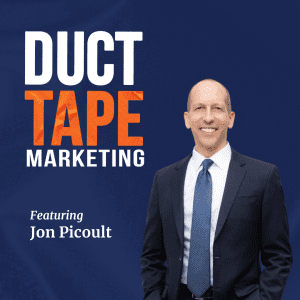
Photo of Jon Picoult

In this episode of The Duct Tape Marketing Podcast, we explore the art of customer recovery with Jon Picoult, a renowned customer experience expert, founder of Watermark Consulting and author of “From Impressed to Obsessed: 12 Principles for Turning Customers and Employees into Lifelong Fans.”  Jon has worked with some of the world’s foremost brands, personally advising CEOs and other members of the C-Suite. He helps organizations capitalize on the power of loyalty, both in the marketplace and in the workplace.

Key Takeaway:

In the world of customer experience, mishaps are inevitable. However, by approaching customer recovery with style, empathy, and exceptional ownership, businesses can turn these situations into opportunities to create raving fans. Remember, a well-handled recovery can often leave a more positive impression on customers than a problem-free experience.

Questions I ask Jon Picoult:

  • [01:01] How does somebody become a customer experience expert?
  • [02:48] How do you unify decision-makers in an organization around a customer experience vision?
  • [05:27] As the pandemic’s impact led to relaxed customer service, are we now entering an era where customers have heightened expectations?
  • [06:56] What role do you see speed playing in today’s market?
  • [09:06] Could you share a case where a company sought your assistance in transforming their customer experience?
  • [13:13] Have you encountered instances where customers were willing to pay more for exceptional service?
  • [15:10 What are the best strategies for fixing a poor customer experience?
  • [17:56] How can someone begin to identify and address gaps in their customer experience?
  • [19:52] What role will A.I. play in shaping the future of customer service and experience?
  • [21:19] Where can our listeners connect with you and explore your work further?

More About Jon Picoult:

Get Your Free AI Prompts To Build A Marketing Strategy:


Like this show? Click on over and give us a review on iTunes, please!

Connect with John Jantsch on LinkedIn


This episode of the Duct Tape Marketing Podcast is brought to you by the DeskTeam360

Desk team 360 is the #1, flat-rate, digital marketing integration team, that helps small businesses and marketing agencies with graphic, web design, and on-page marketing services.


John Jantsch (00:08): Hello and welcome to another episode of the Duct Tape Marketing Podcast. This is John Jantsch, and my guest today is Jon Picoult. He helps companies impress their customers and inspire their employees creating raving fans that drive business growth. He's the founder of Watermark Consulting and a noted authority on customer and employee experience. He's a sought after business advisor and speaker working with some of the world's foremost brands, personally, advising CEOs and other members of C-Suite. He's also the author of a book called From Impressed to Obsessed 12 Principles for Turning Customers and Employees into Lifelong Fans. So we're going to talk about customer experience today. So Jon, welcome to the show.

Jon Picoult (00:52): Hey, John, it's good to be here with you.

John Jantsch (00:54): So I'm always curious on people's origin stories for how they got into the particular line of work that they chose to focus on. So how does somebody become a customer experience expert?

Jon Picoult (01:05): Just lucky, I guess

John Jantsch (01:07): I should have said, how does somebody choose to as well now, not doubting it, I just mean I always love hearing what story backs somebody into what they're doing now.

Jon Picoult (01:18): Yeah, so my first entree into business was selling radio ads back in college, door to door selling radio ads because the college station that I was trying to get a DJ job at, it was a commercial station. It didn't get any funding from the university. And so they basically said, well, if you want anything other than the graveyard shift, you need to bring in some revenue for us. And so it was actually through that experience that I began to see how even very small details in your interactions with prospects or customers can have a really significant influence on their likelihood to purchase from you to repurchase from you. And so that was the first time I was kind of exposed to what I would now call customer experience, even though back then there really wasn't the term for it. And then eventually when I went into the corporate arena, I had the opportunity to work leading various areas like sales, marketing, service ops, distribution even.

(02:13): And that really gave me a chance to see how the customer experience is delivered from the perspective of many different silos. And that's a big challenge for many organizations is getting all of those functional leaders to really coalesce around one vision for the experience you're trying to deliver. And so after that experience, I kind of thought to myself, well, this is a unique perspective to have having walked in the shoes of all those people, and I always wanted to set up my own consultancy. And that was the trigger for me was leveraging that expertise and those different perspectives to help other organizations improve the experiences they were delivering.

John Jantsch (02:48): So my next question was really going to be about challenges. You teed up a pretty big one that somebody can have an idea of, oh, we should be seen as this kind of company, but then at the end of the day, you've got this person executing, this person executing. So how do you help people work through that particular challenge?

Jon Picoult (03:08): Yeah, I think it comes to good leadership in the end. I mean, that might sound trite, but I have found that the common thread of any company that I've ever worked with that has been successful in its efforts to differentiate itself through customer experience, it really came down to the top executives, if not the CEO themselves, being passionate about that and making sure that it was something that was woven through every action that the company took. So how do you make sure that you are not trying to herd cats in terms of all of these functional silo leaders? And I think that it really comes, it's the job of the chief executive to make sure that they are holding accountable, everyone in the organization for not just maximizing their own metrics and their own organizations success, if you will, but that they are cognizant of how they fit into the bigger picture and that they are standing up and raising their hand when they see that something that might be good for their organization is not good for some larger objective that the enterprise is seeking to achieve. And I think when you make heroes out of the people who step forward, raise their hand and say, Hey, I got an issue here, we need to recalibrate. I think that's how you start to create a culture where people are not just strong silo leaders, but good corporate citizens.

John Jantsch (04:29): And I

Jon Picoult (04:30): Think that's where you want to end up.

John Jantsch (04:31): Yeah, I mean, what I hear you saying is it's really related to culture, isn't it? Or permission to be that person to speak up, isn't it?

Jon Picoult (04:41): Absolutely. Yeah. I think that the cultural norms that surround executives within an organization are going to shape their behaviors. And if you've got a culture that rewards people for hitting the metrics and the objectives for their particular silo, ignorant of how that may or may not actually hurt other parts of the business, that's a problem. And conversely, when you create a culture where people are just by default thinking about the enterprise as a whole, I think that the sum ends up being greater than the parts.

John Jantsch (05:13): So we went through one of these days, I'm going to get through a show without blaming the pandemic on something that's changed in business. But I think we went through a period in the pandemic where people were very forgiving. It's like, I know you can't get people, oh, supply chain, I get it. I mean, it was like customer experience kind of went by the wayside in a way out of necessity maybe. And then I think some companies relied on it a little too long, and I feel like we've almost got this backlash now where it's like, no, that passes over. I actually, things have changed to the point where I actually expect more.

Jon Picoult (05:47): I think you're absolutely right. I think there was this period of forgiveness among both B two B and B two C consumers. But I think we are long past that. And I think that if anything, that there is an aggravation among customer populations when they see a company that is trying to attribute its experiential weaknesses

John Jantsch (06:11): To

Jon Picoult (06:12): The pandemic at this point, what four years in. And I think there's very little tolerance for that. And I think that you're seeing the companies that are succeeding and thriving following the pandemic are the ones that didn't cut to the bone during that downturn and were able to bounce back strongly and continued their focus on the quality of the experience they were delivering.

John Jantsch (06:34): Right. There's been a lot of talk lately. In fact, I don't know if you're familiar with Jay Bearer was on this show recently talking about speed being maybe number one in terms of customer experience for a lot of industries. What role do you see that? I want it fast. I want the response to be quick. I want the solution to be quick or the resolution to be quick. What role do you see speed playing in today's market?

Jon Picoult (07:01): I absolutely agree that for many businesses, speed is a key driver to customer success. And I don't want to say customer satisfaction because satisfaction in my view is setting the bar too low. It is a way to delight people when you are super responsive. And the reason that I would say that's the case is because number one, it's rare that people see that these days. So when it happens, it creates what I refer to as a peak in the experience that people remember kind of snaps their head around and they're like, Hmm, that's unusual. I don't normally see that. The other thing that quick responsiveness does is it actually reduces the amount of effort that your customers need to invest in order to accomplish something with your business. Because if you're not super responsive, it really saddles me as the customer with more effort because what do I need to do? I need to reach out and follow up with you or follow up with a colleague or maybe another potential business or supplier that can help me more quickly. So I would say yes, speed is important. What I want to be clear though is it's not always the key driver, and it really depends on the nature of your business and what you want to be famous for. So for example, there are some luxury,

John Jantsch (08:12): The fastest brain surgeon on the planet is probably not what you want.

Jon Picoult (08:16): Example. Yeah. Wasn't the example I was thinking of, but yeah, that's a good one too. But I'm thinking about some luxury products like Hermes for example. There are luxury high-end providers where the fact that you actually have to wait potentially many weeks for the product to come in and be delivered to you maybe to be handcrafted for you, that is actually a strengthening element of their brand experience. And so their speed is not a plus. So that's the one caveat that I would say to your listeners is you got to really know what you want to be famous for as a company. And speed in that case might play into the value proposition, but in other cases it might detract from it.

John Jantsch (08:57): Yeah, absolutely. So let's use an example. A lot of people use the term raving fans. You use it as part of your unique positioning for your organizations. Do you have an example that you can think of a company that brought you in and ask for, Hey, we need to transform our experience and maybe talk about some of the things that they did or you did or how they turned it around?

Jon Picoult (09:19): So one example that comes to mind, and the reason I like this example is because when many people approach customer experience improvement, they think about fixing pain points. They think about, let me look for stuff that's broken and then figure out how I can remedy that. And that's obviously an important component. But what I always like to tell people is that the customer experience game isn't just about find and fix, it's about discover and delight.

John Jantsch (09:48): And

Jon Picoult (09:48): What I mean by that is it's about understanding things that your customers need or want that they never thought to ask you for because they never imagined that you could possibly help them. And so the example that I have actually is from a medical technology company that my firm worked with one of the largest companies in its industry. And essentially what they do is they provide automation products for laboratories. So for example, when you go to a local lab or a hospital and you have a blood drawn or something, it's their systems that are automating the processing of those samples. And so here's the thing, they have this great newfangled technology that completely automates the entire hospital laboratory. Well, that's great, super exciting. But what they never realized was that one of the biggest challenges for their customers was actually the change management that was involved for the people working in the lab

John Jantsch (10:44): Because

Jon Picoult (10:45): The people working in the lab, these lab technicians, they had done it the same old way for decades, and then suddenly there's this newfangled technology coming and they have to completely relearn how to do their jobs. And as you can imagine, there was a lot of friction and hesitation and concern there. And so in working with this, that was an opportunity. There was an opportunity for my client to actually provide their clients a turnkey program to help manage the change in their laboratories. And when they started to offer that, it was like they made the lab leaders at these hospitals heroes in the eyes of their employees because now it wasn't just like, oh yeah, we got this new technology deal with it. There was a whole structured program for them to take their staff through and navigate them through that change. And that's something that I would say was the kind of thing that creates raving fans within your employee ranks, which as you know from my book, I consider a type of customer and it comes down to delivering something that nobody really asked for.

John Jantsch (11:47): But

Jon Picoult (11:47): When you look and listen carefully, you see, you know what? There's an opportunity there to do something different.

John Jantsch (11:52): And that's a perfectly case of what can be seen as a customer experience touchpoint as actually being a core differentiator from a marketing standpoint. Yeah,

Jon Picoult (12:01): That's right. And to this day, they actually do market that.

John Jantsch (12:04): Hey, have you ever tried to hire freelancers and found that the quality of work was lacking? Or you got all the outsourcing excuses as to why the work didn't get done on time? Well, DeskTeam360 has revolutionized the outsourcing game with their insourcing program that eliminates all those frustrations and excuses. You get unlimited graphic designs, website funnels, CRM, email automation integrations, automations, really anything that requires you to log into software. Imagine all the time and frustrations you can save from trying to get your tech work done properly. We use DeskTeam360 every day in our business, and so I've negotiated you a 10% deal. That's right. Just go to a Deskteam360.info, book a discovery call, and you'll receive the special duct tape marketing 10% off because hey, your pal John always takes care of you. So that's it. Go to Deskteam360.info and book your call today. So talk a little bit about, there are a whole boatload of surveys, research that suggests people are willing to pay more for a better experience. What have you seen in terms of that price being down the list because the experience was up here that people were willing to pay more?

Jon Picoult (13:22): Yeah, it's absolutely true. It is not a myth. It bears out, as you say, in study after study. And the bottom line is that happy, loyal customers are less price sensitive because they don't focus on the cost of a particular transaction, but rather they look at the value of the entire relationship that they have with you. And so when they're less price sensitive, you can absolutely derive greater revenue from them, not only in terms of adjusting your price, but they're also more likely to entertain ideas for other products and services from you. They're more likely to refer others to you. So there's a whole bunch of goodness there, but absolutely price. I'm not going to say they'll pay any price no matter how good the experience, but you absolutely have more latitude. And the research that I've done that is described in the book actually looked at the shareholder returns of companies that excel in customer experience. And I mean, the contrast is quite stark. The companies that lead in customer experience outperform that those lag by an over three to one ratio. And one of the key reasons they're able to do that is because they get a loyalty lift from their revenues and that just increases their profitability.

John Jantsch (14:31): Well, I think you said one of the key words value, I mean, convenience has value, for example. So I think obviously all those things go into the equation of analyzing whether a price is worth it or not. I had you share an example of creating raving fans in a positive environment of doing something proactively every now and then somebody screws up. And a customer experience is not what they meant it to be. Somebody has a bad experience. Do you have any advice for somebody to think of as a point of view or, I don't think it's a set tactic because it applies differently across the board, but how do you save or a bad experience? I mean, how should you approach saving a bad experience?

Jon Picoult (15:13): And so I love the question. This is very dear to my heart. It's one of the key principles I talk about in the book, the notion of recovering with style. And the key thing for people to understand when they're faced with a failure in the experience is that you should not resign yourself to creating a dissatisfied customer or even just a neutral customer. Because what great companies recognize, all the legends out there, the legendary brands, they sometimes screw up. But what makes them different is that they recognize that doesn't have to, it doesn't necessitate creating that dissatisfied customer and that if you overcorrect on the recovery, you can actually create a peak in the experience that's going to eclipse the negativity of the failure

John Jantsch (15:56): Itself.

Jon Picoult (15:57): And this has been researched so much that there's actually a term for it. It's called the service paradox, and it refers to this idea that you could create a more loyal customer after the failure if you're recovering in style as compared to before the failure even occurred. And so my suggestions for folks is first, that's the number one rule, is you got to approach it. If there's a failure, you say, this isn't just about fixing, this is about fixing. And then figuring out how can I create that peak that people are now going to remember? And I think the way to accomplish that is, number one, it's very easy to immediately focus on solving the problem, but the first thing many customers want is just to feel seen and heard. And so simply empathizing with them and acknowledging the issue and the impact that it had on them, that can go a long way. Once you do that, then the second key thing is to take exceptional ownership. What really aggravates people at a point of failure is when you have somebody that says, that's not my department. I can't really solve that. I've got to pass you off to this other area. When somebody just says, I can help you with that, just those words immediately, the tenor of the conversation changes. And if you back that ownership up with great execution, that's going to serve you well in terms of recovering with style

John Jantsch (17:11): And going all the way back to one of our original points is, I mean, that's a culture, right? I mean, that's like I give you permission to own that and solve that. And even if it's not in your job description, I give you permission to solve that rather. That's

Jon Picoult (17:25): Right. Yeah. I call it Velcro ownership, and I encourage any company I work with to embrace Velcro ownership, where you imagine everybody comes to work, they're dressed in a Velcro suit every day, every complaint, every need, every request is like a Velcro ball that's thrown at 'em. And what happens when it hits your Velcro suit, it sticks, it hits your desk, it is yours. You might get other people involved to help resolve the issue, but you're always keeping a on it, and the customer sees that it's you advocating for them and owning the resolution of their issue.

John Jantsch (17:54): So if somebody's listening to this and they're thinking, yeah, I know we've got some holes. I don't know where they are, but I just feel it. What's the process? I mean, is it an audit you take a look at? I mean, how does somebody get started?

Jon Picoult (18:07): I think there are a number of ways to get started. I'll suggest too to your listeners. The first is become a customer yourself. Whatever business that you're in, sit down, take off your business hat, pretend that you don't know anything, and try to sign up for that service. Try to go buy that product. Try to go learn about that offering that you've got, because inevitably, when you go through the experience yourself, you will come across things where you'll be like, whoa, I didn't know that it was like that. And it's going to give you a whole host of ideas of how to improve it. So that would be my first suggestion. The second is, and this would be a compliment, is go out to your staff and simply ask them, say to them, what are the top three things that annoy or frustrate our customers?

(18:52): Tell me about those. And the neat thing about that, John, is the mere act of asking your staff and listing them in that process, as long as you act on their ideas, not only is it going to help improve the customer experience, it actually helps improve the employee experience. Because what your employees then see, they're not just gears in the machine, cogs in the wheel. You are engaging them as a trusted partner to really help elevate the quality of the experience by capitalizing on the intelligence that they bring to bear. And so that serves to elevate the experience of both parties, the customer and the employee alike.

John Jantsch (19:27): And I wonder how many employees hate their job because they're the brunt of bad customer experience processes, right?

Jon Picoult (19:34): Yeah. Well, and that's why it's a vicious cycle. A bad customer experience leads to a bad employee experience, which in turn leads to more bad customer experiences. But it works the other way too. If you can get that flywheel going in a positive way, you're unstoppable.

John Jantsch (19:50): Alright. We've waited really till almost the last minute of the show for me to ask you, what's the role of AI in customer service, customer experience, good, bad, ugly?

Jon Picoult (19:59): I'm not going to purport to know the answer to this because it's obviously a rapidly evolving technology.

John Jantsch (20:05): But

Jon Picoult (20:05): Here's what I would say is in the short term, I believe the greatest benefit of it, and that is giving your people a copilot that can guide them, coach them, help them navigate what, in many organizations can just be a mass of information that people have to sift through in order to find something that the customer's looking for. How do I solve this problem? How do I answer this question? I think that ai, by being with the large language models, to be able to sift through that information very efficiently, it can provide a very effective copilot to your staff. So they could quickly zero in on the answer. And what that allows them to do is to focus not so much on the transaction of getting the information. It allows them to focus on the interaction with the customer because it becomes so easy for them to get the answer that they can then focus on the softer aspects of the interaction that make it feel warm and inviting to that customer.

John Jantsch (20:58): Yeah, I saw a demo of a product, some of these developing where it actually listens. And so it's providing the answers before in real time. In real time. It's like, this person's asking about this, oh, here are a couple of scenarios. So yeah, obviously that makes it a lot easier to get people very effective in their jobs very quickly.

Jon Picoult (21:19): Absolutely.

John Jantsch (21:19): Well, John, I want to appreciate, or I do appreciate you some by the Duct Tape Marketing Podcast. You want to invite people to where they might connect with you and learn more about your work and anywhere you want to send them.

Jon Picoult (21:29): Yeah, sure. The best way to learn about my work is to go to my website, which is jonpicoult.com. That's J-O-N-P-I-C-O-U-L-t.com. And from there you can learn about my book, my speaking services, and my consulting firm.

John Jantsch (21:43): Yeah. Awesome. Well, again, I appreciate you taking a moment, and hopefully we'll run into you one of these days out there on the road. Did you know that with HelloFresh, you get Farm Fresh, pre-portioned ingredients and seasonal recipes delivered right to your doorstep, skip trips to the grocery store and count on HelloFresh to make home cooking easy, fun, and affordable. That's why it's America's number one meal kit. They have so many in season ingredients. I mean, you'll taste the freshness of fall, all those fall vegetables that are really right on your doorstep straight from the farmer's field to your table, I think it's pretty easy to see that HelloFresh takes a hassle out of mealtime. But did you know it could also be less expensive than going to the grocery store and way less expensive than take out fast food junk? My wife and I really love the fact that we can order vegetarian meals. We're vegetarians, and they have us covered with a wide array of options. So go to hellofresh.com/50duct, that's five zero DUCT, and use that code 50duct for a 50% off, plus free shipping. That's right. Go to hellofresh.com/50duct and you're going to get 50% off your first order plus some free shipping. Check it out. I.


from Duct Tape Marketing https://ift.tt/FojUmxv
via IFTTT

Saturday, November 4, 2023

Weekend Favs November 4

Weekend Favs November 4 written by John Jantsch read more at Duct Tape Marketing

My weekend blog post routine includes posting links to a handful of tools or great content I ran across during the week.

I don’t go into depth about the finds, but I encourage you to check them out if they sound interesting. The photo in the post is a favorite for the week from an online source or one I took on the road.

  • Luna.ai – Luna.ai uses artificial intelligence to make it easier than ever before to gather high quality leads for you. After learning about your business, Luna.ai can even perform outreach to those leads in the background while you work on other parts of your business. Boasting an impressive 5.5% reply rate to cold emails, it’s worth checking out if you could use more leads.
  • BrightBid -You can use BrightBid to optimize your paid advertising with AI. Not only does BrightBid optimize your ad copy, it also speeds up testing on your ads, saving you money on your campaigns.
  • Fluency – Fluency is a comprehensive marketing automation platform for agencies and enterprises. It has a robust selection of tools and features to scale your marketing efforts, including ad optimization, ad customization, and comprehensive dashboards and reporting.

These are my weekend favs; I would love to hear about some of yours – Tweet me @ducttape

If you want to check out more Weekend Favs you can find them here.


from Duct Tape Marketing https://ift.tt/6XZo1Dh
via IFTTT

Thursday, November 2, 2023

Unlocking the Power of Data: Transforming Metrics into Actionable Insights

Unlocking the Power of Data: Transforming Metrics into Actionable Insights written by John Jantsch read more at Duct Tape Marketing

The Duct Tape Marketing Podcast with John Janstch

Photo of Peter Caputa IVIn this episode of the Duct Tape Marketing Podcast, I interviewed Peter Caputa, CEO of Databox, an innovative player in the realm of marketing analytics. With a focus on transforming raw data into actionable insights, Databox has carved out a niche for itself, offering unique solutions for businesses to visualize their metrics in a customized manner. Peter, with his rich background in data analytics and his leadership at Databox, brings a fresh perspective to the challenges and opportunities in the world of marketing analytics.

Key Takeaway:

Peter and I dove into the world of data measurement, emphasizing the transformative power of turning raw figures into actionable insights. Peter shared the significance of looking beyond just the present numbers and understanding historical patterns and the importance of harnessing the power of data tools for any size company. The rising importance of predictive AI-driven analytics became clear, hinting at a future where forecasts will shape decisions.

Questions I ask Peter Caputa:

  • [0:48] What exactly does Databox do?
  • [02:06] Can you share your experience starting with an early-stage company (Hubspot) that eventually went public?
  • [07:11] With so many tools claiming the same space, how does Databox differentiate itself?
  • [08:43] Many tools only show real-time data, making historical comparisons challenging. What’s your take on that?
  • [09:55] At what company size does implementing a tool like Databox become beneficial?
  • [12:46] As we move towards predictive analytics, how is Databox addressing this trend?
  • [15:11] Attribution remains a challenge. How can businesses approach it more effectively?
  • [17:41] Can you elaborate on benchmark groups and how someone can participate?
  • [19:01] Is it possible for users to bring their own groups for benchmarking?
  • [20:54] Where can listeners connect with you and learn more about Databox?

More About Peter Caputa:

Get Your Free AI Prompts To Build A Marketing Strategy:


Like this show? Click on over and give us a review on iTunes, please!

Connect with John Jantsch on LinkedIn


This episode of the Duct Tape Marketing Podcast is brought to you by the DeskTeam360

Desk team 360 is the #1, flat-rate, digital marketing integration team, that helps small businesses and marketing agencies with graphic, web design, and on-page marketing services.


Speaker 1 (00:13): John Jantsch (00:08): Hello, and welcome to another episode of the Duct Tape Marketing Podcast. This is John Jantsch, and my guest today is Peter Caputa. He's the CEO of Databox. He's a former VP of sales at HubSpot, and currently specializes in helping companies grow by implementing sales and marketing excellence. This company, databox, is a business analytics software company that helps companies monitor, report, predict, and improve their entire company's performance in one's spot. So Pete, welcome to the show.

Peter Caputa (00:38): Thanks, John. Appreciate the intro and great to be here.

Speaker 1 (00:13): John Jantsch (00:41): I just described your business, but let's just take the non-marketing speak and just say, what does Databox do?

Peter Caputa (00:50): Yeah, well, I think the biggest problem that we solve for companies is that their performance data is all over the place. So marketing is the worst where you have website analytics like Google Analytics, maybe HubSpot, you have SEO data from SEMrush, hres Search Console. You have social data ads, data, et cetera, and everywhere. And so what we did is we built integrations with all those tools, recreated the visualizations and the charts and the metrics that you're used to seeing so that you can click and basically have all that data in one spot, view it, set goals against it, forecast performance on it, benchmark it against similar companies, et cetera, et cetera.

Speaker 1 (00:13): John Jantsch (01:32): So before we get more into that, I want to go backwards a little bit in your entrepreneurial journey. You were an early HubSpot person. In fact, when Brian and Dharmesh were actually creating it and wrote the book Inbound Marketing, that's when Duct Tape Marketing was really around and I had a lot of conversations with them early on. I should have gotten on the partner train. That's one of my big regrets in life. A whole lot of people were pitching cr mish kind of things at the time, and I missed that opportunity, but to still have done a lot with HubSpot over the years. But talk a little bit about being in that early start company and now that is public, and I know you've got a lot of opinions about what's going on there, but I'm curious just kind of what it was like to start in that small of a company that really blew up.

Peter Caputa (02:18): Yeah, a hell of an experience had no idea. At the time when I was joining, I was running a startup of my own and making a living but not going anywhere. And I did that for several years, about six years. So when I joined HubSpot, it was like, ooh, a steady paycheck and other people that seem really smart and doing digital marketing, which is what my startup was. So it was a step up from what I was doing. When I look back, it was actually quite risky. I was 15th employee, I remember the hundred person party, the hundred customer party. I remember we went and grabbed beer and pizza and celebrated that. We had a hundred customers paying, it's two 50 a month, so do the math. That's hundred grand annual revenue. So really risky startups that I joined, but obviously it turned out quite well.

(03:05): And then I stayed there for nine years. I was the first person to go from individual contributor sales rep to manager, director, and MVP. And so I grew a big team there. I started the agency partner program that you passed on and built that up. And that became about, and now is about 40% of HubSpot's revenue. I always stayed there until that team was counter million in annualized revenue, which was around 2016. And so HubSpot, since then's going crazy, I think as a company, they're doing 2.2 billion in annual revenue and 40% of that, or roughly, I don't think they shut publicly that often, but about 40% of that is coming in through partners. So it's a billion dollar business at this point. So quite an experience.

Speaker 1 (00:13): John Jantsch (03:51): And I know you didn't get on here to talk about HubSpot, but I have one more question to dive into. I'm good. That partner program is a lot of agencies who you work with still today. That's really your target today. And I work with a number of HubSpot agencies and I'm hearing some grumbling that they got to a point where they said, oh, I know you were with us a long time, but we're doing something different. And here's the new program. I'm hearing some grumbling that happens when companies grow. And I know you're still a big fan of HubSpot, but I'm curious how you feel like that move has really turned out for them.

Peter Caputa (04:27): So HubSpot, the HubSpot execs are used to me being bluntly honest. I was bluntly honest as an employee, so I'm happy to continue with that reputation. But yeah, so they definitely made a bunch of changes. I think the net of it is it went from HubSpot teaching a business model to follow to more of a partner program where you're reselling technology. And I don't think a company with a hundred or however many customers they have, I think is way over a hundred thousand, can continue to be a business. They chose not to continue to be a business model advisor to agencies,

Speaker 1 (00:13): John Jantsch (05:04): Which

Peter Caputa (05:04): Is the way the program started. We were helping these agencies improve their cashflow by switching away from project work to retainers, inbound marketing retainers. And I think that time has passed. HubSpot doesn't even really talk about inbound marketing that much. They talk about the CRM. And so HubSpot I think recently has made painful for some, but necessary changes for both their business as well as I think for the partners. And what's happening now, from my observations and talking to lots of partners is that more HubSpot is really bringing partners into deals and leveraging them for service sales, assistances and service so that HubSpot doesn't need to continue to build a massive services team and can rely on agencies to do the very customized personalized work to make ACRM and a market automation and the services platform work. So I think it's the right move for HubSpot to change it where they have a smaller number of partners that they're referring or bringing into deals where they can really control for the quality.

(06:08): And those partners are big enough and capitalized enough to be able to offer a breadth of services that help the customer implement the entire HubSpot product suite. So I think they're making necessary changes, but yes, it's painful. I think for the smaller agencies who don't get those referrals, they also change the commission program. So the commission starts to expire, especially for those smaller firms that don't keep up with selling new licenses. Definitely. I think what we'll see, my prediction would be that there's a little bit of a rationalization. There's fewer small partners, more big partners, maybe more specialized partners who specialize either in a type of service or a niche market that can bring expertise that HubSpot doesn't have internally. But again, these are things that happen in a maturing partner program. Yeah,

Speaker 1 (00:13): John Jantsch (06:53): And it's a proven model. I mean, it's a Salesforce kind of model I bringing partners in many software before Salesforce. Yes, exactly. Yeah. So let's go back to data. You started to describe what you've done with databox. I'm curious, there are a lot of other tools out there that claim that same space. Agency analytics, for example, is one that comes to mind. How do you tell people, here's what we're trying to do that's different?

Peter Caputa (07:15): Yeah, the most unique thing that we do is that we turn data into KPIs. They'll provide a level of flexibility in terms of what data metrics somebody wants to show and how they're going to show it and how they're going to visualize it. And it really enables a custom reporting platform. So I think when we're comparing to companies like Agency Analytics, I think the flexibility of our system is really good When you're comparing us to companies more like business intelligence tools, where we are strong is our native integrations. So turning the data that gets pulled from APIs, from sale, HubSpot or Google Analytics or whatever, and translating that for the user into the metric that they're used to seeing. So sessions by referral source sessions, by organic sessions, by paid

(08:04): All the way down to the keyword level or the ad level, we recreate that. So it's point click in choosing making choices and dropdowns as opposed to what many BI tools do is like, okay, I get your data into a warehouse. And then once you do that, learn how to write SQL or use this thing and look at all your data and then extract the right metric. So what that net that allows is somebody who's not extremely technical to get in and get set up relatively quickly with the metrics that matter from the different tools that they have.

Speaker 1 (00:13): John Jantsch (08:33): What has always irritated me with some of the tools in that similar space is the data's there in real time, but there isn't a real handy way to go, well, let's look at last quarter and compare. Have we grown? Have things changed? It's like, nope, here's today's data. And I always find that sort of irritating with a lot of the tools,

Peter Caputa (08:53): Some of, I think the lower end tools where they are easy to set up, but it's because they've coded it exactly the way they've coded it. And so there is that lack of flexibility. We actually spent two years doing a project we internally called custom date ranges that allowed the user to just change it to any date range in the past ranges month to date, whatever date range you could want on the fly as they're looking at the dashboards. Believe it or not, it was an extremely complicated problem to solve and

Speaker 1 (00:13): John Jantsch (09:24): That's why it exists, right?

Peter Caputa (09:26): And that's why there's lots of tools that don't bother. And when we did it, it really just caught us up almost with what the native tools provide. And so it was a big project that we didn't frankly get a lot of return because it's kind of table stakes, I think.

Speaker 1 (00:13): John Jantsch (09:42): So how big, I know the answer to this, but I'm going to tee it up for you anyway. How big does a company need to be? Because a lot of times people think about data and data warehouses and BI tools, we're talking enterprise stuff, but how big does a company need to be to where this type of implementation makes sense?

Peter Caputa (10:00): So we have a very inexpensive starting price point, I think, don't quote me, I think it's $59 a month, I should know that, but so we have a very low starting price point. So we have lots of small businesses that use us. Our sweet spot of customers that stick with us for a long time and use the product in the way that we kind of intended it is that 11 to 250 employee mark.

Speaker 1 (00:13): John Jantsch (10:25): We

Peter Caputa (10:25): Have many customers that are bigger as well, but there's a smaller number of companies that are that bigger. So we have a lot of customers or big percentage of customers in that 11 to two 50. It's generally whether they have ongoing marketing and advertising activities, they have salespeople or a shopping cart or subscription, and they have multiple people doing things that improve the performance of the business. And each of those people are using multiple tools. That's when our product becomes valuable, especially for an owner. We have a persona we call Decision Maker Dave, and

Speaker 1 (00:13): John Jantsch (11:02): That

Peter Caputa (11:02): Is the person that usually signs up for our product and the person that logs into our product most frequently, they usually, they'll delegate the setup of our product to their managers or maybe an analyst, but usually just their managers. And so it tends to be those small business owners that want that visibility into the performance of their entire company without bugging everybody. They want it real time. They want to be able to explore it themselves. They want to be able to track performance to goal this month of this quarter across the team.

Speaker 1 (00:13): John Jantsch (11:33): Hey, have you ever tried to hire freelancers and found that the quality of work was lacking? Or you got all the outsourcing excuses as to why the work didn't get done on time? Well, DeskTeam360 has revolutionized the outsourcing game with their insourcing program that eliminates all those frustrations and excuses. You get unlimited graphic designs, website funnels, CRM, email automation integrations, automations, really anything that requires you to log into software. Imagine all the time and frustrations you can save from trying to get your tech work done properly. We use DeskTeam360 every day in our business, and so I've negotiated you a 10% deal. That's right. Just go to a https://ift.tt/i9Xt6GV, book a discovery call, and you'll receive the special duct tape marketing 10% off because hey, your pal John always takes care of you. So that's it. Go to https://ift.tt/i9Xt6GV and book your call today. So one of the big words when we talk about anything today is prediction or predictive ai. That's really what AI does. So increasingly we're going to expect that kind of performance from everything, including our dashboards that we set up instead of them being rear view mirror. We want to see what's ahead. How are you addressing that trend?

Peter Caputa (12:54): Yeah, so we have a bunch of things in play around AI and predictions and also really guidance for how to improve performance. But to answer your question very specifically, a standalone forecasting feature where once you can act to your data sources, you can select from different metrics that we would pull from there, and then it forecasts it automatically for you based on your historical performance. So that's pretty new. It's a standalone feature. We haven't even integrated it with our custom dashboards yet, or custom reporting feature working on it. But yeah, it's very much important piece of what we consider a set of features that are important for really managing the performance of the business. What we observe is that a lot of companies kind of just do reporting as a check the box activity. It's like, yep, I sent you my results, go check it out. And it's either good or bad. It's almost like a report card that after you've taken your test.

(13:49): But in reality in business, we get to go and take the test again in a way where we can say, we got next month, we can change it up, we can do something different. We do more or less, we could try something completely new. So there's a bunch of features. We're building forecasting, benchmarking, which allows companies to compare to peers correlations, which automatically detect correlations between leading and legging indicators, which is a really difficult concept, I think, for a lot of marketers to grasp. And so we're trying to make that easy. So important to understand the things you do today that will impact next month, next quarter. And so that's just some of 'em. There's a few others that we are working on. They're in the works that we'll launch this quarter and next quarter, but we think there's an opportunity to help companies make decisions by giving them those types of functionalities that help them not just predict the future, but also think and think about what they could do to impact the future.

Speaker 1 (00:13): John Jantsch (14:45): So I do want to talk, you mentioned benchmarking and benchmark groups, which is kind of an educational that I know you do alongside this. I do want to get to that, but I want to ask about one more topic that drives me crazy and that's attribution. I have people that join our fractional CMO program that have been following me for 10 years and I run an ad and they see it. Oh yeah, I remember John's out there exactly 10 years later. So what are some ways that people can start thinking about attribution in a more effective way? I don't think many of the tools do a very good

Peter Caputa (15:19): Job. No, I think if you're only using Google Analytics or HubSpot, any automated website analytics tool, if that's all you're using, you're seeing maybe 25 to 50% of what's actually happening. Because if you write a book and it gets sold through Amazon, you don't even know who that is, let alone whether they read it right? And I know you've written a bunch of books, you have a podcast. There's no way to connect your podcast to your CRM to see, hey, they listen to 10 episodes and now they're in our funnel. There's so many things now that happen to actually be the more effective marketing tactics and channels that aren't measurable by the tools that most companies use. Now you can measure how many downloads did I get on my podcast? You can measure how many.

(16:02): So often you get a report from Amazon, how many books were sold. And so you can see directionally whether that content is resonating with your audience, but you can't connect it to the sales or sale that you got unless you ask. And so I think we're back to 1990s marketing attribution, 1980s before the internet was around where when you called somebody's business, they asked, oh, how'd you hear about us? And they said, word of mouth, A friend referred or Yellow Pages or saw you at a trade show two years ago, whatever it was. And so if we ask those questions on forms on our website, on our Zoom sales calls, then we can start to actually get a piece, a much better picture of which marketing is working.

Speaker 1 (00:13): John Jantsch (16:46): The problem is

Peter Caputa (16:47): Very few companies are doing that in any kind of structured way.

Speaker 1 (00:13): John Jantsch (16:51): Well, and I tell you too, you'd take that with a grain of salt too, because we have a lot of organizations we work with where we use that model, and people don't remember where they heard, they just pick one.

Peter Caputa (17:02): Yeah, I think capturing on a form is tough. People are like, I'm just trying to get through this form. I want to book

Speaker 1 (00:13): John Jantsch (17:06): Call.

Peter Caputa (17:07): I just want the stupid ebook. Why am I asking? Catching this question. But when you get somebody in a sales conversation, they will usually like, oh yeah, I've been following you guys for this and listen to your podcast. You get a little more context. But then there's a whole process of grabbing that data, organizing it, and then analyzing it, which requires human to

Speaker 1 (00:13): John Jantsch (17:26): Usually for fun. We'll sometimes put, my great aunt told me about you as the first choice. And when we get a bunch of those, we know they're just getting through the

Peter Caputa (17:34): Form. No, it's important to have an open text field, I think, in those.

Speaker 1 (00:13): John Jantsch (17:38): So let's go back to the benchmark groups a little bit. And again, I'm just going to open it up and you tell me what you're doing with that and what you've seen and how somebody might be able to participate in that.

Peter Caputa (17:48): Sure. So it's a free product. It's available@benchmarks.databox.com. You can go there, sign up, get access to benchmarks from tens of thousands of companies who have opted in, and they've agreed to anonymously, I shouldn't put that in quotes. They agreed to anonymously share their performance data in order to access a benchmark that allows them on a report to see here's how we compare. And we've organized those companies once again and honestly by company size and industry and type of business, et cetera. So you can go in and see how does my Shopify performance metrics compare to other e-commerce companies with 50 or more employees or something like that, or how can I go and see how my HubSpot performance metrics compare to other companies that are SaaS companies? And so completely free, we're on a mission to help companies just understand how they should be performing, because I think it's really hard and confusing for most small businesses to figure that out. Not only is it hard for them to even know what metrics to track, it's hard for them to know, is this good or bad? And so that's what we're trying to answer. Could

Speaker 1 (00:13): John Jantsch (18:59): Somebody, I was going to say, could somebody theoretically bring their own group? I want to benchmark my customers, something of that nature,

Peter Caputa (19:07): Especially

Speaker 1 (00:13): John Jantsch (19:08): B2b, obviously,

Peter Caputa (19:09): We're coming up, we're just short of about a hundred partnerships, which is what we call them, where other companies decided to say, I want to build a benchmark on my own. So we have an agency, for example, that only works with mental and behavioral health clinics, and they have 200 of those clinics as clients. And so what they did is created a group, they can add their clients to it or ask their clients to opt in. And then once that's done, it automatically calculates the benchmark. And so now that agency is the owner of the only, I think, the only proprietary benchmark for behavioral mental health clinics that want to measure their Facebook ads, Google Ads, Google Analytics and Search console performance. And nationwide, they have nationwide coverage. So they can even see how is your performance in Texas compared to your performance in Pennsylvania. So they have this amazing data set that they now can go in and say to a client or prospect, like, you're spending a lot more than the average and your results are less. Or you could probably afford to spend a little bit more to keep up with your peers. And if we were able to increase our reduce the CPC cost per click, maybe you can justify that, and that would ultimately yield them more results. So it allows them to go in and consult objectively through either a new prospect or client.

Speaker 1 (00:13): John Jantsch (20:27): Awesome. So it's effectively bringing in, it's very focused on advertising and kind of a core set of

Peter Caputa (20:34): Marketing. Social media. Yeah, CRM data. We have a lot of sales data, some finance data, although people are a little less likely to share that even though it's anonymous. So it's a lot more marketing and sales.

Speaker 1 (00:13): John Jantsch (20:47): Yeah. Awesome. Well, Pete, I appreciate you taking a few moments to come and chat with the listeners of the Duct Tape Marketing Podcast. You want to tell people where they can find you, maybe connect with you and certainly find out more about databox.

Peter Caputa (21:00): Sure. Yeah. So I'm very active on LinkedIn these days. So Peter Caputa on LinkedIn, there's two of us, but one doesn't post and I post almost daily, so I'm pretty easy to pick

Speaker 1 (00:13): John Jantsch (21:10): Up. And your Peter Caputa the fourth

Peter Caputa (21:13): As well? I'm fourth, yes. I'm the fourth. My great-grandfather father and my son are all Peter Caputa. So yeah. And there's actually a Peter Caputa fourth. That's what I meant. There's another guy in Germany that's the fourth, which is crazy.

Speaker 1 (00:13): John Jantsch (21:25): Oh funny.

Peter Caputa (21:27): And then Databox is just databox.com, just like if they see the video, they can see it on my hat here. But databox.com, just like it sounds

Speaker 1 (00:13): John Jantsch (21:35): Awesome. And we'll have it in the show notes as well. So again, appreciate you stopping by and hopefully we'll run into you one of these days out there on the road.


from Duct Tape Marketing https://ift.tt/cbZFInm
via IFTTT

Wednesday, November 1, 2023

The Importance of Simple Messaging for Marketing Success

The Importance of Simple Messaging for Marketing Success written by John Jantsch read more at Duct Tape Marketing

The Duct Tape Marketing Podcast with John Janstch

In this episode of the Duct Tape Marketing Podcast, I interviewed Ben Guttmann, a marketing and communications expert, professor, and author of Simply Put: Why Clear Messages Win — and How to Design Them. He’s an experienced marketing executive and educator on a mission to get leaders to more effectively connect by simplifying their message. 

Currently, Ben teaches digital marketing at Baruch College in New York City and consults with a range of thought leaders, venture-backed startups, and other brands.

Key Takeaway:

From the design of his book cover to the clear title, Simply Put: Why Clear Messages Win―and How to Design Them, Ben highlights the importance of simplicity. He talks about concepts like fluency and discusses how the things we perceive as easy often bring about positive reactions. Ben and I explored the five key principles of simple messaging: being beneficial, focused, salient, empathetic, and minimal. Understanding these principles can significantly impact the way you market your business.


Questions I ask Ben Guttmann:

  • [01:32] What was the thought process that went into trying to make the book cover as simple as possible?
  • [04:56] Why do clear marketing messages win?
  • [06:30] Do you find it is actually harder to be simple?
  • [10:48] Is simplicity a technique that people can actually use in some ways to mislead?
  • [12:05] What are some examples of great messages and why?
  • [14:03] What are the five principles of how to create simple and effective marketing messages?
  • [15:33] How do you show empathy in your marketing message?
  • [19:10] How can people connect with you and where can they find your book?

More About Ben Guttmann:

Get Your Free AI Prompts To Build A Marketing Strategy:


Like this show? Click on over and give us a review on iTunes, please!

Connect with John Jantsch on LinkedIn


This episode of the Duct Tape Marketing Podcast is brought to you by the DeskTeam360

Desk team 360 is the #1, flat-rate, digital marketing integration team, that helps small businesses and marketing agencies with graphic, web design, and on-page marketing services.

Speaker 1 (00:03): Hello and welcome to another episode of the Duct Tape Marketing Podcast. This is John Jantz. My guest today is Ben Guttman. He's a marketing and communications expert, professor and author of Simply Put, why Clear Messages Win and How to Design Them. Currently, Ben teaches digital marketing at Baruch. Hopefully I said that right. College in New York City and consults with a range of thought leaders, venture-backed startups and other brands. So Ben, welcome to the show.

Speaker 2 (00:33): Thanks for having me, John. It's great to be here. And yes, you did pronounce Baruch correctly.

Speaker 1 (00:36): Okay. I thought that's probably, that was the New York pronunciation anyway. Right? So you owned an agency right before doing your thing here?

Speaker 2 (00:45): Yeah, I ran a marketing agency called Digital Natives Group for 10 years. I had a couple partners. It was a ton of fun. We started in an old professor's basement up in Westchester and we did the reverse commute for a year doing that. They had some extra space in their basement. We slapped their logo on the wall, we're on some folding tables, and that was a ton of fun. We started with the local ice cream shop and camera shop, and eventually we worked our way up to the N F L and I love New York and a bunch of really awesome clients.

Speaker 1 (01:14): Yeah, that's awesome. So some of what we can talk about, we can talk about in the context. Obviously the message in the book is for anybody, but certainly agencies work with a lot of people trying to figure out their messaging. So we could probably talk about both those contexts. One of the things I wanted to hit on first was the book title is Simply Put, and I would say the cover is one of the simplest covers I've ever seen. So I'm sure it was intentional, but I'd love to, obviously people are going to have to go online and look at the cover. You're not going to see it here unless Ben, there it is. Okay. I knew he'd have one. What author doesn't do that? What was the thought process or what went into trying to make it as simple as possible?

Speaker 2 (01:55): Oh yeah, I appreciate that. I mean, getting to this was a bit of a journey. So this is a traditionally published book. My publisher is Barry Kohler, who they're excellent. My agent was saying he's been in this business for 30 years, 40 years, and this is the most author friendly contract he ever saw when he saw the offer from them. So I'll give them a big thumbs up as part of this. But as part of the process, which is interesting, it kind of replicated a piece that we talk about in the book about testing and about talking to your audience is it wasn't just here's five names. The people internally are going to look at them and figure out which one works. It was we put together a list of names, list of titles, a list of subtitles, and we went out and I pulled in a bunch of people that were like my target audience that worked in marketing or that were entrepreneurs that were leaders of some form. And I said, well, which of these titles best encapsulates the message I want to say in this book? And I got quantitative feedback, I got qualitative feedback, and that's how we ended up at Simply Put in terms of the title. So that was a fun process. And then the cover itself, so my functional background is in design. I mean, that's the hat that I wore as

Speaker 1 (03:08): Creative

Speaker 2 (03:08): Director for a long time. And I didn't design the actual book, but where I worked with their, I worked very closely with their internal designers. And because my background was as a creative director and as a designer, it was a lot smoother of a process than somebody who comes in having no background with that. I knew exactly what words to use. I knew the colors and the typefaces that we wanted to lean towards, and we go through lots of iterations, but we eventually got to something which I feel like really stands out.

Speaker 1 (03:39): So you didn't say I'll know it when I see it. Just design something, I'll know it when I see it. The great direction.

Speaker 2 (03:46): A little bit. A little bit. I've got plenty of little doodles in my notebook here. Also where I would, I doodle it holds up to the camera and talk to our designer. One thing that, it's funny, so you mentioned I teach at Baruch College. My students, they're all marketing majors, but there's a wide range of things that means, and some of them have a background in design, but I specifically include a lesson on design in my course because I'm saying, look, you might not be a designer, you might not want to be a designer, but at some point if you're working in marketing, you're going to work with designers. And it's important for you to have the language and the base level understanding that allows you to get the best out of them. And so I think that this is an interesting example of that too.

Speaker 1 (04:30): Yeah, I always tell people when it comes to marketing topics, you don't have to get down and know how to do ss e o, but you sure better know how to buy it, right? I mean, that's kind of what it comes down to. The same idea. You have to understand it enough to know what you're looking for, your objectives are. So let's cut to the chase. I mean, why do clear messages win?

Speaker 2 (04:52): So I say this in the first page of the book there, which is why do some messages work when others don't? Right? Why do some advertisements work and others fall flat? Why do some warnings work? Why do some political slogans work when others don't? And the answer is that the ones that are effective are simple, and the ones that aren't are not simple always. And if that's enough, if that's it, then don't buy the book. You got it. You don't need to read anything else. But if you're interested in the why or the how, then that's how we end up with a 208 page book about saying something simply, which sure sounds like I didn't take my own advice. The backbone to a lot of the kind science behind. It's this idea of fluency, which scientists, sorry, psychologists, cognitive scientists will describe fluency as anything that is easy.

Speaker 2 (05:41): We know that word fluency, we can be fluent in English or Spanish or man or motorcycles, but when something is fluent, it's easy. It's easy for us to take something from out in the world and stick it in our heads and make sense of it. And when something takes less mental processing power, when it's easier for us to get in and use, we like it better. There's a whole body of research about this. We are more likely to trust something more likely to buy something more likely to something that is easier than something that is more complicated. If something is harder to read or see or understand, even something that's like a blurry font that is associated with all sorts of negative feelings, which are again, not likely to buy, not likely to trust, these are the things that we don't want as a marketer.

Speaker 1 (06:30): Do you find, I certainly have found over the years, and certainly working with clients, it's actually harder to be simple, but I think sometimes people misunderstand the word simple as being short or something like that. And there's really a lot more to that effective being simple and being effective. I, I started with the point of it's harder to be, and I think that's why I always quote this. I think it's attributed to Mark Twain. I would've written a shorter letter if I'd had more time. I don't know if that's who said it or not.

Speaker 2 (07:07): I say that same thing actually. You mentioned I was going to drop the same quote.

Speaker 1 (07:13): So I guess I've been rambling now and haven't asked the question. Here's the actual question, why is it harder?

Speaker 2 (07:20): So I mean, again, that quote is great. It is one of those things that's often attributed to Mark Twain, but I don't think it's actually his, just like everything else, that it's either Mark Twain or Abraham Lincoln, every quote or Yogi

Speaker 1 (07:29): Vera, Yogi, Yogi Vera, Albert, Einstein. There's

Speaker 2 (07:31): Like four or five people. That's it. The thing about simplicity, so you also mentioned the idea of less, right? And I mentioned this, especially when I talk, I have five different principles in the book. One of them is minimal. It's not everything is about minimal. There's stuff about saliency and empathy and everything else, but when we talk about minimal, we're not talking about the fewest number of words, the fewest number of paragraphs, fewest number of pages. We're talking about the least amount of friction. And I'm looking at this from a user experience perspective. I mentioned the design background before and talk about the title and figuring out that word design was the part that we noodled on the most was I really wanted to get that word in there because that's the perspective that I'm taking on this, which is we want to minimize the amount of friction.

Speaker 2 (08:18): If there's a bump in the road somewhere where we don't understand something, where it becomes harder for us to make use of something, we're going to go take the off ramp and go somewhere else, right? There's 13,000, sorry. There's 13 hours a day that the average American spends consuming media. We see thousands of messages in that time. There's plenty of other things competing for our attention. And so any bit of friction is a piece, is an opportunity for us to get sidetracked. But to answer the question of why it's so hard, part of it is internal, part of it's external, the internal component. And there's some great studies in this book that I cite from his book, subtract, which just came out. It's all about this additive bias that we have when we're faced with a question of how do we improve something or change something.

Speaker 2 (09:08): But whether it's something like a Lego structure or a mini golf course or a vacation itinerary or a piece of music or anything else, they've run through this experiment dozens of times. Our bias is to add our first choice for 75% of s s O is to add instead of subtract. And this is, again, repeatable throughout a lot of different frames and ends up becoming, it becomes something like feature creep. If you look again to the UX world, and then the external component is that we have all sorts of structures set up in our work, in our society, in our life that will reward more, reward the addition, but don't so much reward the subtraction. You don't get the award for maintaining a bridge or taking a bridge down. You get the award and you get your picture of the paper for building a bridge or something like that. And then ultimately it takes a lot of blood, sweat, and tears to be simple. You don't have anywhere to hide. We've all been in meetings where we don't have the answer to something and we just throw a wall of sound at the other side to try to get out of that sticky situation. And that's a defense mechanism that a lot of us can put up. It's ultimately harder for us to be simple.

Speaker 1 (10:22): So I'm going to take a negative turn for a moment, and I'm not debating that this isn't just as effective. Maybe you'll get your point actually across, but sometimes people use very simple messages to actually be misleading, to actually hide behind what's really there. We can see it in politics all the time today. Defund the police is a message that says maybe kind of one thing, but it's way more complacent than that. So is this a technique that people can actually use in some ways to mislead? I mean, we see it all the time.

Speaker 2 (10:56): Yeah, I think that's certainly something that can be said for almost everything in marketing. And one of the models that I was looking at as I was writing this book, and I wanted to try to be as close to this other book on the shelf, would be influenced by Robert Cialdini. And I'm sure you've read it, I'm sure everybody in this podcast has,

Speaker 1 (11:18): Robert's been on this show a couple of times.

Speaker 2 (11:22): That was one of the foundational books for me when I read it in college about doing this. And I think he has a really great perspective in that book, which is this is about defending yourself sometimes against the influence and the practice of persuasion. And I try to as many, as much as I can, lean in that same direction, which is saying, this is about how we can do good things trying to avoid and not about how to manipulate or to trick anybody.

Speaker 1 (11:50): He said, he's been on my show a couple times and he actually said that very thing. He said, I set out to write this book to warn people of here's how you're being influenced. I created the roadmap for how to do it. So he goes there as well. Hopefully you can cite an example or two maybe of a redo. I'd love to hear that somebody here was kind of their messaging or whatever, and we turned it into this. Or even just if you weren't prepared to answer that, just even maybe a couple examples of here's a great message and here's why.

Speaker 2 (12:23): Oh yeah. And so in the book I talk a little bit about one of the reasons simplicity is so effective is that it's kind. And the example I use there is I look at traffic signs. So here in New York, we had a mayor a few decades ago named Ed Cotts who was kind of gregarious character and

Speaker 1 (12:43): On a Saturday Night Live. Sure.

Speaker 2 (12:46): And so his Department of Transportation put up signs that have become this iconic piece of road infrastructure, which has since spawn sequels and people buying the souvenirs, which is, don't even think about parking here, don't even think about parking here. When you compare that to the more Byzantine kind of no parking of the state of this day, that

Speaker 1 (13:06): Violators

Speaker 2 (13:08): This many axles, whatever, it's one of those is kind. And one of those is nice and so kind is when you care about the outcome, it's when you care about the wellbeing and the fundamental nature and goodness and outcome of what you're saying. Nice is the surface level piece of it. That is the, I care about politeness, I care about decorum, I care about everything, just kind of going smoothly with a smile and getting out of there. And so that's an example of that sign. Don't even think about parking here is simple because it's kind, but it might not be nice. There's another version of that which was like, no, I'm going to butcher this one. It's like, no parking, no stopping, no standing, no kidding. And so these types of signs, their embodiment of a little bit of the New York idea where we're kind, we're not always nice, but we're certainly kind.

Speaker 1 (13:58): So the second half of the subtitle is and how to design them. So let's spend a little time talking about the how to part of it. Is there a five step framework? Do we just go ask our customers and they tell us what we should be saying? Or is it, well, I'll just let you answer that.

Speaker 2 (14:18): Well, talking to customers is certainly part of it. So there are five principles to simple messaging that I've identified in the book. The first one is beneficial. What's in it for the receiver? How do you make their features and benefits? We've talked about this since sales 1 0 1, marketing 1 0 1, but it's so easy to forget it and it's so easy to not understand why it's important. Number two is focus. Are you trying to say one thing or are you trying to say three different things at the same time? Number three is salient. Does it stand out? Does it come to our attention as noticeable? Does it contrast to the background? Four is empathetic and this is about are you speaking in the language of your audience? Are you meeting them where they are linguistically obviously, but also emotionally and their motivations. And then the last one is minimal, which is what I mentioned before, which is everything you need, but only what you need. I put that at the end on purpose. It's hard to know everything you need, only what you need unless you consider the other pieces here as well.

Speaker 1 (15:18): Yeah, so go over the five again, just the names of 'em.

Speaker 2 (15:22): Beneficial, focused, salient, empathetic and minimal.

Speaker 1 (15:28): Awesome. So let's just focus on empathy for a minute. That's got to be a tough one for people to get into a message, right? I mean, because it means so many different things. So can you just break that one down? What would we be looking for that would show that we have some empathy?

Speaker 2 (15:45): So the empathy one, the title of that chapter is Welcome The Enlightened Idiot, and it's meant with love, not with malice, right? We are all the enlightened idiots idiot. If you look back at the origins of the word means the outsider, it means the common man. And so we're looking at what is the knowledge of the outsider? It's very easy for us to get caught in our own bubbles if you look at all sorts of studies. But we're much more likely to believe that our behavior, motivations, and knowledge are much more common and much more normatively, right? Than they really are in the population as a whole. And the best way to do this is kind of the no dub piece, which is go talk to your audience. If you can run a focus group and pay to a bunch of people sitting in a conference room and talking to them and making sure that all the right demographics and they've been quizzed a million times, that's great, but most of us can't afford that or don't have the time to do that or don't have interest in doing that.

Speaker 2 (16:45): The best thing you can do is maybe get as close to that as you can, and that can sometimes be as easy as finding somebody who is outside the room who is outside your company and somebody who is somewhat tangentially related to your audience and talking to them and just running it by them. And the other version of that is sometimes speaking it out loud, I tell a story in the book of a dinner I was at where a friend came and they were working at a company that was all in the news of some bad pr, some product recalls. It was the butt of late night jokes, all this bad stuff. They sit down, somebody else at the dinner says, oh, so how's it going at X, X, Y, Z? And they go, well, it's unfortunate however, and everybody just starts laughing because none of you, nobody ever uses the term.

Speaker 2 (17:33): It's unfortunate, however, that to describe anything you've only ever written that it's only language that you use as a press release used behind a podium somewhere. And so that's an example of not having empathy in your message. And if I wanted to pull an example, I like pulling examples that aren't always marketing in this. I talked about road signs before. I'll talk about my dentist this time. I have always had genetically terrible teeth and I had some gum problem and it was all a mess and whatever. I go to the dentist and they say, well, you only have to floss the teeth you want to keep. That's good. Ever since then, I have flossed every single day, and it's made some difference for sure, but still my teeth are terrible. When you compare a message like that, which is meeting me in the language that I'm at, meeting me where I am, it's much more effective than something like use of floss to prevent plaque buildup below the gum line. That's true, but that's not going to connect with me in the same way that the other messages.

Speaker 1 (18:35): Yeah, I tell you one secret you talked about can you afford focus groups? I tell you a secret weapon out there that I tell people all the time, increasingly every business is getting Google reviews now, and a lot of times the actual words somebody uses talk about the promise, talk about how they experienced your focus, some level of the real value that they got. And I tell you there, there's some golden in just looking at those if you're not paying attention to 'em.

Speaker 2 (19:06): Oh yeah.

Speaker 1 (19:07): So awesome. All right. Well, we have run out of time. Ben, I appreciate you stunned by the Duct Tape Marketing Podcast. You want to tell people where they might be able to connect with you and certainly I guess they can enroll in one of your classes if they are in the New York area, but also where they might find your book.

Speaker 2 (19:25): Appreciate it. Thanks for having me, John. I've had a ton of fun being here. So my book is out now. It just came out, it released October 10th from Barry Kohler Publishers. You Can Buy wherever books are sold. It's called Simply Put, why Clear Messages Win and How to Design Them. If you go to Simply Put book.com, which is the easiest way to spell it, you can just find all the information there. Otherwise, I'm at ben guttman.com, G U T T M A N N, two T's and two Ns. It's not minimal. I know that it's got an extra N at the end. Everybody always forgets it, and you can again get the book there. I send an email out every Tuesday as well, but you can go check it for free.

Speaker 1 (20:01): Yeah, I like, actually, I love the format of your email, which is very simple. You're going to get this, this, and this, and so go there and check it out for yourself. Again, thanks for stopping by the Duct Tape Marketing Podcast and hopefully we'll see you on these days soon. Out there on the road.


from Duct Tape Marketing https://ift.tt/BCPfZAm
via IFTTT